
Lieferung heute & morgen

Qualitätsgarantie

Willkommens-Angebote freischalten: KOSTENLOSE Lieferung | Bis zu 80 % RABATT | Kostenlose 30-Tage-JoyPlus-Testphase
App herunterladen
Educational learning games and 3D puzzles combine entertainment with planning, building and problem-solving. However, parents, grandparents and families need to consider which product is genuinely suited to the user’s age, patience and available space. Teenagers and adults can also choose from a wide range of models, but not every puzzle is suitable for beginners.
Small components, metal rings, balls or delicate connecting pieces may be unsuitable for younger children. An age recommendation such as “8 years and over” often refers not only to safety, but also to the expected level of concentration and fine motor skills. For children aged 3 and over, parents should pay particular attention to warnings about small parts that could be swallowed and supervise use initially.
Architectural models such as a 3D puzzle of London, a Big Ben puzzle or an Empire State Building puzzle can make attractive decorative displays once assembled. However, the number of pieces, connection system and clarity of the instructions are also important. A model with many pieces can be frustrating for beginners, while a smaller set may offer an easier introduction.
Descriptions such as “educational toy”, “brain trainer” or “creative activity” reveal little about how a product is actually used. Buyers should check whether the material, dimensions, power supply, assembly time and care instructions are clearly stated. Claims about improving particular skills should not be understood as guaranteed results. Learning games provide opportunities to practise; the actual benefits depend on the user’s age, interests and regular use.
For products containing small parts, the age recommendation is a key selection criterion. The CUBIC FUN 3D Puzzle NG St. Paul’s Cathedral, for example, contains 131 pre-cut EPS foam board pieces and is intended for ages 10 and over. The Ravensburger Big Ben 3D Puzzle contains 216 pieces and is suitable for ages 8 and over, but also warns about small parts and the possible need to support younger users.
Products containing small parts that could be swallowed are generally unsuitable for children under 3. With metal puzzles featuring functional edges or moving parts, direct adult supervision is advisable.
A wooden puzzle with a marble run requires different qualities from a cardboard model. Wooden components should be easy to remove cleanly and should not need to be subjected to unnecessary force during assembly. For glue-free 3D puzzles, numbered pieces and clear instructions are helpful.
CUBIC FUN’s Empire State Building Puzzle uses 66 numbered pieces made from wood and printed cardboard. The model is intended for users aged 8 and over and can be assembled without tools or glue. A Big Ben puzzle with Easy Click Technology uses numbered plastic pieces that slot together. Before buying, it should therefore be clear whether the desired experience is mainly about crafting, sorting or playing with the finished model.
The finished size determines whether the model can remain permanently on a shelf. Once assembled, the St. Paul’s Cathedral Puzzle measures 40.5 × 22.5 × 27 cm. The Empire State Building reaches a height of 66 cm and therefore requires a suitably high, stable place for display.
Mechanical models also require care and a power supply. The Robotime ROKR Marble Spaceport operates via USB at 5 V. The marble run should be placed on a stable surface; the wood, gears and electronic components must not be immersed in water. For frequent users, this information is more relevant than a general description such as “challenging educational game”.
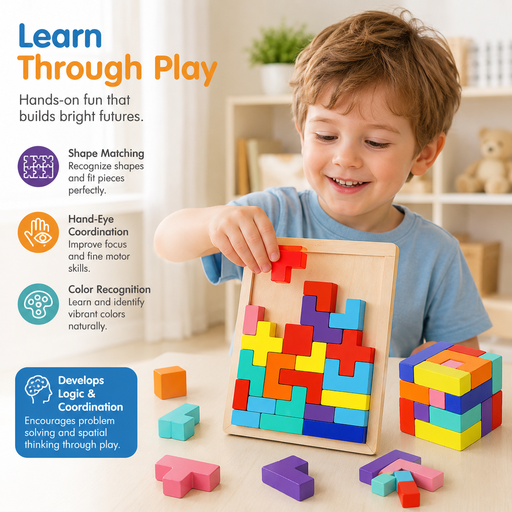
Why this product suits the profile: This wooden puzzle combines pattern-building with logical thinking and can be used without electricity during family game time or for independent play.
It focuses on a manageable playing principle rather than a complex model size. The product information recommends using it as instructed and, where necessary, under supervision.
Wooden construction, manual use and suitability for family activities. According to the product information, the colour or design may be selected at random.
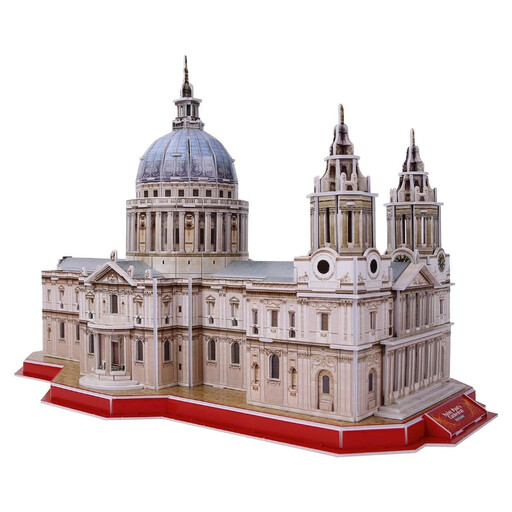
Why this product suits the profile: This architectural model is intended for users aged 10 and over. It combines building a London landmark with an accompanying photographic booklet.
The pieces are precisely pre-cut and fit together without tools. The age recommendation, number of pieces, finished dimensions and care instructions are all clearly stated.
131 EPS foam board pieces, tool-free assembly and a finished model measuring 40.5 × 22.5 × 27 cm.

Why this product suits the profile: This model for ages 14 and over combines wooden assembly, a marble run and a USB-powered motor to provide teenagers and adults with a longer-lasting activity.
The power supply, assembled dimensions of 31.2 × 25.1 × 23 cm and recommended age group are clearly stated. This makes it possible to plan the required space in advance.
Wood, plastic and metal components, ten steel balls, plus manual and USB-powered play modes. A stable, dry surface is required.
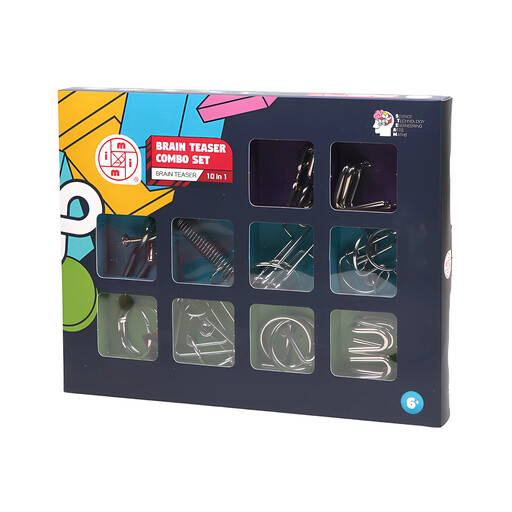
Why this product suits the profile: This metal brain-teaser set offers ten different metal puzzles with varying difficulty levels for teenagers and adults.
The number of puzzles, metal construction and dimensions of 30 × 24 × 3.2 cm are specified. Because of the small parts and accessible edges, children must be supervised.
Ten puzzles in one set, different difficulty levels and suitable for use indoors or outdoors.
We have put together a complete, regularly updated list of products that fully meet these strict selection criteria and the safety regulations applicable in the EU.
For younger children, an educational toy for children with straightforward rules may be more suitable than a complex architectural model. The four-in-a-row game can be incorporated into short family games and combines a simple concept with forward-thinking play.
A screen-free learning tablet such as the Alilo Kids Learning Tablet uses 47 double-sided educational cards, audio output and an interactive pen. It is intended for children aged 3 to 5. Before use, parents should read the warnings about small parts and initially explain the device together with their child.
Not every model. The age recommendation depends on the size of the pieces, assembly complexity and material. For children aged 3 and over, only products expressly intended for this age group should be considered. Architectural models with many small parts are often only suitable for children aged 8 or 10 and over.
This depends on the number of pieces, connection system and experience. The Empire State Building Puzzle has an approximate assembly time of 120 to 220 minutes. A numbered slot-together system can make getting started easier. With mechanical wooden models, additional time should be allowed for checking the gears and marble runs.
Many classic family games, wooden puzzles and architectural models work entirely manually. The Big Ben Puzzle and St. Paul’s Cathedral Puzzle do not require batteries. A learning tablet uses a rechargeable battery, while the Robotime Marble Spaceport requires a USB connection for its motor. These ongoing requirements should be checked against the intended place of use before buying.