
Lieferung heute & morgen

Qualitätsgarantie

Willkommens-Angebote freischalten: KOSTENLOSE Lieferung | Bis zu 80 % RABATT | Kostenlose 30-Tage-JoyPlus-Testphase
App herunterladen
As a Joybuy Product Recommendation Officer, I see countless products every day. My job is to help you make a clear and informed decision. The selection of educational games for children is vast, and not every game advertised as "educationally valuable" delivers on its promise. Before you make a purchase, it's helpful to know the most common pitfalls.
Many parents and grandparents invest in these games hoping to foster cognitive development, only to encounter three fundamental problems:
To avoid these disappointments, it's worth checking a few key parameters before buying.
Instead of being guided by colourful packaging, three objective criteria can help you separate the wheat from the chaff and find the perfect gift for kids.
The manufacturer's age recommendation is a starting point, but it should be viewed critically. Pay attention to the following details:
The quality of the material determines a game's longevity and safety.
A good educational game captivates for a long time.
Based on these objective criteria, we have selected a few products that are suitable for different needs and age groups.
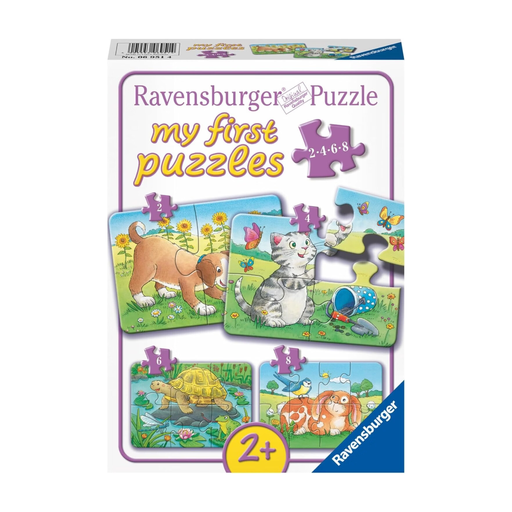
Why This Fits Their Persona: This set is specially designed for children aged 2 and up. With just a few large pieces per puzzle, it creates early successes without being overwhelming. It playfully promotes fine motor skills and the ability to make connections.
It avoids frustration from over-complexity. The thick, sturdy cardboard is designed for small hands and withstands less-than-gentle handling, preventing the problem of a short lifespan.
The set includes puzzles with increasing piece counts, supporting a gradual learning process. The themes from a child's daily life are appealing and recognisable.
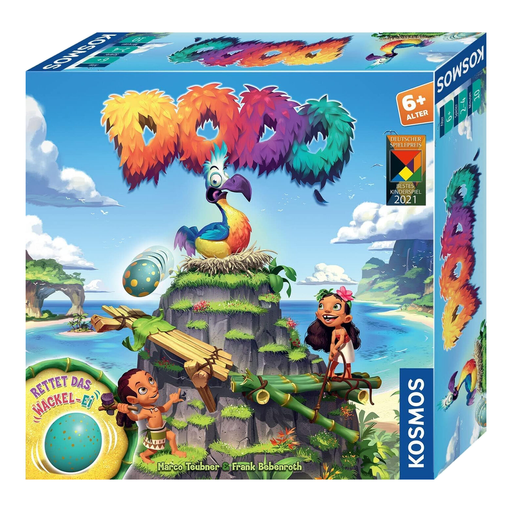
Why This Fits Their Persona: Ideal for families looking for a shared gaming experience without competitive pressure. As a cooperative game for children aged 6 and up, everyone must work together to save the rolling egg. This strengthens team spirit and communication.
The play value comes from the shared action and high-quality 3D game material, not an empty "learning" promise. The replay value is high because every round is different thanks to the unpredictable wobbly egg.
Simple rules allow for an immediate start to the game. The game promotes strategic thinking within the team and creates an exciting, action-packed atmosphere.
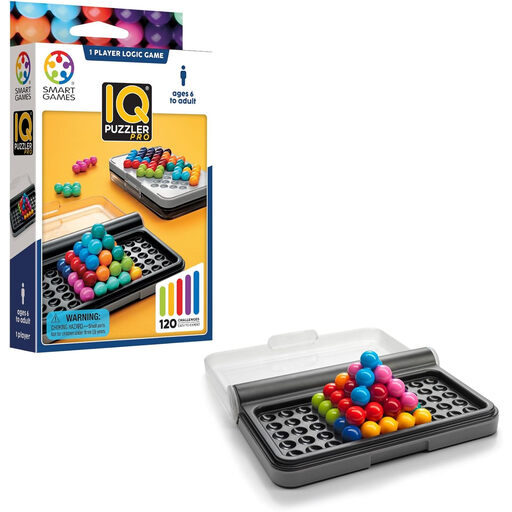
Why This Fits Their Persona: This compact single-player logic game is an ideal travel game for children aged 6 and up. It promotes concentration and logical thinking without needing a partner. Perfect for quiet moments at home or on long trips.
It avoids the "one-and-done" effect with 120 challenges across various difficulty levels. The durable material and compact case ensure a long lifespan, even with frequent transport.
It offers three different game modes, including 2D and 3D puzzles, which provides variety. The game specifically promotes cognitive skills like spatial reasoning and problem-solving.
We've compiled a complete, up-to-date list of products that fully meet these strict selection criteria and German safety regulations.
Look for robust and safe materials. For wooden toys, a smooth surface without splinters is important. For plastic, you should look for "non-toxic" labels or corresponding certificates. Thick, laminated cardboard in puzzles for kids or board games is a good sign of durability. The CE mark on the packaging confirms that the product meets the basic safety requirements of the EU.
The manufacturer's age rating is a guideline. Observe your child: Do they show interest in numbers and letters? Do they have the patience for more complex tasks? For kids' games from age 6, reading comprehension or strategic thinking may already be required. When in doubt, a game that is initially a bit too challenging and that the child can grow into is often a more sustainable choice than one that quickly becomes too easy.
A higher price can indicate higher-quality materials, more elaborate development, or a well-known brand, but it is no guarantee of higher play value. A simple but well-designed patience game can often do more to promote concentration than an expensive electronic toy. Focus on the criteria mentioned above, such as replay value, material quality, and age-appropriate mechanics, to assess the true value of a game.