
Lieferung heute & morgen

Qualitätsgarantie

Willkommens-Angebote freischalten: KOSTENLOSE Lieferung | Bis zu 80 % RABATT | Kostenlose 30-Tage-JoyPlus-Testphase
App herunterladen
Educational games and learning toys for children should do more than keep them occupied. They should also suit their age, surroundings and play style. The choice ranges from learning games for children and children’s jigsaw puzzles to construction toys and family games. But eye-catching product claims don’t automatically lead to a good buying decision.
A game labelled for children aged 3 and over isn’t automatically suitable for every three-year-old. The size of the pieces, the level of difficulty and the amount of adult support needed also matter. If a product contains small parts or magnets, take the warning particularly seriously.
When choosing games for children aged 3 and over, parents should check:
A toy with lots of buttons, pages or components isn’t automatically more versatile than a simple game. For younger children, a clearly structured activity can be more suitable than an overcomplicated product. With a Montessori busy book, for example, securely attached features, easy-to-grip fastenings and a clear layout matter more than having the longest possible product description.
Toy pieces can easily get lost if there’s no bag, box or dedicated storage space. Magnetic building blocks for children also need to be checked regularly for cracks or loose magnets. With a marble run building set, parents should check the number of pieces, the stability of the connections and that it’s used safely under supervision.
The age rating is a useful first filter, but it doesn’t replace your own judgement. For children aged 1 to 3, large, easy-to-grip pieces and short play sessions are usually suitable. A children’s jigsaw puzzle for ages 2 and over might have just a few sturdy pieces. For children aged 6 and over, more challenging concentration games or logic puzzles may be a better fit.
Look out for:
For toys sold in Germany, product information about the materials, manufacturer and responsible person should be easy to verify. A CE mark is generally relevant in the EU, but it doesn’t replace checking the toy in practice before and during use.
With wooden toys, smooth surfaces and an undamaged finish are important. For plastic parts, check for sharp edges and visible damage. Strong magnets must not be put in the mouth. Swallowing magnets can cause serious injuries; if you suspect a child has swallowed one, seek medical help immediately.
Larger board games for children, construction sets and family games are well suited to playing at home. Compact travel games for children with just a few pieces are more practical when you’re out and about. The SmartGames IQ-Puzzler PRO, for example, is designed for one player and is described as measuring 3,82 × 1,1 × 5,67 cm.
Before you buy, consider where the game will be used regularly: at a table, on the floor, in the car or while travelling. Suitable storage makes it more likely that all the pieces will stay together.
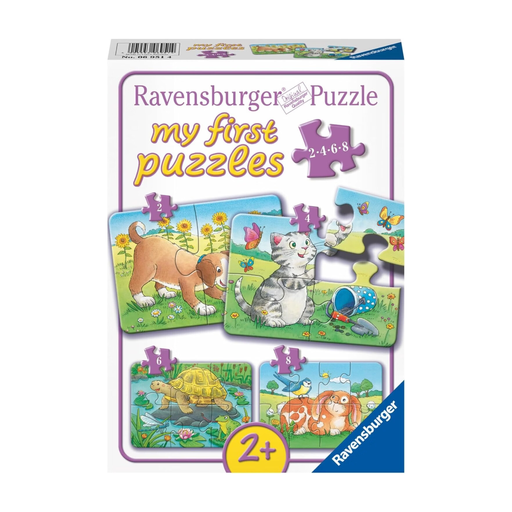
Why this product suits this profile: Designed for children aged 2 and over, this set includes four jigsaws with gradually increasing levels of difficulty. It’s a gentle introduction to jigsaw puzzles.
The age recommendation, different puzzle sizes and sturdy cardboard pieces make it easier to choose than a set with no clear progression in difficulty.
Four designs, child-friendly pieces and a format for solo or shared play.
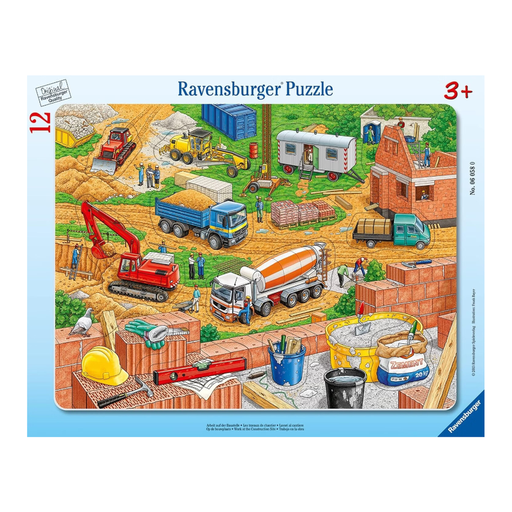
Why this product suits this profile: This frame puzzle has 12 pieces, a building site illustration and cut-outs that make the pieces easier to remove. The recommended age is 3 and over.
The number of pieces and frame format are clearly stated. Check the warning about small parts and the age limit before buying.
12 sturdy frame pieces, no batteries required and a clear, contained objective.
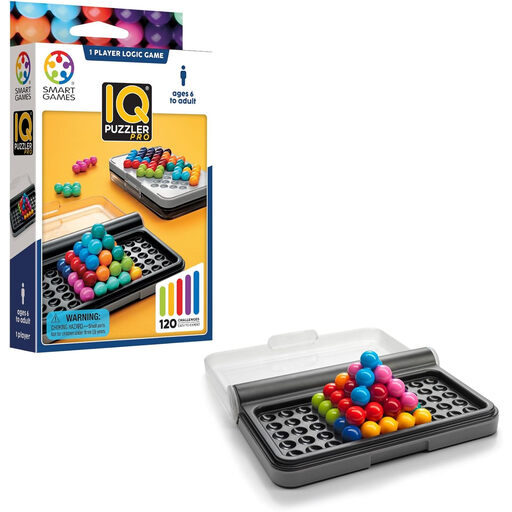
Why this product suits this profile: Designed for one player and children aged 6 and over, this game offers 120 challenges in three ways to play, including 2D and 3D challenges.
The number of challenges, player count and compact dimensions are all clearly stated. This makes it easier to judge whether it’s suitable for travel or waiting times.
120 challenges, 13 playing pieces and no batteries required.
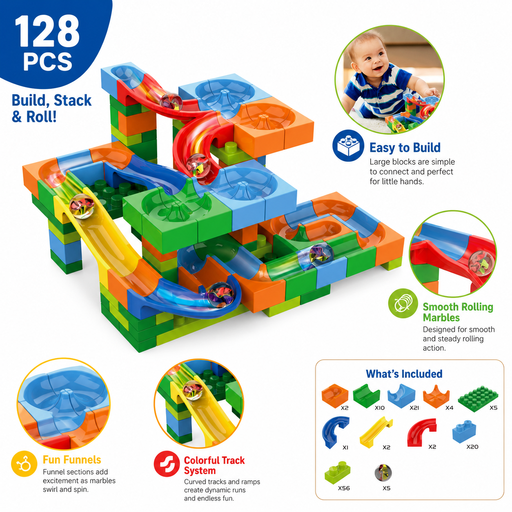
Why this product suits this profile: This 128-piece building set combines construction with rolling movement. It’s ideal for creative play with several family members and for children who enjoy building.
The exact number of pieces makes it easier to plan. Adult supervision is a good idea for younger children and when assembling the small components.
128 building pieces, a track design that can be combined in different ways and no batteries required.
We’ve put together a complete, regularly updated list of products that meet these strict selection criteria and fully comply with the safety regulations in force in the EU.
Simple frame puzzles, games with short turns, stacking games and age-appropriate construction sets may be suitable. Always check the specific age recommendation, the warning about small parts and the level of supervision required.
Lifespan depends on the materials, how the toy is used and how it’s stored. Cardboard puzzles should be kept dry. Plastic and magnetic components should be checked regularly for cracks, sharp edges or exposed magnets. Damaged pieces should no longer be used.
Compact solo games such as the IQ-Puzzler PRO, small card games and busy books are usually easier to carry than large building sets. For travelling, a secure bag, a small number of loose pieces and a quick set-up are particularly practical.