
Lieferung heute & morgen

Qualitätsgarantie

Willkommens-Angebote freischalten: KOSTENLOSE Lieferung | Bis zu 80 % RABATT | Kostenlose 30-Tage-JoyPlus-Testphase
App herunterladen
Educational learning toys for children should do more than simply keep them occupied. They should encourage children to grasp, sort, build, listen and play together. At the same time, choosing the right toy can be challenging: age recommendations vary, some toys need batteries, and colourful extra features do not necessarily say much about how practical a toy will be in everyday life.
Parents, grandparents and other family members should therefore watch out for three common pitfalls before buying:
The age recommendation is an important starting point. Toys for children aged 1 and over should have large, easy-to-grip elements and manageable tasks. Sorting toys, simple shape sorters and an activity cube, for example, support matching, pressing, turning and grasping.
For toys for children aged 2 and over, first puzzles with a few sturdy pieces, simple construction activities and role play are suitable. Toys for children aged 3 and over introduce an understanding of rules, children’s board games and more complex building or logic activities.
Important: The age recommendation does not replace supervision. For products with small parts or magnets, read the warnings on the packaging and product page carefully.
For baby learning toys and learning toys for toddlers, rounded edges, sturdy construction and easy-to-clean surfaces are practical features. Information such as ABS plastic or BPA-free materials may be relevant product details, but they do not replace checking the specific item.
The CE marking indicates that the supplier must declare compliance with the relevant EU requirements. The EN 71 series of standards covers various toy safety areas, such as mechanical and physical properties and flammability. However, a marking alone is no reason to ignore the warnings.
Extra care is needed with magnetic construction toys: swallowed magnets can pose serious risks. Parts should be checked regularly for cracks, loose components and exposed magnets.
Children’s musical instruments and electronic sensory toys can encourage rhythm, an understanding of cause and effect and shared play. Before buying, however, check the following:
A toy with fewer features may be more suitable for everyday life if it is used regularly and can be put away quickly.
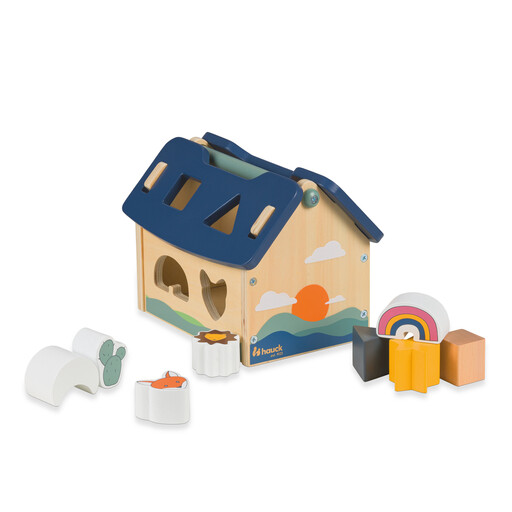
Why this product suits this profile: This wooden toy is designed for children aged 12 months and over, combining sorting, stacking and storage in a compact design.
The activity is easy to understand and requires no batteries, lights or sound effects. The stated FSC certification for the wood and the warnings are shown in the product information.
8 shape pieces, a removable roof and a carry handle; no batteries required.
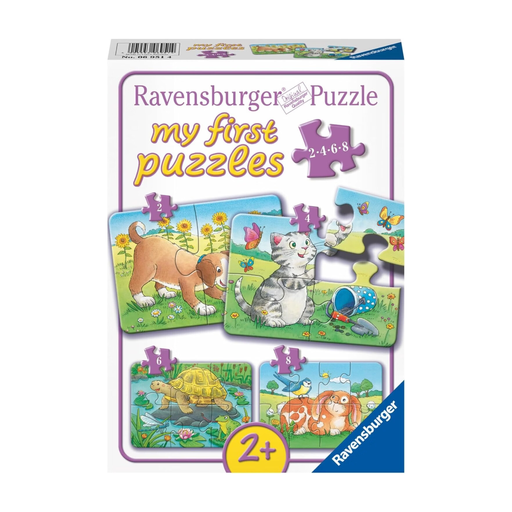
Why this product suits this profile: According to the product information, this set is designed for children aged 2 and over and contains four puzzles with gradually increasing difficulty.
The number of pieces and the age limit are clearly stated. Children under 2 are expressly excluded because of the possible presence of small parts.
Sturdy cardboard pieces, four designs and tasks that become progressively more challenging.

Why this product suits this profile: This activity cube combines several play areas for children aged 1 to 3 and, according to the product description, features a piano, guitar, telephone, gears and musical functions.
The functions are divided into separate play zones. Before buying, check the batteries, volume and the toy’s actual suitability for your child using the product page.
Compact multi-function design, a carry handle and manual activities such as turning, pressing and dialling.
We have put together a complete, regularly updated list of products that fully meet these strict selection criteria and the safety regulations applicable in the EU.
For children aged around 1 and over, large shape sorters, sorting toys, simple motor skills toys and sturdy building blocks are suitable options. Look for a clear age recommendation, sturdy parts and confirmation that there are no small pieces. A toy should match the child’s current grasping, sitting or standing development, rather than being chosen simply because it has lots of features.
Lifespan depends on the material, construction, use and care. Wooden toys should be checked regularly for splinters and cracks. With electronic baby learning toys, inspect the battery compartment, buttons and cable areas. Puzzles and card games will remain usable for longer if they are stored in a dry place and kept complete.
Battery-operated toys may incur regular costs for replacement batteries. So check whether batteries are included, which size is required and whether there is an on/off switch or volume control. Many mechanical learning games, children’s puzzles and classic children’s board games have no ongoing energy costs after purchase.