
Lieferung heute & morgen

Qualitätsgarantie

Willkommens-Angebote freischalten: KOSTENLOSE Lieferung | Bis zu 80 % RABATT | Kostenlose 30-Tage-JoyPlus-Testphase
App herunterladen
Pedagogically valuable toys should do more than just keep children occupied – they should offer them the right opportunities to build, experiment, make music and create. For parents, grandparents and early years professionals, however, choosing the right toy isn’t always straightforward. Terms like “STEM toy”, “motor-skills-boosting” or “especially educational” often describe the marketing angle more than the actual product features.
This guide shows what really matters when it comes to educational learning toys for children – from learning toys for 1-year-olds to science kits and challenging construction sets.
A toy may be broadly suitable for a particular age group, but that doesn’t mean it matches the developmental stage of every individual child. Large, easy-to-grip pieces are better suited to toddlers. Small components, chemical ingredients or complex instructions, on the other hand, require more coordination, patience and supervision.
The age recommendation on the packaging is therefore only the first checkpoint. Parents should also consider the safety warnings, the size of the parts and where the toy will be used.
Building blocks can stimulate spatial awareness and hand-eye coordination. A children’s musical instrument allows them to recognise sounds and rhythms. A children’s science kit can encourage observation and comparison. However, none of this guarantees a learning outcome.
What really matters is whether the child understands the play concept and whether adults are on hand to ask questions or help with assembly. Playing together is what makes many learning opportunities truly accessible.
With construction toys, it’s not just the number of pieces that counts, but also their shapes, how they connect and the instructions provided. For wooden toys, the surface finish, edges and care instructions are important. With science kits, you should check what materials are included, what household items you’ll need and how to dispose of things afterwards.
Before you buy, it’s worth taking a look at:
For children under three, small parts are particularly risky. Sets like the WANGE Elizabeth Tower or the WANGE Destroyer contain numerous small components and, according to the product information, are not suitable for children under three. Adult supervision is recommended for assembly of these products.
Even a toy for toddlers should be checked for cracks, loose parts and damage before each use. For a learning toy for 1-year-olds, large, easy-to-grip pieces and a manageable number of parts are often more practical in everyday life.
For plastic products, information about the material used and its workmanship should be available. The KAPLA set, for example, specifies 100 rectangular building blocks made from untreated pine wood. This makes it easier to assess the feel and possible uses, but it doesn’t replace checking the specific safety warnings.
The YEEHOO Nordic Train Set is described as being made from beech, walnut and sipo wood. For care, a dry cloth is recommended, along with keeping it out of direct sunlight. Such details are relevant if the toy will be used regularly in a child’s bedroom or in educational settings.
A high number of pieces isn’t automatically an advantage. For younger children, a 22-piece set like the YEEHOO Navia Forest Mystery Building Blocks can offer an easier starting point. Older children and adult hobby builders, on the other hand, can benefit from sets with several hundred pieces, detailed instructions and a longer build time.
With building blocks for children and a marble run, you should check whether free construction is possible or whether only a single model can be built. Free building supports different levels of difficulty and can therefore stay interesting for longer.
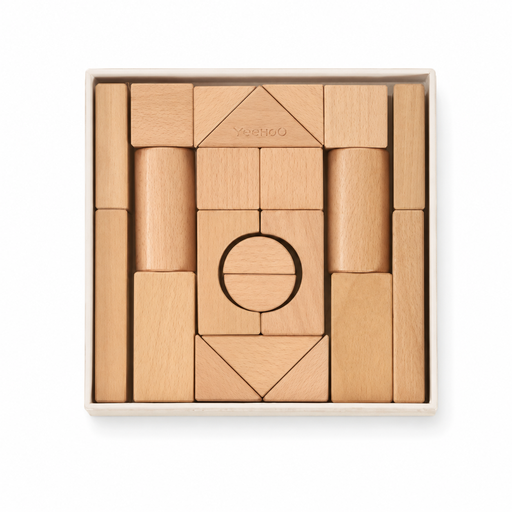
Why this product fits the profile: The 22-piece set is designed for children from 12 months and offers a manageable introduction to stacking, shapes and simple scenes.
The limited number of pieces reduces assembly effort and makes it easy to check what’s included. Before use, always check the age recommendation and the condition of the pieces.
22 pieces, forest theme, free stacking and combining for parent-child play.
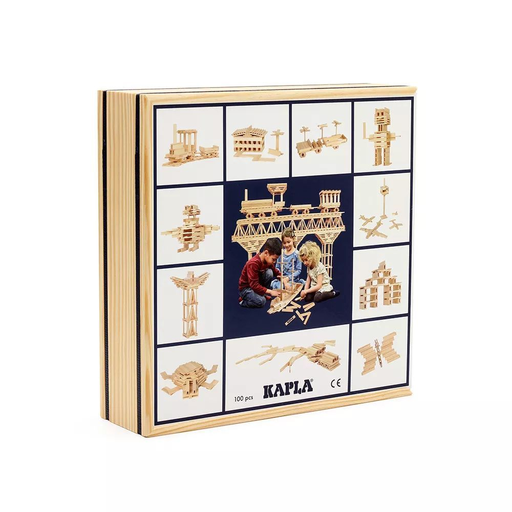
Why this product fits the profile: The 100 identical pine wood blocks are ideal for free construction and can be combined with other KAPLA sets.
The standardised shape makes sorting and understanding the concept easy. The set is recommended from age three and contains small parts.
100 rectangular blocks, wooden box with sliding lid and free building options.
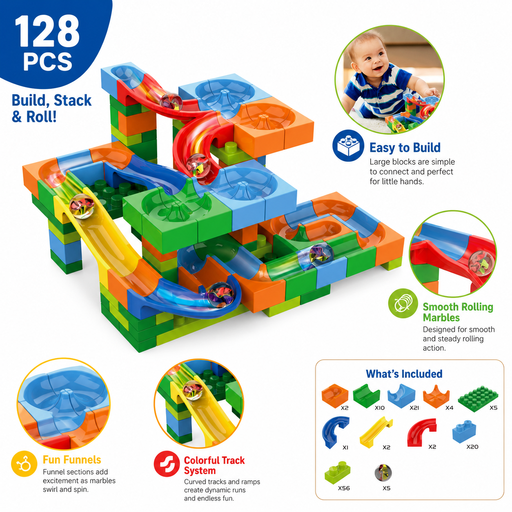
Why this product fits the profile: The 128-piece marble run construction kit combines building with rolling motion and is ideal for creative family activities.
The number of pieces and the specific play concept are clearly stated. Before buying, check that you have enough space for assembly and storage.
128 pieces and the combination of constructing, rolling and rebuilding.
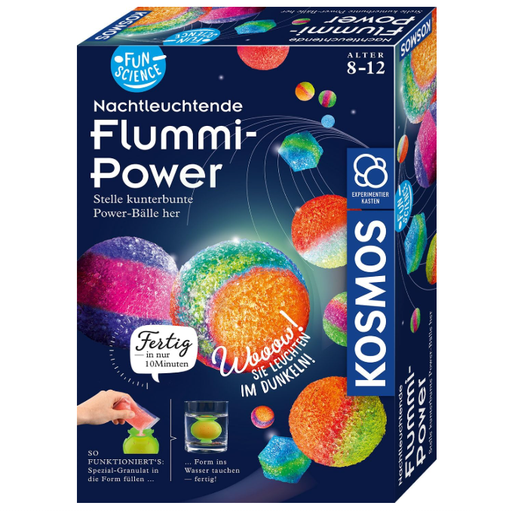
Why this product fits the profile: According to the product information, this set is aimed at children aged 8 to 12 and includes granules, moulds and instructions for making 20 bouncy balls.
The age, number of moulds and manual work required are all clearly described. Due to granules and small parts, use is only intended under supervision.
Six coloured granules, three glow-in-the-dark variants, two moulds and 20 possible balls.
For musical activities from age three, the YEEHOO Musical Xylophone Bench is also worth considering. It has eight notes, two ways to play and a storage compartment for the mallets. Adults should check the mallets and the product before use.
We’ve put together a complete, regularly updated list of products that fully meet these strict selection criteria and the safety regulations in force in the EU.
For children from around one year old, large, easy-to-grip building blocks, simple posting and stacking games, and robust wooden toys are all good options. What’s important is an appropriate age label, no small parts that could be swallowed, and adult supervision. The YEEHOO Navia Forest Mystery Set is recommended from 12 months according to the product information.
How long a toy holds a child’s interest depends less on the “educational” label and more on its versatility. Free building blocks, a marble run or a construction toy with multiple building options can offer different levels of difficulty over a longer period. With science kits, the supply of consumables and the possibility of carrying out further experiments are key.
Science kits for children aged eight and over should be used according to the instructions and under supervision. Check that the safety information is clear, what materials are included and whether any additional items are needed. Chemical ingredients, granules and small parts should not be in the hands of younger children.