
Lieferung heute & morgen

Qualitätsgarantie

Willkommens-Angebote freischalten: KOSTENLOSE Lieferung | Bis zu 80 % RABATT | Kostenlose 30-Tage-JoyPlus-Testphase
App herunterladen
The search for the right educational toy can quickly become overwhelming. The market is filled with products that promise playful learning, but not all of them live up to the claims on the packaging. As a Joybuy Product Recommendation Officer, I see every day which products bring joy and which ones quickly end up gathering dust in a corner.
Many parents and grandparents invest with the hope of supporting a child's development, only to encounter common problems. Before you make a decision, it's helpful to know the typical pitfalls that lead to disappointment and unnecessary expense.
A well-considered purchase that takes these aspects into account ensures the gift provides lasting enjoyment and genuinely achieves a learning effect.
To make an informed choice that meets both the child's interests and your standards for quality, you should examine three core aspects. These will help you separate the wheat from the chaff and find a product that retains its value.
A good educational toy is one that can be discovered again and again. Look for the following features:
The child's safety is the top priority. In the EU, toys must meet strict standards.
Educational toys can be broadly divided into two categories. The choice depends on the child's inclinations and developmental needs.
Based on the criteria above, we have selected a few products that are well-suited for different profiles.
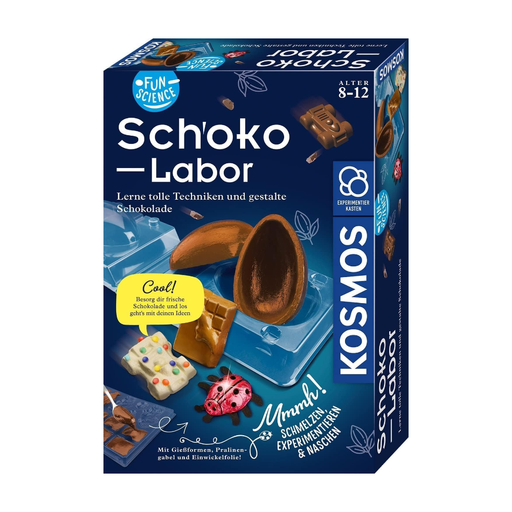
Why it's a great fit: Ideal for children aged 8 and up who enjoy hands-on activities and want to see a tangible, delicious result. It combines chemistry and physics (melting points, states of matter) with a creative activity in an entertaining way. A perfect gift for kids who are curious about science.
The kit isn't limited to the included materials. The techniques learned can be repeated with standard store-bought chocolate, creating high replay value and bypassing the "one-and-done" trap.
Teaches a practical skill (tempering chocolate) and scientific principles in a fun way. All the necessary tools are included.

Why it's a great fit: A screen-free alternative for practising basic arithmetic. It's an ideal supplement to the primary school curriculum. The device is portable and perfect for practice at home or on the go, without resorting to a tablet or smartphone.
With over 50,000 questions and 19 different games, the device offers enormous scope and prevents boredom. The integrated, USB-C rechargeable battery eliminates the follow-up costs of disposable batteries.
Provides focused, distraction-free learning of the four basic arithmetic operations through audio feedback. The device is ready to use right out of the box and requires no complicated setup.
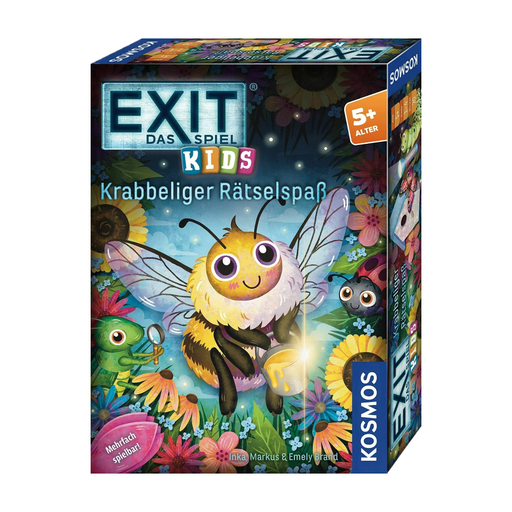
Why it's a great fit: A cooperative escape room game designed specifically for children aged 5 and up. It promotes teamwork, logical thinking, and problem-solving skills in an exciting yet age-appropriate setting. Ideal as a board game for ages 6+ for the whole family.
Unlike many escape games for adults, no materials are destroyed. The game is designed to be played multiple times with varying puzzle combinations, completely avoiding the "one-and-done" trap.
Playfully introduces children to the popular escape game genre. The rules are simple, allowing for a quick start without lengthy preparation.
We have compiled a complete, up-to-date list of products that fully meet these strict selection criteria and EU safety regulations.
Look for the CE marking, durable materials, and a clean finish with no sharp edges. Product descriptions that mention long-lasting plastics (e.g., ABS) or certified wood are a good sign. Additionally, customer reviews often provide insight into a product's durability in everyday use.
The manufacturer's age recommendation is a guideline. More important are the child's individual interests and developmental stage. Observe what your child enjoys playing with: Do they like solving puzzles, prefer building, or are they more creative? A toy for 8-year-olds might be perfect for an advanced 7-year-old, while another child of the same age might prefer simpler concepts. Choose a toy that offers a slight challenge without being overwhelming.
Science kits from established manufacturers like Kosmos or Clementoni are designed for use by children and contain harmless substances when used correctly. However, it is crucial to follow the instructions precisely. The packaging always indicates whether adult supervision is required. This should always be provided, especially for experiments involving liquids or heat.