
Lieferung heute & morgen

Qualitätsgarantie

Willkommens-Angebote freischalten: KOSTENLOSE Lieferung | Bis zu 80 % RABATT | Kostenlose 30-Tage-JoyPlus-Testphase
App herunterladen
The selection of educational toys is vast, and the promise is often the same: learning through play for your little ones. But not every product advertised as "educationally valuable" delivers on its promise. As a Joybuy Product Recommendation Officer, I see every day which products truly offer added value and which ones quickly end up collecting dust. This guide will help you navigate common purchasing pitfalls and make an informed decision.
Before we turn to the best examples, it's important to understand the most common issues that lead to disappointment and unnecessary spending.
To avoid the pitfalls mentioned above, you should check three core aspects before making a purchase. These will help you separate the wheat from the chaff.
The manufacturer's age recommendation is a starting point, but every child develops at their own pace. For example, toys for ages 1 and up should not contain small, swallowable parts and should appeal to a toddler's motor skills without causing frustration.
Safety is non-negotiable. In Germany and the EU, the DIN EN 71 standard specifies the safety requirements for toys. Pay attention to the following points:
A good educational toy offers more than just one way to play. Building blocks can be used for stacking, sorting by colour, counting, or for initial role-playing games. Such an open-ended play concept fosters creativity and ensures that the toy remains interesting across different developmental stages.
Based on the criteria above, we have selected a few products that are suitable for different age groups and developmental goals.

Why this product is a great fit: Ideal for babies who are beginning to grasp purposefully and explore their environment through their senses. The ball encourages crawling and trains visual perception with the floating duck and confetti.
The toy is simple and not overwhelming. It offers a clear cause-and-effect principle (movement creates sound and motion inside) and is versatile due to its waterproof design.
Promotes fine and gross motor skills (grasping, crawling). According to the manufacturer, the material is BPA-free and safe for young children.
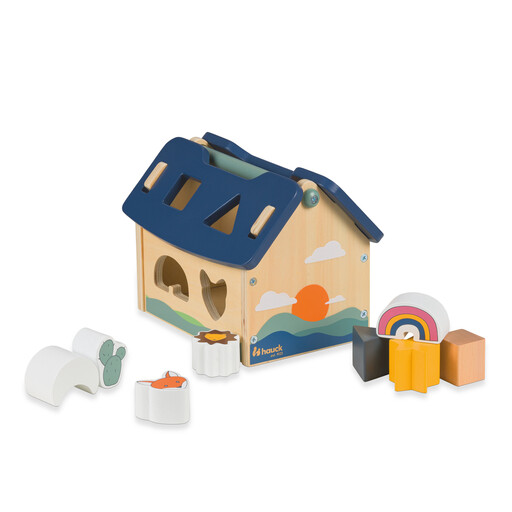
Why this product is a great fit: A classic **toddler toy** for training hand-eye coordination and shape recognition. The child learns to match different geometric shapes to the corresponding openings.
This **wooden toy** is durable and focuses on a core skill. It is free of distracting lights or sounds and, according to the manufacturer, is made from FSC-certified wood, which speaks to its quality and sustainability.
Specifically trains fine motor skills and the cognitive understanding of shapes and colours. The blocks can also be used for free-form building.
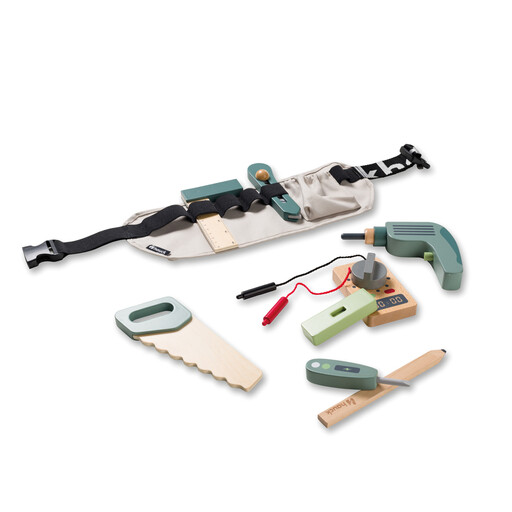
Why this product is a great fit: At this age, children begin to imitate everyday situations. A tool set encourages imagination, social skills in collaborative play, and refines fine motor skills through handling the tools.
This set encourages free, creative play rather than imposing rigid rules. It is durable and grows with the child's imagination. According to the manufacturer, the tools are made from FSC-certified wood.
Fosters imagination, role-playing, and social interaction. The adjustable belt provides a realistic play experience and keeps the tools within easy reach.
We've compiled a complete, up-to-date list of products that fully meet these strict selection criteria and German safety regulations.
Developmental learning begins in infancy but must be adapted to the child's stage. For babies from 0 to 6 months, sensory toys like teethers, rattles, or play gyms are ideal. Structured educational toys such as shape sorters or simple puzzles are generally beneficial from about one year of age, when the child begins to grasp purposefully and understand cause-and-effect relationships.
With wooden toys, quality is crucial. Look for the FSC seal, which confirms that the wood comes from responsible forestry. The surfaces should be smoothly sanded and all edges rounded to prevent injuries. It is especially important that the paints and varnishes used are water-based, non-toxic, and "saliva-resistant," which is ensured by compliance with the DIN EN 71 standard.
The correct cleaning method depends on the material. Plastic toys without electronics can usually be wiped down with a damp cloth and mild soap. Wooden toys should only be cleaned with a slightly damp cloth, as too much water can cause the wood to swell. For toys with electronic components, moisture must not get near the battery compartment; only surface cleaning is appropriate here. Always follow the manufacturer's care instructions on the packaging.