
Lieferung heute & morgen

Qualitätsgarantie

Willkommens-Angebote freischalten: KOSTENLOSE Lieferung | Bis zu 80 % RABATT | Kostenlose 30-Tage-JoyPlus-Testphase
App herunterladen
The search for the right educational toy can quickly become complicated. The market is filled with products that promise playful learning, but not all of them deliver on what their packaging suggests. As a Joybuy Product Recommendation Officer, I'm here to help you separate the good from the bad and make an informed decision that both delights children and meets educational standards.
Before you make a purchase, it's important to be aware of common pitfalls that often lead to disappointment:
To avoid these pitfalls, you should focus on a few key parameters. These will help you objectively evaluate a product's quality and utility.
The manufacturer's age recommendation is more than just a number. It's based on the average developmental stage of children regarding motor skills, cognitive abilities, and safety aspects. A toy designed for a three-year-old can overwhelm a toddler or pose a choking hazard with small parts. Ensure the toy challenges the child's abilities without causing frustration. This is a central aspect of early development toys.
Safety is non-negotiable. In the EU, toys must comply with the EN 71 standard and bear a CE marking. This mark confirms that the product meets basic safety and health requirements. Look for the following features:
A good educational toy offers more than just one function. It stimulates the imagination and can be played with in various ways. Role-playing toys like a toy cash register or screen-free toys like a kids' learning tablet with interchangeable cards often provide higher and more lasting play value than products with a rigid, predetermined gameplay loop.
Here are some recommendations tailored to different profiles and requirements.
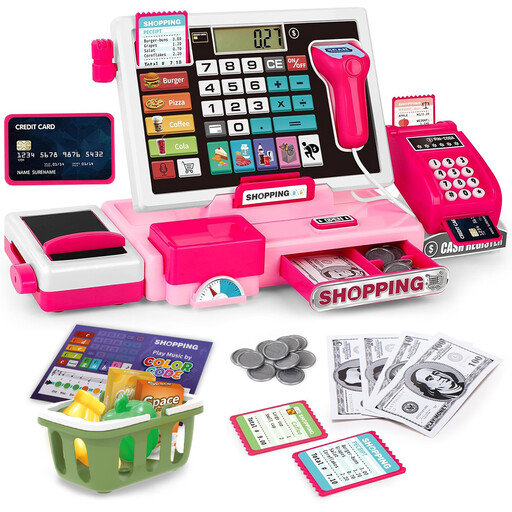
Why This Fits Their Persona: Ideal for children aged 3 and up who love to act out everyday situations. This set promotes social interaction, communication skills, and an understanding of numbers and money in a creative play context.
It avoids the fleeting novelty trap by enabling open-ended role-play. Children can invent new scenarios again and again, alone or with friends.
Features a working calculator to promote early maths skills. Soft edges and non-toxic materials ensure safety.
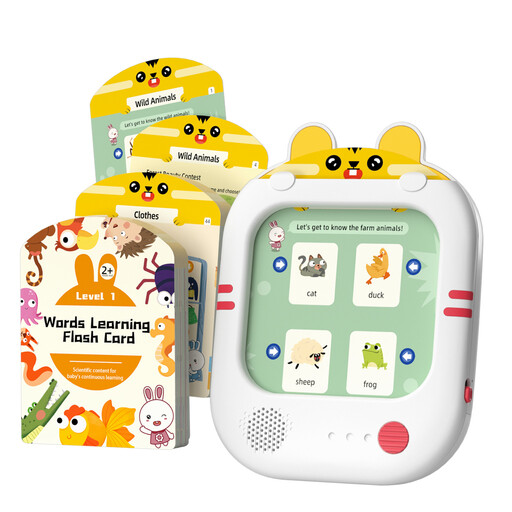
Why This Fits Their Persona: Perfect for parents seeking an interactive learning experience without screen time. It specifically promotes vocabulary and logical thinking in children aged 3 to 5 through physical cards.
It avoids the trap of sensory overload from "smart" features. The focus is on clear, auditory feedback related to the learning cards.
The set includes 47 double-sided cards with over 180 words and logic games. The battery is rechargeable and offers up to 6 hours of playtime, perfect for on the go.
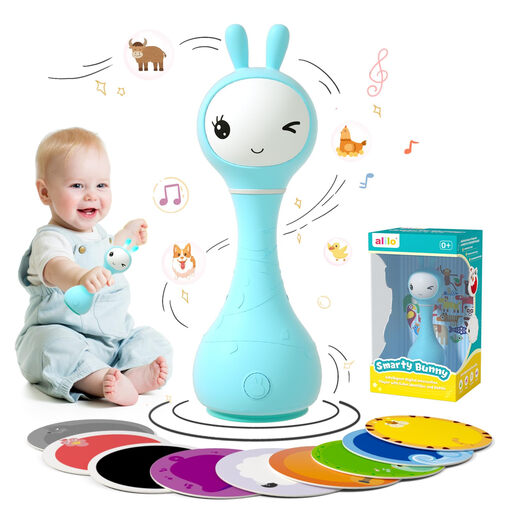
Why This Fits Their Persona: An ideal first toy designed specifically for babies from 0 months. It combines sensory stimuli like sounds, light, and textures to support early development.
It avoids the safety flaw trap with a design free of small parts, soft silicone ears for teething, and a robust construction that is safe for the very youngest.
Multifunctional: Serves as a rattle, night light, and music player. The integrated colour recognition feature with the included cards offers an early learning effect.
If you're unsure about choosing a specific toy or want to give the recipient the freedom to choose for themselves, a gift card is a flexible alternative. Discover various designs and amounts for any occasion.
The CE marking must be visibly, legibly, and permanently affixed to the product, its packaging, or accompanying documents. It is a self-declaration by the manufacturer that the product complies with EU directives. However, it is not a quality seal. Therefore, always check the toy's workmanship and materials as well.
First, read the manufacturer's instructions. As a general rule: never use water or liquid cleaners, as they can damage the electronics. Wipe the surface with a slightly damp or dry, soft cloth. For toys that babies put in their mouths, you should use disinfectant wipes that are suitable for toys.
Screen-free learning tablets, like the featured alilo model, are often suitable from the age of 3. At this age, children begin to recognise symbols, understand logical connections, and actively expand their vocabulary. Such a toy can specifically support this process without exposing the child to screen time, which is often viewed critically at this age.