
Lieferung heute & morgen

Qualitätsgarantie

Willkommens-Angebote freischalten: KOSTENLOSE Lieferung | Bis zu 80 % RABATT | Kostenlose 30-Tage-JoyPlus-Testphase
App herunterladen
Educational toys for children aged 3 and over should do more than keep them occupied for a short while. They can encourage movement, imagination, language skills and playing together. At the same time, products can differ considerably in their materials, size, assembly and safety information. That’s why parents, grandparents and other family members should look beyond general marketing claims and check the product’s actual features.
Lights, sounds and battery-powered features stand out in product photos. However, they’re not automatically an advantage. A toy with lots of effects may appeal to some children, while others prefer open-ended materials such as building blocks or accessories for pretend play. So check whether the product suits the child’s everyday life and interests.
The ‘aged 3+’ label is no substitute for checking individual small parts. Magnetic elements, play money, kitchen accessories or medical play equipment can pose a choking risk if used improperly. Read the warnings, manufacturer’s information and supervision recommendations before buying and before first use.
A large play kitchen can be over 90 centimetres tall once assembled. A construction toy with lots of pieces, on the other hand, needs suitable storage. Check the dimensions and weight, and whether a bag, case or other storage solution is included. This helps make the toy practical for everyday family life.
When choosing educational toys for children aged 3 and over, consider the age recommendation alongside the safety warnings. With magnetic building blocks, it’s also important to check whether the magnets are securely enclosed in the casing. Damaged pieces should be removed. If magnets are swallowed or inhaled, seek medical help immediately.
The European toy safety standard EN 71 covers various safety requirements for toys. However, a label or manufacturer’s information doesn’t remove the need for supervision. For younger children, it’s a good idea to play together the first time to show them how to use the toy correctly.
With plastic toys, smooth, rounded edges and sturdy connections are practical things to check. For wooden products, parents should look at the material information, finish and care instructions. Some products only need a dry or slightly damp cloth; electronic components must not be submerged in water.
For motor skills toys, role-play sets and cutting toys, it’s also important that the accessories are easy to grip. For example, hook-and-loop fasteners on play food can make pretend cutting possible without sharp blades. However, this doesn’t replace checking the toy for damage.
Battery-powered products need the right batteries, which are sometimes not included. Before buying, check:
These points matter just as much for a play kitchen, a children’s doctor’s kit or a basketball game as they do for a small learning toy for young children.
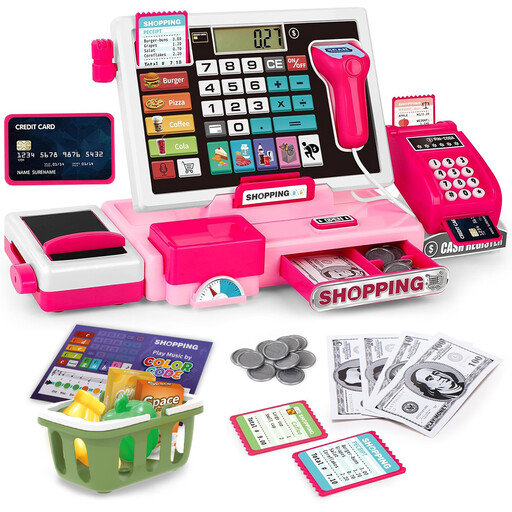
Why this product suits this profile: This set combines shop role play with a calculator, play money, scanner, shopping basket and credit card. It’s a good choice for families looking for an affordable introduction to role-play toys for children.
The product information gives the age recommendation, dimensions of 37,49 × 8,99 × 19 cm and confirms that it’s battery-powered. Batteries are not included, so you can factor in this ongoing cost before buying.
Calculator, LED lights, sounds and several accessories; suitable for children aged 3 and over, according to the product information.

Why this product suits this profile: This height-adjustable wooden kitchen is designed for families looking for a role-play set that can stay assembled, with several accessories and clear space requirements.
The height is adjustable, and the dimensions of 91 × 30 × 91 cm and weight of 7,8 kg are provided. Remember to allow time for an adult to assemble it and have two AA batteries ready.
Wood with stated FSC certification; hob with light and sound functions; suitable for children aged 3 and over.
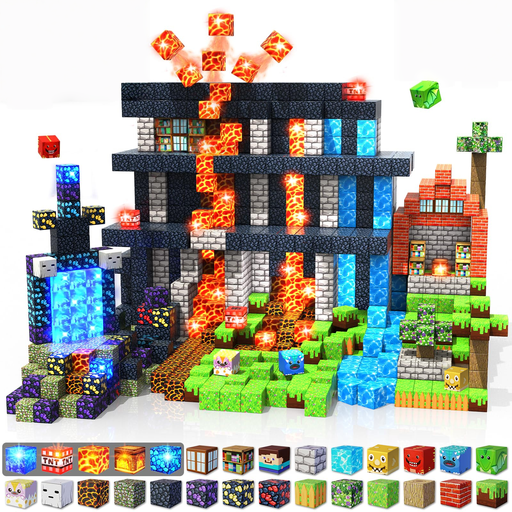
Why this product suits this profile: This extensive set is ideal for children who enjoy building, changing their designs and creating their own models time and again. It’s a versatile option for children who like magnetic building blocks and a variety of building ideas.
The product description clearly flags the small parts and states that it’s suitable for children aged 3 and over. Check the magnets regularly for damage; damaged blocks should no longer be used for play.
150 blocks, 24 light-up elements and an ideas booklet; manual play with no batteries required.
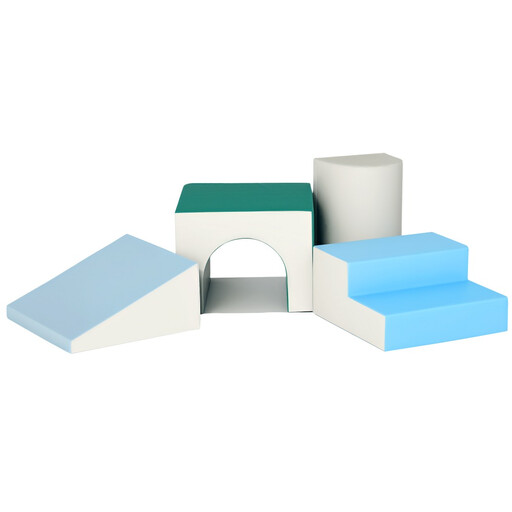
Why this product suits this profile: The four soft EPE foam modules are a good option for families who want to create simple movement activities and building ideas indoors.
Compared with hard construction materials, soft blocks reduce the risk of sharp edges. Even so, check the surface, seams and shape before each use.
Four EPE foam modules; flexible enough for simple movement courses and creative constructions.
We’ve put together a complete, regularly updated list of products that meet these strict selection criteria and fully comply with the safety regulations in force across the EU.
It depends on the child’s preferred way to play. Role-play toys for children, such as a play kitchen, doctor’s kit or toy shop, encourage open-ended everyday scenarios. Construction toys and magnetic building blocks are ideal for children who enjoy building and changing things. Motor skills modules or a height-adjustable basketball set may appeal to children who like to keep active.
How long a toy lasts depends on its materials, workmanship, how it’s used and how it’s stored. Check screws, connections, accessories, battery compartments and magnetic parts regularly. Keep wooden toys away from moisture and avoid harsh cleaning products. Toys with lots of small parts are easier to keep organised if each piece has a set place to go after playtime.
As well as the purchase price, you may need to budget for batteries. Some sets need AA or C batteries, while others work without a power supply. Check the product description for the battery type and what’s included. For a learning toy that gets used often, a model without electronics or one with rechargeable batteries may be more practical for everyday use.