
Lieferung heute & morgen

Qualitätsgarantie

Willkommens-Angebote freischalten: KOSTENLOSE Lieferung | Bis zu 80 % RABATT | Kostenlose 30-Tage-JoyPlus-Testphase
App herunterladen
Educational toys for children should spark curiosity while also matching their age, abilities, and family’s everyday routine. In practice, however, extensive accessory lists, eye-catching branding, or supposedly simple experiments do not automatically make a product the right choice. Parents, grandparents, and other family members should therefore focus on how a product will actually be used, which safety information applies, and whether its contents are suitable for the child.
A children’s experiment kit with numerous individual components may appear comprehensive. What matters, however, is whether it includes clear instructions and whether the materials are suitable for the experiments. With construction toys, the number of building pieces is not the only consideration. It is equally important that children can build, modify, and correct mistakes independently.
Toys for children aged 3 and over are not automatically suitable for every three-year-old. Small screws, nuts, cards, or laboratory accessories may pose a swallowing risk. With educational toys for ages 6 and up or experiment kits for ages 8 and up, additional factors include fine-motor skills, reading ability, and the child’s capacity to handle the accessories.
The recommended age should therefore be treated as guidance, not as a substitute for adult supervision. Safety warnings on the packaging and in the instructions should be read before purchase.
A children’s workbench requires significantly more room than a compact logic game. Models measuring approximately 86 to 102 cm in height should be placed where there is sufficient space to move around. A stable table is also advisable for a children’s microscope or chemistry experiment kit. Without a suitable place to use it, even an engaging set may end up sitting unused.
For younger children, hands-on, repeatable activities such as screwing, sorting, and building are particularly suitable. A Bosch children’s workbench can combine role-play with simple manual tasks. For children aged 6 and over, magic sets or logic games are suitable options, especially where concentration and following a sequence are important.
From around age 8, children may enjoy science toys, a microscope, a detective kit, or a chemistry experiment kit. With these products, an adult should read through the instructions with the child and supervise the first few activities.
Look for specific information:
For products containing small parts, the general rule is clear: do not use them with children under three if the manufacturer indicates this restriction. Experiment kits should only be used according to the instructions and under supervision. Chemical substances must be kept away from food and stored safely after use.
With battery-powered science toys, batteries should only be inserted or replaced by adults. Product descriptions may include specific details such as EN 71-compliant materials, the type of plastic used, or safety warnings. This information is more meaningful than broad claims such as “safe” or “educationally valuable.”
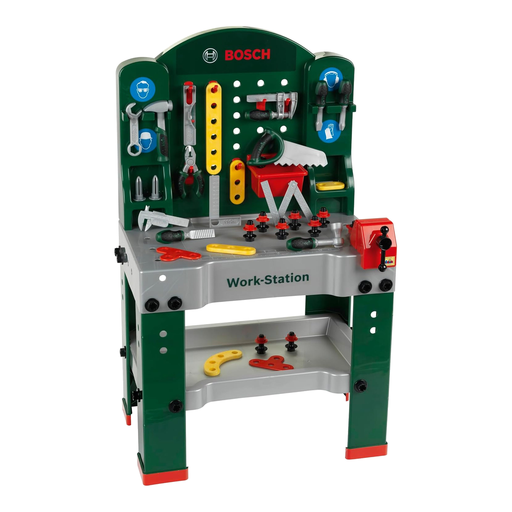
Why This Fits Their Persona: Ideal for families looking for a versatile introduction to hands-on role-play for children aged 3 and over. The 44-piece set is centred around a dedicated play station.
The product details specify the recommended age, dimensions of 61 × 44.5 × 101 cm, and a clearly defined scope of delivery. This makes it easier to assess the required space before purchasing.
44 pieces, learning features built into the work surface, a vice, and several storage options; no batteries required.
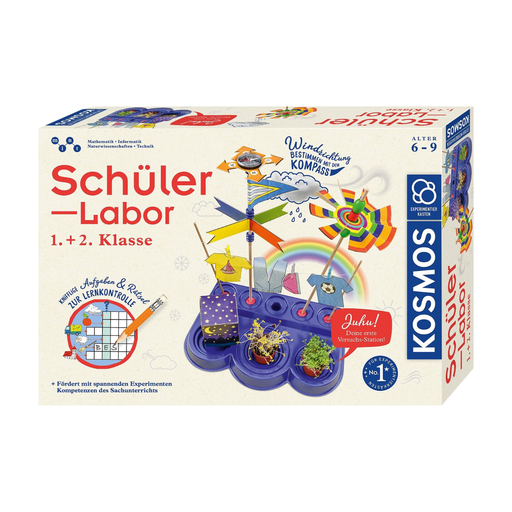
Why This Fits Their Persona: Designed for children aged 6 to 9 who want to explore nature and technology systematically—at home or as a complement to primary-school learning.
More than 50 experiments and illustrated instructions make the scope of the set easy to understand. Some activities require additional household materials.
Covers topics including light, shadows, air, water, and the senses; measures 29.5 × 42.5 × 8 cm and weighs 1.38 kg.
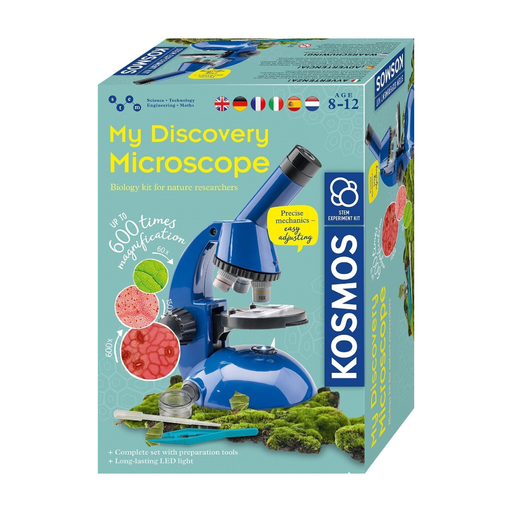
Why This Fits Their Persona: A strong choice for nature-loving children aged 8 and over who want to examine plants, fibres, and other specimens and have a permanent place at a table for their activities.
The magnification of up to 600× and the included preparation accessories are specified clearly. Two AA batteries for the LED illumination must be purchased separately.
Slides, coverslips, a pipette, tweezers, and specimen containers are included; according to the product information, cleaning is limited to the surface.
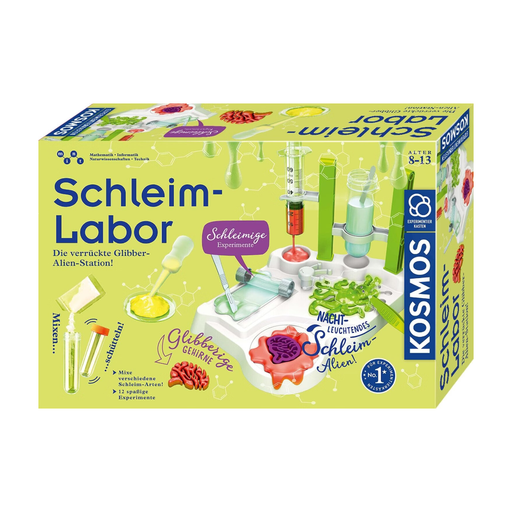
Why This Fits Their Persona: For children aged 8 and over who enjoy repeating experiments and are fascinated by slime, fizzing liquids, and colour changes.
The instructions describe 20 experiments and explicitly state that adult supervision is required. This allows families to plan the level of support in advance.
A laboratory station with several containers and tools; no batteries required. Experiments should only be carried out according to the enclosed instructions.
For children aged 3 and over, options include a children’s workbench, a Bosch screw truck, or simple construction toys. Children aged 6 and over can practise with a magic set or a compact logic game. For children aged 8 to 14, suitable choices include a detective kit, a Triops observation set, a children’s experiment kit, or a COBI model with 390 pieces.
If you are specifically looking for a gift for children with an interest in scientific discovery, you will find a wider selection in the children’s science kit category.
We have compiled a complete, up-to-date selection of products that can be compared based on recommended age, included features, and safety information.
For children aged 3 and over, play stations with large, easy-to-grasp parts are particularly suitable, such as a workbench or a screw-powered vehicle. Small parts must be stored safely. The manufacturer’s specific age recommendation and safety warning should always take precedence.
With experiment kits for ages 8 and over, adult supervision is advisable and is explicitly required for some products. Adults should explain the instructions, prepare the materials, and ensure that the child has a suitable workspace. Chemical components, batteries, powders, and sharp accessories must never be used without supervision.
How long a toy remains engaging depends on its format. Workbenches and construction toys can be used repeatedly by introducing new scenarios. An experiment kit offers greater long-term value when it includes multiple activities and some of its accessories can be reused. Before buying, it is therefore worth checking the number of activities, whether refills are needed, and what storage options are provided.