
Lieferung heute & morgen

Qualitätsgarantie

Willkommens-Angebote freischalten: KOSTENLOSE Lieferung | Bis zu 80 % RABATT | Kostenlose 30-Tage-JoyPlus-Testphase
App herunterladen
By Joybuy Product Recommendation Officer
Educational toys for babies and toddlers should do more than keep children occupied. They should suit the child’s age, surroundings and stage of development. Between six months and five years, a child’s grip, mobility, attention span and play interests change considerably. A product suitable for a three-year-old may be unsuitable for a baby because it contains small parts or magnets.
The words ‘for babies’ on the packaging are not enough. The specific age recommendation and safety warnings are what matter. Toys with small parts or magnets must not be given to children under three. Even with a product suitable from six months, you should check whether it is designed for floor play, tummy time or crawling activities.
Lights, music, buttons and several play modes can seem appealing. In practice, an overloaded interactive toy can quickly lose its appeal if the functions simply repeat themselves or the volume cannot be adjusted. For smaller homes and flats, a volume control or quiet mode can be a useful selection criterion.
‘BPA-free’ describes just one specific aspect of the materials used. Similarly, a CE mark is a necessary statement of conformity, but it is not a general quality assessment. You should also look for rounded edges, a securely closed battery compartment, a stable base and clear safety warnings. For wooden toys, information such as FSC-certified wood provides a transparent material specification.
For baby toys from 6 months, easily accessible elements, larger shapes and simple cause-and-effect games are good choices. A rolling toy can encourage children to track movement with their eyes and start crawling, but it should only be used on a clear, level surface.
Educational toys from 1 year can involve more complex movements, such as turning, pressing, sorting or stacking. Depending on its design, an activity cube or an activity table for babies with removable legs can initially be used on the floor and later while standing.
From the age of three, building toys from 3 years, role-play toys and creative construction toys become suitable options. With magnetic building blocks for children, the risk of swallowing magnets is a particularly important safety warning. These sets should only be given to children in the specified age group and checked regularly for damage.
Check whether the manufacturer specifies the main material, such as ABS plastic or wood. Smooth, burr-free surfaces make cleaning easier and reduce the risk of skin injuries. For electronic toys, the battery compartment, battery type and included batteries should be clearly stated.
Wipe-clean surfaces are useful for baby toys. Fabrics, crevices and moving parts can increase the cleaning effort. Products with fewer, easily accessible components are generally easier to check and maintain in everyday use.
For sensory toys and children’s musical instruments, the volume should be adjustable. According to the product description, the Kids Drum Set with adjustable volume features a volume control; batteries are not included, however. For an activity table, stability, dimensions and whether it can be stored compactly are also important.
A bouncing toy such as the Chicco Bouncing Unicorn is specified for children aged two to five and weighing up to 25 kg. It requires plenty of clear space, must not be used near stairs, roads or swimming pools, and requires constant supervision.
The following products have been matched to different everyday situations based on age, range of functions and stated product features. The age recommendation for each individual item remains the deciding factor.
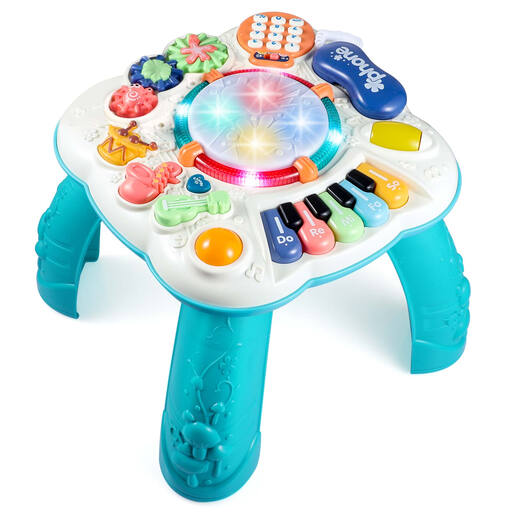
Why this product suits this profile: The table combines several play areas and, according to the description, can initially be used without its legs as a floor play board and later as a standing activity table.
The removable legs reduce the risk of buying a toy that is only suitable for a short stage of development. A volume control and quiet mode are specified.
Six play areas, battery operation and a stated age range of 6 to 36 months.
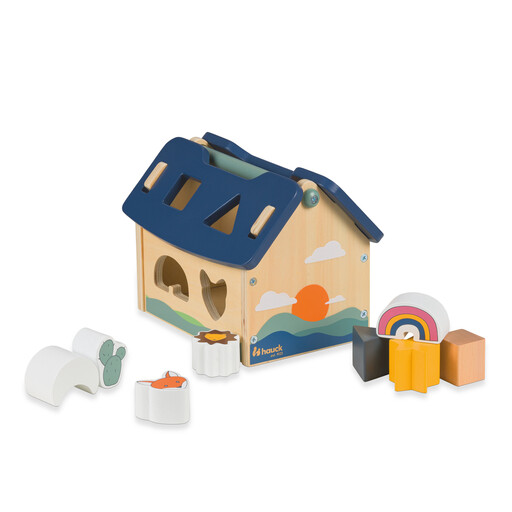
Why this product suits this profile: According to the product information, this sorting and stacking toy is made from FSC-certified wood and is suitable from twelve months.
It focuses on clearly defined play activities rather than a multitude of electronic effects. The pieces can be stored at home; any damaged or splintered parts must be removed from use.
Eight shape pieces, a removable roof and a carry handle; recommended from one year.
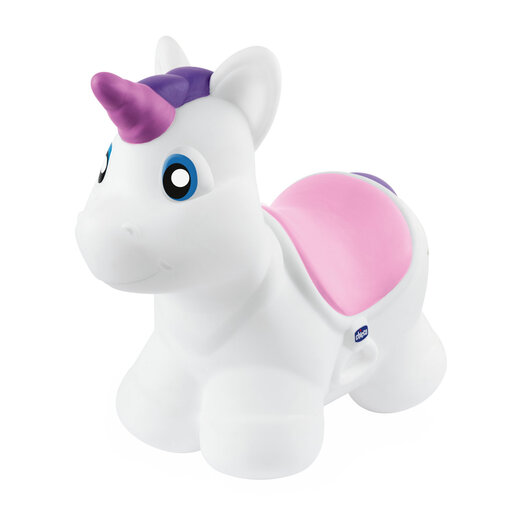
Why this product suits this profile: For active children aged between two and five, this inflatable ride-on toy can be used indoors or outdoors, provided the required safety distances are maintained.
The age and weight limit of up to 25 kg are clearly specified. A pump is included, and the air pressure can be checked.
Ergonomic seat, integrated handles and specified PVC materials; regular visual checks are still required.
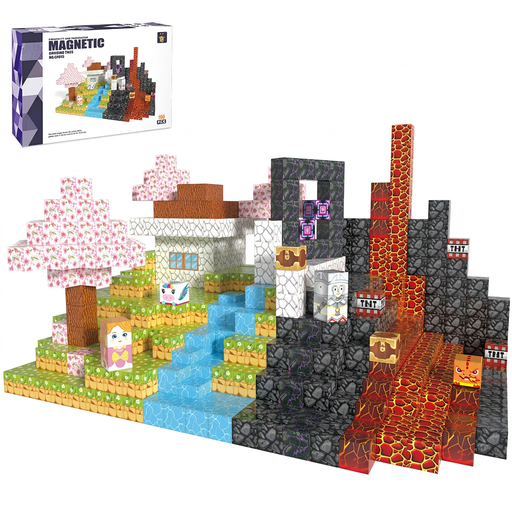
Why this product suits this profile: According to the product information, the 100-piece set is intended for children aged three and over and allows 2D and 3D constructions.
The age recommendation and warning about small parts and magnets are clearly stated. Damaged pieces with potentially exposed magnets must no longer be used for play.
100 pieces, a storage bag and compatibility with other magnetic sets in the 2.5 cm format.
We have put together a complete, regularly updated list of products that fully meet these strict selection criteria and the safety regulations applicable in the EU.
From six months, larger, easy-to-grip elements, simple sorting shapes and sensory toys with controlled light or sound functions are suitable options. For rolling products, the floor should be clear of stairs, cables and small objects. The specific age recommendation and safety warnings take priority over general categories such as ‘baby toys from 6 months’.
How long a toy remains engaging depends on the child’s development and the scope for open-ended play. Products with adaptable uses, such as an activity table with removable legs, can cover several stages of play. With electronic toys, battery consumption, volume and repetitive melodies can have a greater impact on everyday life. Regular checks for wear and tear are advisable regardless of the child’s age.
A useful price comparison starts with the child’s age, the materials, what is included and ongoing costs such as batteries. A simple sorting game may be enough for beginners, while a comprehensive construction set or children’s musical instrument requires more pieces and space. For a birthday or Christmas gift, it is therefore not the number of functions that matters, but the right combination of safe use, maintenance requirements and play opportunities.