
Lieferung heute & morgen

Qualitätsgarantie

Willkommens-Angebote freischalten: KOSTENLOSE Lieferung | Bis zu 80 % RABATT | Kostenlose 30-Tage-JoyPlus-Testphase
App herunterladen
The selection of educational toys is vast, and manufacturers' promises are often grand. However, not every toy advertised as "educationally valuable" genuinely supports a child's long-term development. As a Joybuy Product Recommendation Officer, I'm here to help you see through the marketing noise and make an informed decision. This guide highlights the most common pitfalls and the crucial criteria for selecting safe, developmentally appropriate toys.
Many well-intentioned purchases quickly turn into disappointments. Watch out for these typical problems to avoid frustration and unnecessary expense.
Before you decide on a product, check these three objective features. They are crucial for safety, durability, and genuine play value.
Your child's safety is the highest priority. Look for non-toxic materials and sturdy construction with no sharp edges or small parts that could be a choking hazard.
A good educational toy challenges without overwhelming. The type of motor skill required must match the child's age.
A toy with only one single, strictly defined function quickly becomes boring. Products with high play value leave room for creativity and grow with the child. These include building blocks that can be combined in endless new ways or playsets that can be expanded. Open-ended concepts foster imagination far more than toys that dictate every step to the child.
Based on the criteria above, we have curated a selection of products suitable for different age groups and developmental goals.
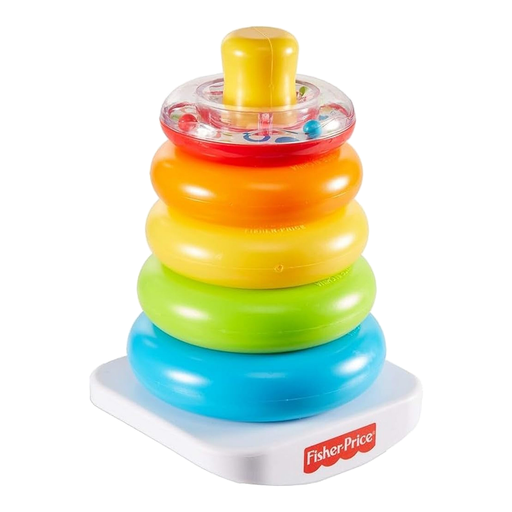
Why this product is a good fit: Ideal for babies from 6 months who are starting to grasp and examine objects with purpose. The focus is on a single, clear task: grasping and stacking.
This toy avoids unnecessary electronics and empty "educational" promises. It focuses on the fundamental development of hand-eye coordination and is perfectly sized for the specified age group.
Specifically promotes fine motor skills, spatial awareness, and an understanding of size relationships. A durable classic that lasts for generations.

Why this product is a good fit: Perfect for toddlers from 1 year who love role-playing and have a high need for activity. The garage offers various play stations on multiple levels.
Although it's an electronic toy, it offers long-term play value through its compatibility with the entire "Tut Tut Baby Flitzer" world. The interactive elements are diverse and promote language and motor skills, rather than just flashing lights.
Encourages imaginative role-play and motor skills with numerous moving parts (lift, barrier). The expandable system ensures long-lasting fun.
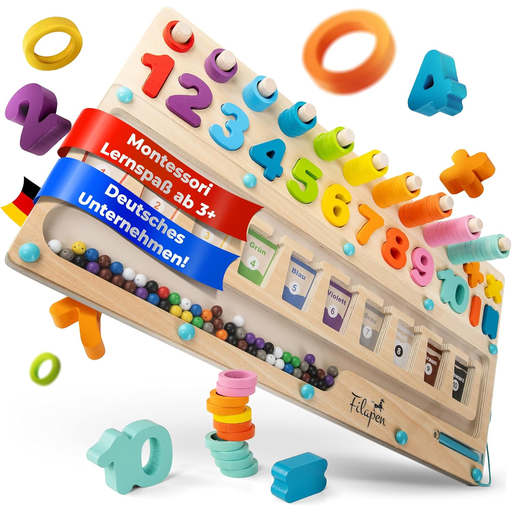
Why this product is a good fit: For children from 3 years who enjoy quiet, focused activities. It combines fine motor skill training with learning colours and numbers according to Montessori principles.
This is an example of a truly educationally valuable toy. The learning objective is clearly defined and achieved without distracting electronics. This durable wooden toy is a sustainable investment in your child's development.
Specifically promotes fine motor skills, concentration, colour recognition, and an early understanding of numbers. The balls are safely enclosed behind an acrylic glass panel.
We have compiled a complete, up-to-date list of products that fully meet these strict selection criteria and stringent safety regulations.
Primarily, look for the GS mark for tested safety. Check the toy for sturdy construction: no small parts should be able to come loose, as they could be swallowed. The materials should be saliva-resistant and non-toxic, especially for baby toys from 6 months, as babies put everything in their mouths.
Simple sounds like rattles or crinkles are interesting even for babies. More complex interactive toys with melodies or spoken phrases are appropriate from around one year of age, when children begin to understand cause-and-effect relationships. A crucial quality feature is a volume control to protect the child's hearing and save parents' sanity.
Wooden toys should never be submerged in water, as the wood can swell and crack. Instead, wipe them with a slightly damp cloth and perhaps a little mild soap, then let them dry thoroughly. For toys with sound or other electronics, only the plastic surfaces should be carefully wiped. Ensure that no moisture gets into the battery compartment or other openings.