
Lieferung heute & morgen

Qualitätsgarantie

Willkommens-Angebote freischalten: KOSTENLOSE Lieferung | Bis zu 80 % RABATT | Kostenlose 30-Tage-JoyPlus-Testphase
App herunterladen
The search for the right educational toy can quickly become complicated. The market is flooded with products that promise playful learning, but not all of them deliver what the packaging suggests. As a Joybuy Product Recommendation Officer, I see it as my mission to provide you with objective criteria so you can make an informed decision and find a meaningful activity for children that combines joy and development.
Many buyers fall into recurring traps that lead to disappointment and unnecessary expenses. Before we look at specific recommendations, it's important to understand these pitfalls:
To avoid these problems, you should check a few key parameters before making a purchase.
A good purchasing decision is not based on marketing messages, but on objective product features. Three factors are particularly crucial.
The manufacturer's age recommendation is a starting point, but the more critical question is whether the toy "grows" with the child. Ideal educationally valuable toys offer various difficulty levels or open-ended play concepts that can be reinterpreted again and again. A good logic game, for example, includes challenges for both beginners and advanced players. This keeps the experience challenging and sustainably promotes concentration.
Instead of searching for a generic "educational toy," it's more helpful to narrow down the desired area of development. Look specifically for:
A durable toy is made from robust and safe materials. Look for clean craftsmanship without sharp edges or small, loose parts, especially for toys intended for younger children. For wooden toys, smooth surfaces and non-toxic paints are important. For plastic products, the BPA-free label is a relevant quality indicator. Durability is not just a matter of safety, but also of sustainability and value for money.
Based on these criteria, we have identified some products that are well-suited for different profiles and age groups.
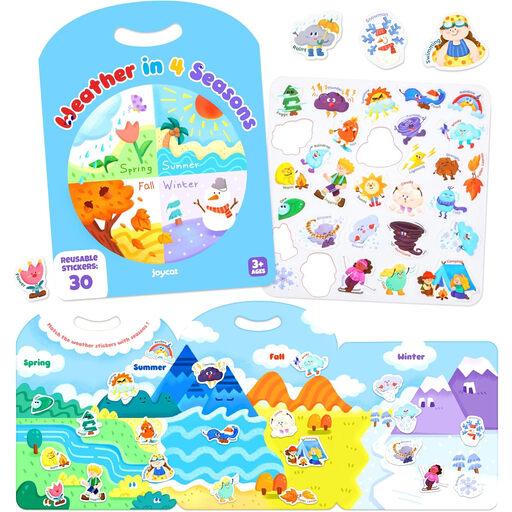
Why This Fits Their Persona: Ideal for parents looking for a clean, reusable activity for car rides, flights, or waiting at a restaurant. The compact book with a carrying handle is a perfect travel toy for kids that promotes fine motor skills and creativity without the mess.
The gel stickers are washable and stick to smooth surfaces again and again. This bypasses the "short-lived fun trap," as scenes can be redesigned and the stickers can also be used on windows or bottles.
Promotes fine motor skills, hand-eye coordination, and vocabulary through themed play. The stickers are durable, waterproof, and leave no residue.
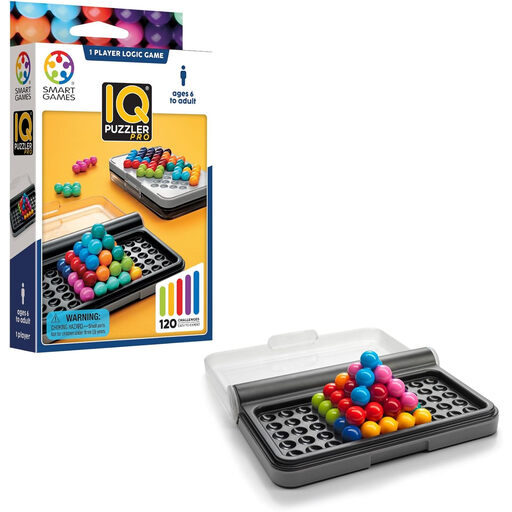
Why This Fits Their Persona: Perfect for kids who enjoy solving puzzles on their own and seek a mental challenge. This brain teaser for kids is compact and excellent for training logical thinking and problem-solving skills—at home or on the go.
With 120 challenges across three different game modes (2D and 3D), it offers enormous long-term motivation. The difficulty level increases, ensuring the game doesn't get boring and avoiding the trap of superficial learning.
Promotes concentration, logical thinking, and spatial reasoning. Its sturdy, compact design makes it an ideal travel game.
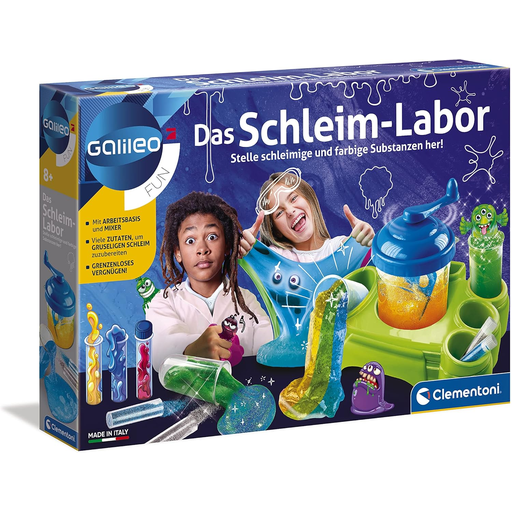
Why This Fits Their Persona: For kids who love to experiment and get creative. This STEM toy combines the fun of making slime with a safe, hands-on introduction to basic chemistry principles. It's an excellent gift idea for kids with an inquisitive mind.
Instead of a finished product, this set offers a process. The child becomes an active creator, making something themselves. This ensures deeper engagement with the subject and avoids the trap of passive consumption and fleeting fascination.
Complete lab kit with a workstation and instruments. Fosters an interest in science and creativity by mixing colours and textures.
We have compiled a complete, up-to-date list of products that fully meet these strict selection criteria and UK safety regulations.
Don't just look at the printed age range; consider the complexity of the game. A good indicator is whether the toy offers different difficulty levels or allows for free, creative play. Read the product description carefully to understand the specific motor or cognitive skills required. For puzzles, for example, the number and size of the pieces are important factors.
The key is to tap into your child's natural curiosity. Start with topics that already interest them. Do they love to build? A beginner's robotics kit could be a great choice. Are they fascinated by natural phenomena? An experiment kit about crystals or plants might spark their interest. It's important to focus on the process, not just the result. Building and experimenting together can also boost their enthusiasm.
A good travel game should meet three criteria: It must be compact and lightweight to fit easily into hand luggage. It should have few to no small, loose parts that can get lost in a car or plane. Magnetic games or games contained in a sturdy box are often a good choice. Lastly, it should be playable without extensive setup and offer high replayability to remain engaging on longer journeys.