
Lieferung heute & morgen

Qualitätsgarantie

Willkommens-Angebote freischalten: KOSTENLOSE Lieferung | Bis zu 80 % RABATT | Kostenlose 30-Tage-JoyPlus-Testphase
App herunterladen
The selection of educational toys is vast and often overwhelming. Many products promise to support a child's development, but not all live up to their advertising claims. As a parent, grandparent, or relative, you want to find a meaningful gift for toddlers that is not only a short-term delight but also safe and offers genuine value. This guide will help you navigate the common pitfalls and make an informed decision.
Before choosing a product, it's helpful to understand the most common issues that lead to disappointment and unnecessary expense.
To avoid these pitfalls, you should check three key aspects before making a purchase. These will help you objectively assess a toy's quality and value.
The manufacturer's age recommendation is a starting point. However, the actual construction is more important. For baby toys and toys for ages 1 and up, no small parts that could be swallowed should be able to come loose. Look for the CE mark, which confirms that the product meets EU requirements. Additional seals like the GS mark ("Geprüfte Sicherheit" or "Tested Safety") indicate that the product has been tested by an independent body. Materials should be non-toxic, durable, and, for toys intended for the youngest children, saliva-resistant.
Good educational toys usually focus on promoting specific skills.
A good screen-free toy often has the advantage of not inhibiting a child's concentration and creativity through passive overstimulation.
A toy is a worthwhile investment if it remains relevant over a long period. Look for products that adapt to the child's development. A tricycle with a push handle, for example, can initially be pushed by parents and later used independently by the child. Toys that allow for open-ended play concepts (e.g., building blocks) are rediscovered again and again and remain interesting for years.
Based on the criteria above, we have identified some products that are well-suited for different needs and age groups.
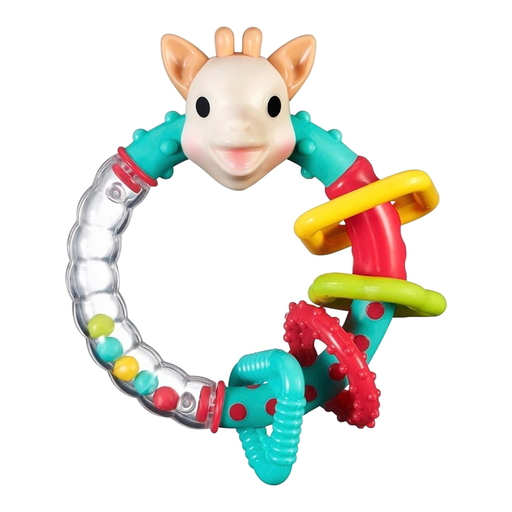
Why It's a Great Fit: Ideal for babies who are starting to grasp intentionally and explore their world with their mouths. It combines sensory stimulation (colours, sounds) with the practical function of a teether.
The design focuses on fundamental motor and sensory needs without superfluous, expensive features. Its value is clear and directly tailored to the teething and grasping stage of development.
Combines a rattle and a teether. The mix of hard and soft materials helps soothe teething discomfort.

Why It's a Great Fit: Perfect for toddlers looking to practise their fine motor and life skills. It's an ideal screen-free toy that provides quiet engagement, even while travelling.
This book-style activity board bundles numerous activities, preventing interest from fading quickly. Instead of many single-purpose toys, it offers long-lasting, varied play value in a compact form.
A 15-in-1 interactive design based on Montessori principles. It promotes practical skills like tying shoelaces, using zips, and buttoning.
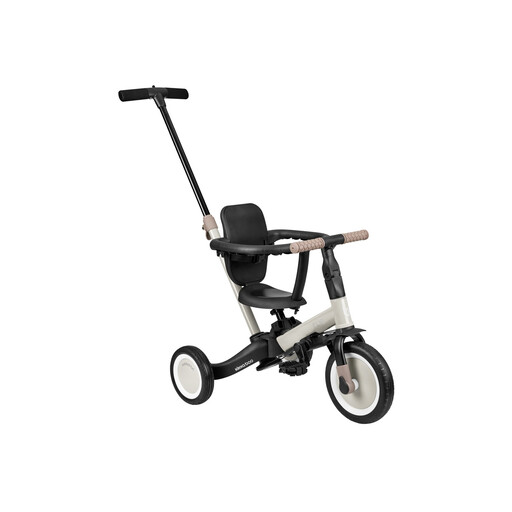
Why It's a Great Fit: An investment that brings joy for several years, supporting motor development from parent-assisted rides to independent cycling.
Instead of needing to buy a new vehicle for each growth stage, this tricycle with a push handle covers five different modes of use. This makes it an economically and practically sustainable choice.
5-in-1 functionality: It grows with your child, converting from a push-along stroller to a tricycle. The sturdy carbon steel construction ensures stability and durability.
We've compiled a complete, up-to-date list of products that fully meet these strict selection criteria and safety standards.
Look for the CE mark as a basic requirement. For added assurance, you can look for the voluntary GS mark ("Geprüfte Sicherheit" or "Tested Safety"). Physically inspect the toy: Are there any sharp edges? Does the construction feel stable? For toys intended for children under three, no small parts should come loose. For painted wooden toys, a label indicating that the paints are "saliva- and sweat-resistant" according to DIN EN 71-3 is an important quality feature.
The term is not legally protected but is based on the principles of educator Maria Montessori. Typical characteristics include:
The principle of "less is more" often applies here. Instead of overwhelming a child with toys, it is more beneficial to select a few high-quality, versatile products. Toys that stimulate the imagination and offer open-ended play opportunities (like building blocks, a workbench, or a versatile activity board) have a higher and more lasting play value than single-function products.