
Lieferung heute & morgen

Qualitätsgarantie

Willkommens-Angebote freischalten: KOSTENLOSE Lieferung | Bis zu 80 % RABATT | Kostenlose 30-Tage-JoyPlus-Testphase
App herunterladen
The selection of educational toys is vast, and manufacturers' promises are often lofty. However, not every product advertised as "educationally valuable" holds up to scrutiny. As a Joybuy Product Recommendation Officer, I see daily which products offer real value and which ones quickly end up gathering dust in a corner. This guide will help you navigate the typical pitfalls and make an informed decision that benefits both your child and your budget.
Before we dive into the selection criteria, it's important to know the most common issues that lead to disappointment.
To avoid the pitfalls mentioned above, you should check three key aspects before making a purchase. These criteria will help you objectively assess a product's quality and utility.
The choice of material is crucial. High-quality wooden toys, ideally from FSC-certified sources, are extremely durable and robust when properly crafted. Look for smoothly sanded surfaces and rounded edges. For plastic products, it's important that they are declared BPA-free and have a sturdy construction. A good motor skills toy, for example, must be easy to grip and resilient to safely serve its purpose. Always check if the product carries the CE marking, which confirms it meets EU safety standards.
The manufacturer's age recommendation is more than just a number. It is based on the average motor and cognitive skills of children at a specific developmental stage. Baby toys for a six-month-old focus on grasping, feeling, and simple cause-and-effect relationships. In contrast, a complex kids' activity table for a three-year-old would overwhelm a baby. Choose a toy that challenges your child's current abilities without causing frustration.
Some of the best purchases are those that grow with the child or serve multiple functions. A simple baby walker can later be used as a doll's pram. A kids' table and chair set isn't just for eating; it quickly becomes the hub for crafts and games. Such multifunctional products often justify a higher price point because they remain relevant for years and stimulate creativity in various ways.
Based on the criteria above, we have selected a few products from our range that are suitable for different needs and age groups.
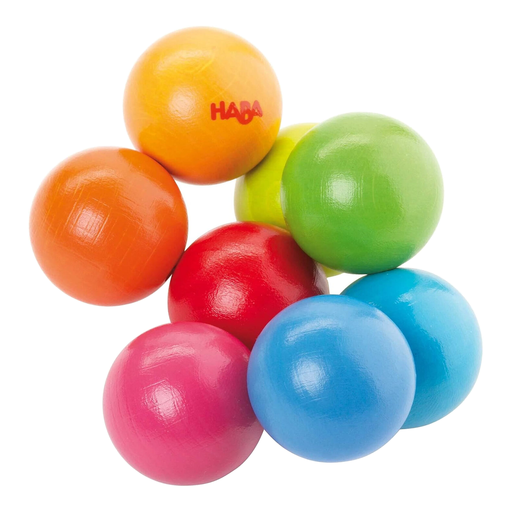
Why it's a good match: Ideal for babies from 6 months who are beginning to grasp with purpose. The design is simple yet effective for promoting hand-eye coordination and sensory perception without overstimulating the child.
This toy avoids the overstimulation trap. There are no batteries, no lights—just the clacking of wooden beads. The focus is purely on the tactile and motor experience.
Made from high-quality beech wood, this grasping toy is robust and safe. The paints are water-based, and the craftsmanship is tailored to the needs of babies.
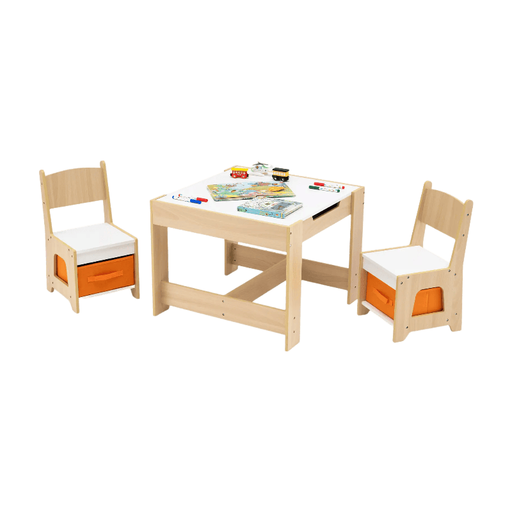
Why it's a good match: This kids' table and chair set is designed for families looking for a durable solution. It serves as a play table, art table, and small dining table, and helps keep things tidy with integrated storage.
This set avoids the short-lifespan trap. Instead of just a toy, you're investing in a piece of children's furniture that can be used for years for various activities, from painting to first homework.
The dual-sided tabletop (whiteboard/chalkboard) and hidden storage make this set extremely versatile and practical for everyday family life.
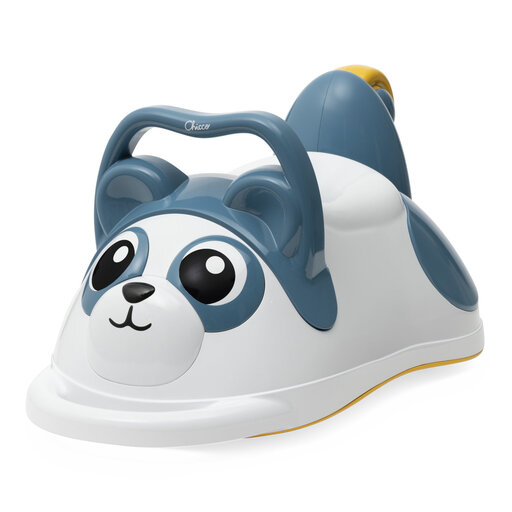
Why it's a good match: Perfect for toddlers discovering their mobility. It supports gross motor skill development by converting from a ride-on toy (from 12 months) to a push-cart (from 18 months).
Instead of an unstable walker, this product offers a stable, wide base. The evolutionary 3-in-1 design ensures it stays relevant as the child grows and develops new motor skills.
Its multifunctionality as a ride-on, push-cart, and sorting station playfully promotes both physical activity and cognitive skills.
We have compiled a complete, up-to-date list of products that fully meet these strict selection criteria and German safety regulations.
Look for the CE marking, which confirms compliance with EU safety standards. An additional, voluntary GS mark ("Geprüfte Sicherheit" or "Tested Safety") is another positive sign. Physically inspect the toy for rounded edges, a sturdy construction, and the absence of small parts that could detach (especially for toys intended for children under three).
Simple activity tables that are used while standing can be interesting for children as young as 18 months, once they can stand securely. Complete sets with chairs, i.e., a kids' table and chair set, are generally suitable for children aged three and up who can sit stably and independently and engage in activities like drawing, modeling clay, or puzzles at the table.
Use a slightly damp cloth for cleaning. Avoid immersing the wooden toy in water or using harsh chemical cleaners, as this can cause the material to swell and damage the paint. For tougher dirt, a mild soap solution can be used, but the toy should be wiped dry immediately afterward.