
Lieferung heute & morgen

Qualitätsgarantie

Willkommens-Angebote freischalten: KOSTENLOSE Lieferung | Bis zu 80 % RABATT | Kostenlose 30-Tage-JoyPlus-Testphase
App herunterladen
The selection of educational toys is vast, and manufacturers' promises are often grand. But not every toy advertised as "educationally valuable" delivers on its promise. Many products turn out to be short-lived dust collectors or even harbour hidden defects. As your Joybuy Product Recommendation Officer, I'll help you navigate the marketing jungle and make an informed decision.
Before we get to the recommendations, it's important to know the typical pitfalls that often lead to disappointment in the playroom.
To avoid a bad purchase, you should check three key aspects. These will help you objectively assess a product's quality and actual play value.
The age recommendation on the packaging is more than just a suggestion. The "Not suitable for children under 36 months" warning, in particular, is a legally binding notice indicating the presence of small parts that can be swallowed. In addition to the mandatory CE marking, also look for voluntary test seals like the GS mark ("Geprüfte Sicherheit" or "Tested Safety"). It confirms that the product has been tested by an independent body according to the German Product Safety Act (ProdSG), which goes beyond the requirements of the European toy safety standard DIN EN 71.
High-quality materials are the foundation for safe and durable toys.
A good educational toy stimulates the imagination rather than limiting it. Ask yourself: Does the toy allow for different solutions or just one? Can it be integrated into different play worlds? Building blocks, figure sets like those from Schleich, or versatile construction toys are examples of open-ended concepts. They promote creativity, problem-solving skills, and the development of fine motor skills, as should be the case with good motor skills toys.
Instead of making a blanket recommendation, we have selected products for different interests and developmental stages.

Why it's a great fit: Ideal for children who love detailed animal toys and enjoy creating complex stories. The set encourages role-playing for children and can be expanded over many years.
This set is the opposite of short-lived fascination. Its modular design and high level of detail offer endless play possibilities and allow it to grow with the child.
A comprehensive 179-piece set, including figures and two horses. The renowned Schleich quality ensures high durability.
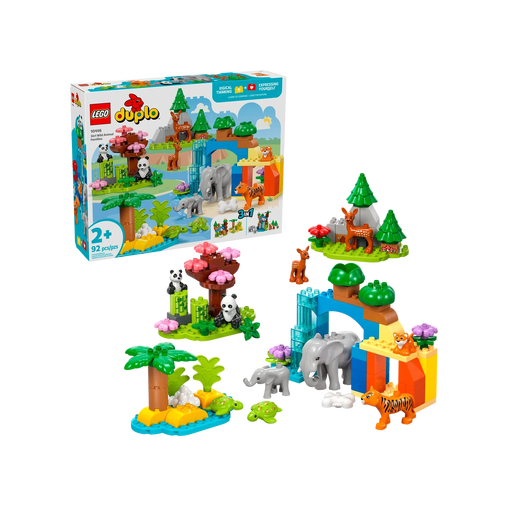
Why it's a great fit: An ideal entry into the world of creative building. It's safe for toddlers, promotes fine motor skills, and is extremely versatile thanks to its 3-in-1 concept.
As the epitome of open-ended play, LEGO DUPLO avoids the trap of short-lived fascination. The high material quality of the ABS plastic ensures safety and durability.
Encourages sorting, matching, and comparing. The set is fully compatible with the DUPLO system, offering long-term play value.

Why it's a great fit: Perfect for children aged 3 and up who love to imitate adults doing DIY tasks. It's a classic motor skills toy that trains hand-eye coordination.
This tool is more than a single-purpose toy. It becomes a central element in imaginative role-playing scenarios involving building and repairing, thus avoiding the trap of fleeting fascination.
Authentic Bosch design with realistic yet child-safe functions, including a rotating drill bit, light, and sound effects.
If you're looking for more gift ideas for children, especially in the animal toy category, we've compiled a selection of products that meet our criteria for safety and play value.
Look for the mandatory CE marking. The voluntary GS mark ("Geprüfte Sicherheit" or "Tested Safety") offers an even higher level of safety, as it requires testing by an independent body. Before buying, physically inspect the toy for sharp edges, loose parts, and sturdy construction. For children under three, it is crucial to pay attention to the warning about small parts that can be swallowed.
For durable plastic toys like PLAYMOBIL or LEGO DUPLO, wiping with a damp cloth or washing in lukewarm, soapy water is usually sufficient. Avoid harsh cleaning agents. Wooden toys should only be cleaned with a slightly damp cloth and not submerged in water, as they can swell. Always follow the manufacturer's cleaning instructions.
Simple motor skills toys, such as grasping toys, are suitable even for infants. More complex toys that specifically target fine motor skills—like stacking towers, peg puzzles, or first building blocks—are beneficial from around 1.5 to 2 years of age. The child's individual development is the most important guide here.