
Lieferung heute & morgen

Qualitätsgarantie

Willkommens-Angebote freischalten: KOSTENLOSE Lieferung | Bis zu 80 % RABATT | Kostenlose 30-Tage-JoyPlus-Testphase
App herunterladen
As a Joybuy product recommendation specialist, I see countless toys every day that are marketed as "educational." However, this term is not regulated and is often used for products that offer little more than short-lived entertainment. Choosing the right toy that genuinely supports a child's development can therefore be a challenge.
Many parents and grandparents invest in toys assuming they will boost cognitive or motor skills, only to find the expensive item lying unused in a corner after a short time. This guide is designed to help you navigate common purchasing pitfalls and make an informed decision.
Common Pitfalls When Buying Educational Toys:
To make a good choice that goes beyond fleeting interest, you should focus on objective features. These three criteria will help you separate the quality from the clutter.
The most important characteristic of any children's toy is safety. Look for the CE marking, which confirms that the product meets EU requirements. Even more telling is the EN 71 standard, which sets out specific safety requirements for toys, such as mechanical stability and chemical composition.
The manufacturer's age recommendation is not just a suggestion but an important safety notice. Especially for toys for toddlers under three, it must be ensured that there are no small parts that can be swallowed. An educational toy for ages 1 and up is designed to safely withstand the motor skills and exploratory drive of this age group.
The material affects not only the tactile feel and aesthetics but also the durability and safety.
A good educational toy stimulates the imagination instead of limiting it. So-called open-ended toys, often found in the context of Montessori toys, have no predefined way to play. Building blocks, climbing elements, or a simple play kitchen can be reinterpreted again and again, growing with the child's skills and imagination. This type of motor skills toy promotes problem-solving and creativity far more sustainably than a toy with only one function.
Based on the criteria above, we have selected a few products that are well-suited for different needs and age groups.

Why This Fits Their Persona: Ideal for toddlers who are just learning to walk. It safely supports the development of balance and coordination, which are precursors to riding a bike.
Avoids the subpar materials trap with a sturdy steel frame and a low centre of gravity that ensures stability. It's an open-ended movement toy, not a single-purpose product.
Promotes motor skill development. The ergonomic seat and side protection grips are specially designed for the needs of toddlers from 12 months onwards.
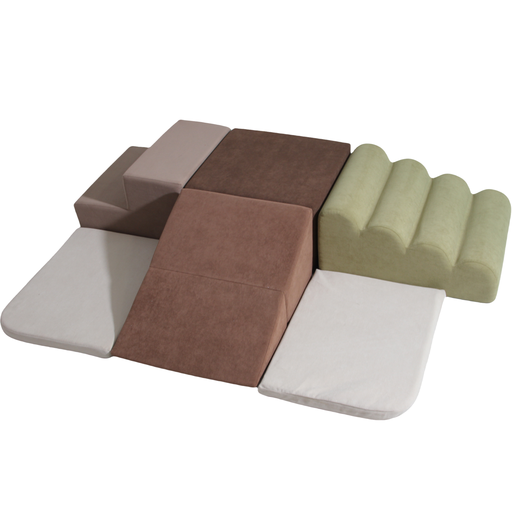
Why This Fits Their Persona: Perfect for families looking for a safe and creative indoor play option. It encourages climbing, building, and balancing without hard edges or noise.
Escapes the "single-purpose trap" with its open-ended play concept, in the style of a Montessori toy. The blocks can be endlessly recombined. The EN71 certification and washable covers address the material trap.
Fosters gross motor skills and creativity. The non-slip base and Velcro fasteners provide stability, while the covers are machine washable for easy hygiene.
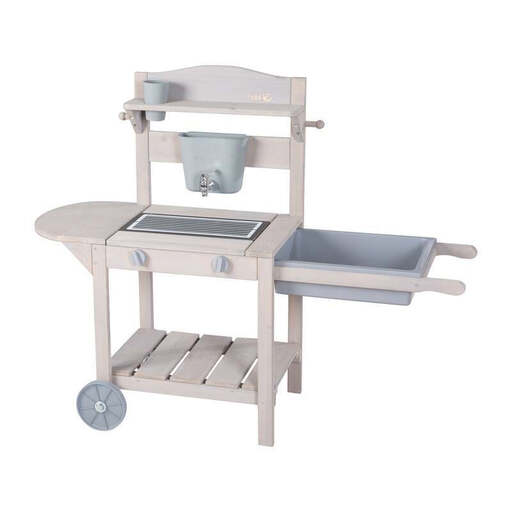
Why This Fits Their Persona: An excellent gift idea for children who enjoy being outdoors and love role-playing. This mud kitchen is designed for outdoor use but can also be used indoors.
This sturdy, weatherproof wooden toy from sustainable forestry (FSC-certified, per the manufacturer) bypasses the subpar materials trap. Its multifunctionality (grill, sink) prevents short-lived fun.
Encourages social role-playing and creativity. It's mobile thanks to its wheels. The water container with a working tap and the removable basin allow for realistic play with water and sand.
We've compiled a complete, up-to-date list of products that fully meet these strict selection criteria and European safety standards.
Look for the CE marking and, ideally, the EN 71 standard. Check the manufacturer's age recommendation to ensure the toy matches your child's developmental stage. Before purchasing, inspect the product for sharp edges, loose parts, or a strong chemical smell. For toys intended for children under three, it is especially important that there are no small parts that can be swallowed.
Wooden toys for indoor use should only be wiped with a slightly damp cloth. Avoid harsh cleaning agents, as they can damage the wood and finish. While an outdoor mud kitchen is weather-resistant, its lifespan will be extended if it is covered or stored in a dry place when not in use. Water containers should always be emptied after play to prevent material damage and the build-up of germs.
An open-ended play concept means the toy has no fixed purpose or single "correct" solution. Unlike a puzzle that can only be assembled one way, open-ended toys like building blocks, cloths, or simple figures can be used in countless ways—as a tower, a house, an animal, or part of a fantasy world. This principle fosters the child's creativity, abstract thinking, and problem-solving skills, as they don't just replicate but become the inventor themselves.