
Lieferung heute & morgen

Qualitätsgarantie

Willkommens-Angebote freischalten: KOSTENLOSE Lieferung | Bis zu 80 % RABATT | Kostenlose 30-Tage-JoyPlus-Testphase
App herunterladen
As a Joybuy Product Recommendation Officer, I see countless toys every day. My job is to separate the wheat from the chaff and give you objective, practical advice. A good educational toy can play a key role in a child's development, but the market is flooded with products that over-promise and under-deliver. This guide will help you avoid common pitfalls and make an informed choice.
Before we look at the positive qualities, it's important to know the most common reasons for a bad buy. This will help you distinguish marketing hype from real value.
To avoid the pitfalls mentioned above, you should check three crucial criteria before buying. These will help you objectively assess the quality and long-term play value of a product.
The child's safety is the highest priority. Look for the CE mark, which confirms that the product meets EU requirements. Even more telling is the explicit mention of the EN 71 standard, the European standard for toy safety.
A commonly used, robust material is ABS plastic. It is known for its durability and resistance to breaking and is considered non-toxic. For toddler toys, it's also important to ensure they have rounded edges and are made without small parts that could be swallowed, especially if the child is under 36 months old.
The manufacturer's age recommendation is more than just a safety guideline. It also indicates whether a toy matches the child's cognitive and motor skills. A toy that is too simple becomes boring quickly, while one that is too challenging leads to frustration.
Toys that enable open-ended play concepts are particularly long-lasting. Construction toys like building blocks or magnetic tiles and creative toys give children space for imagination and can be rediscovered in new ways for years.
Good educational toys often focus on a specific area of development.
Here are some product recommendations tailored to different needs and age groups that meet the criteria mentioned above.
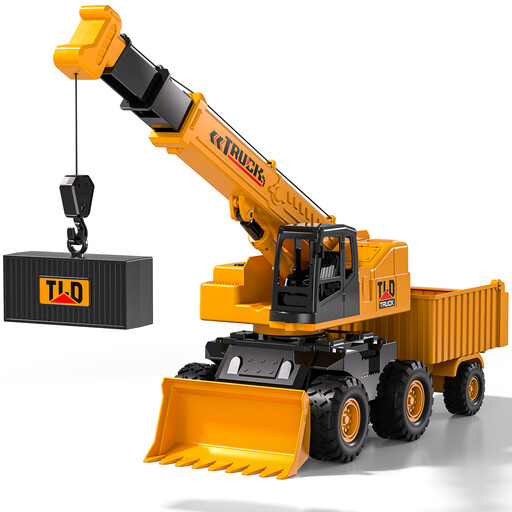
Why It's a Great Fit: Ideal for children who love role-playing and enjoy taking things apart and putting them back together. It promotes an understanding of simple mechanics and offers long-lasting engagement through its various functions.
This toy escapes the "short-lived fascination" trap by being a construction toy with 5 functions (crane, hook, dumper, shovel), offering diverse, open-ended play opportunities. It is made of durable ABS plastic.
Promotes fine motor skills through the manual operation of all parts. It requires no batteries, enabling screen-free play.
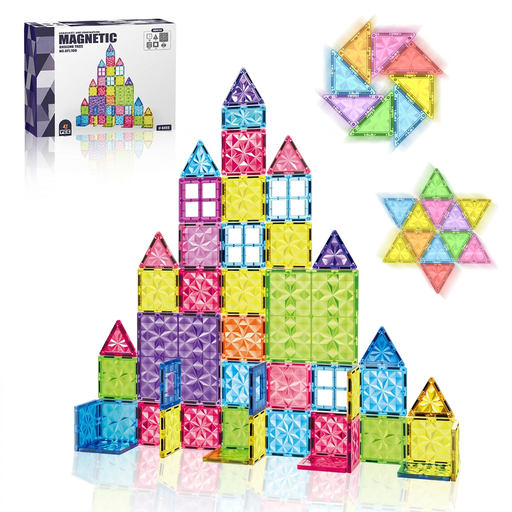
Why It's a Great Fit: A classic STEM toy that promotes spatial reasoning, an understanding of geometry, and creativity. The magnetic attraction makes building easy and motivating for children.
As an open-ended building system, it offers endless possibilities and thus long-lasting play value. The product description notes compliance with the EN71 safety standard and the use of ABS plastic with securely sealed magnets.
Fosters STEM skills in an intuitive way. Compatible with other common magnetic building blocks, allowing for set expansion.
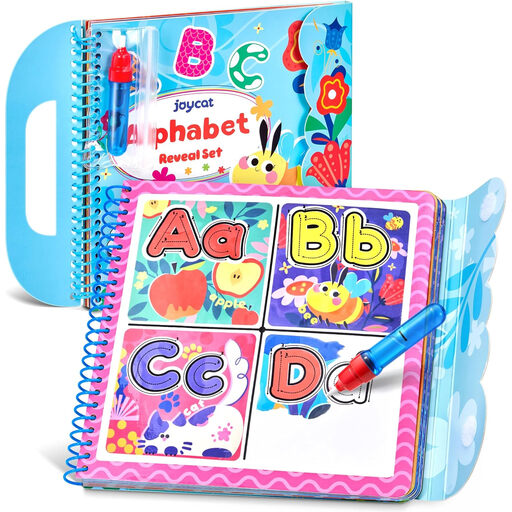
Why It's a Great Fit: Perfect as a gift for kids or a travel companion. It combines creative painting with learning letters, all without making a mess. Ideal for quiet time in the car, on a plane, or at a restaurant.
This creative toy is reusable—the pages dry and can be colored again and again. This avoids the single-use trap and offers long-lasting value. It works only with water, making it completely safe and clean.
No mess, no stains. The book is compact, has a carrying handle, and a holder for the water pen, making it highly portable.
We've compiled a complete, up-to-date list of products that fully meet these strict selection criteria and German safety regulations.
1. How can I identify safe educational toys? Look for the CE mark on the packaging, which confirms compliance with EU directives. An explicit mention of the EN 71 safety standard is another positive sign. Check the toy for sturdy construction, durable materials (e.g., ABS plastic), rounded edges, and, for electronic toys, securely screwed-in battery compartments.
2. From what age are STEM toys useful? Simple construction toys like wooden blocks can introduce toddlers to basic physical principles like gravity. More structured STEM toys that deal with magnetism, simple circuits, or basic programming logic are generally suitable for preschool-aged children (around 4-5 years). The key is that the toy matches the child's developmental stage and is not overwhelming.
3. How do I clean educational toys made of different materials? Always read the manufacturer's care instructions first. As a general rule: toys made of smooth plastic can be cleaned with a damp cloth and mild soap. Untreated wooden toys should only be wiped dry or with a lightly damp cloth to prevent swelling. Electronic toys should never be submerged in water; clean the surface carefully with a dry or slightly damp cloth.