
Lieferung heute & morgen

Qualitätsgarantie

Willkommens-Angebote freischalten: KOSTENLOSE Lieferung | Bis zu 80 % RABATT | Kostenlose 30-Tage-JoyPlus-Testphase
App herunterladen
Finding the right toy can be a complex task. The market is flooded with products advertised as "educational," but not all of them deliver on their promise. As a parent, grandparent, or gift-giver, you want to make a choice that not only brings joy but also meaningfully supports a child's development. This guide will help you recognise common marketing traps and focus on the quality features that truly matter.
Before you invest, it's wise to understand the typical problems that often only become apparent after the purchase.
To avoid a bad purchase, you should focus your attention on three objective parameters that define a good educational toy.
Safety is non-negotiable. Look for the CE mark, which confirms that the product meets the EU's essential health and safety requirements (e.g., the EN 71 Toy Safety Directive). For wooden toys, an FSC seal is an indicator of wood from responsibly managed forests. The materials should be robust, non-toxic, and safe for the respective age group—which, for developmental baby toys, specifically means no small parts that could be swallowed.
A good educational toy challenges a child without overwhelming them. For toddlers from one year old, motor skills toys that train basic abilities like grasping, plugging, or stacking are ideal. A great example is toys for fine motor skills, which train hand-eye coordination. In the spirit of Montessori toys, the product should enable the child to learn independently and understand concepts through trial and error, rather than just passive consumption.
A high-quality toy offers various play incentives and can be used over a longer period. Stacking cubes can be used for building, learning to count, or sorting. A mud kitchen for the garden can become an indoor craft table in the winter. This versatility often justifies a higher purchase price, as the toy "grows with the child" and doesn't lose its relevance after a few months.
Here are some product recommendations tailored to specific profiles that meet the criteria mentioned above.
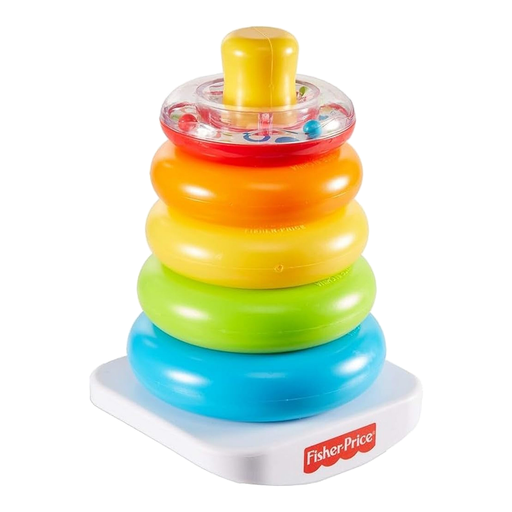
Why This Fits Their Persona: Ideal for babies who are starting to use their hands with purpose. The simple, colourful rings are easy to grasp and promote basic motor skills and hand-eye coordination in a simple and effective way.
This toy is a classic that has stood the test of time. It's not a short-lived trend but a robust, open-ended toy that allows for sorting by size and stacking, thus offering long-lasting play value.
Promotes fine motor skills and an early understanding of size relationships. Made from sustainable plastic materials that are safe for babies.

Why This Fits Their Persona: Perfect for toddlers who love to mimic everyday activities. This busy book offers a variety of tasks like zippers, buttons, and laces that specifically train fine motor skills. An ideal gift for toddlers.
Instead of a single function, this book offers 15 interactive activities. It is made of soft, durable felt, avoiding the trap of fragile plastic toys. Its quiet nature makes it an ideal travel companion.
Teaches practical life skills in a playful way. The compact and lightweight design makes it perfect for travel or quiet playtime at home.
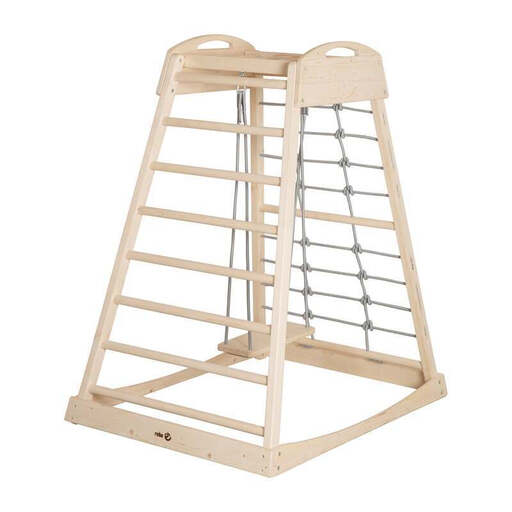
Why This Fits Their Persona: For children with a high need for movement. This climbing frame, based on Montessori principles, promotes gross motor skills, strength, and coordination in a safe indoor environment. It offers a constructive alternative to climbing on the sofa.
Instead of being a single-purpose item, this tower offers multiple functions (climbing, swinging, gymnastics). The solid wooden toy construction is designed for durability and can support up to 70 kg, ensuring long-term use.
Promotes physical development and self-confidence. The modular design with an interchangeable swing and optional slide provides varied and long-lasting fun.
If you'd like to explore more products that meet our selection criteria, you can find a broader collection of vetted toys here.
Look for the CE mark on the packaging. Inspect the toy for rounded edges and sturdy construction. For toys intended for children under three, there must be no small parts that could detach and become a choking hazard. Trustworthy manufacturers also provide transparent information about the materials used.
The term refers to the educational philosophy of Maria Montessori. A Montessori toy is often made from natural materials like wood and is characterized by a simple, clean design. It is intended to encourage children to discover and learn independently. Instead of overstimulating with lights and sounds, it promotes concentration and the development of practical skills at a self-directed pace.
Less is often more. Instead of constantly buying new toys, it is more sensible to invest in a few high-quality, open-ended ones. Products like building blocks, a play kitchen, or a climbing frame can be played with in new ways for years. A good strategy is toy rotation: remove some toys from the play area for a few weeks and bring them back later. This reawakens interest without requiring additional purchases.