
Lieferung heute & morgen

Qualitätsgarantie

Willkommens-Angebote freischalten: KOSTENLOSE Lieferung | Bis zu 80 % RABATT | Kostenlose 30-Tage-JoyPlus-Testphase
App herunterladen
Educational toys for children should do more than keep them occupied. They should also suit their age, interests and the family’s everyday circumstances. However, there are clear differences between educational toys, creative toys, construction toys and activity toys for toddlers.
Anyone who focuses solely on colourful packaging, a large number of individual parts or advertising claims such as “promotes learning through play” can overlook important buying criteria. Three common pitfalls occur particularly often:
The manufacturer’s age recommendation is an important starting point, but it does not replace parental judgement. With puzzles for children, for example, large, easy-to-grip pieces are easier for beginners to handle. Magnetic tiles and construction toys, on the other hand, often contain small components.
Strong magnets deserve particular attention. If magnets are swallowed, they can cause serious injury. With magnetic toys, parents should check that the magnets are securely enclosed and that no housings or components have been damaged. If there are visible cracks, loose parts or exposed magnets, the product should no longer be used.
ABS plastic is often used for building blocks and construction toys. Important features include smooth edges, secure connections between individual parts and clear material information. Craft sets often contain wood, paper, plastic components or textiles. Here, you should check whether tools, small parts or sharp points are included.
Cleaning is also part of the selection process. Some products may only be cleaned with a dry cloth, while textile activity toys may have different care instructions. Suitable storage, such as a tin, bag or box, helps reduce the risk of individual parts being lost.
A Montessori toy or STEM toy can encourage sorting, building, matching or problem-solving. The key question, however, is whether the child can already carry out these activities independently or needs support.
For travel and waiting times, compact products with their own storage are ideal. For playing together, sets with several components or cooperative tasks are a sensible choice. A DIY craft kit is better suited to children who enjoy creating things and can concentrate for longer periods. For babies and toddlers, simple, sturdy activities that can be supervised are generally more suitable than delicate model-building kits.

Why this product suits this profile: The set contains 32 magnetic components measuring 3.75 cm and comes in a metal tin. It offers a manageable introduction to magnetic construction and can be packed away for travel.
The limited number of pieces makes the set easier to manage. The packaging also serves as storage; the age recommendation of 3+ and the magnet warning should be observed.
32 pieces, ABS plastic, smooth edges and a compact metal tin; no batteries required.
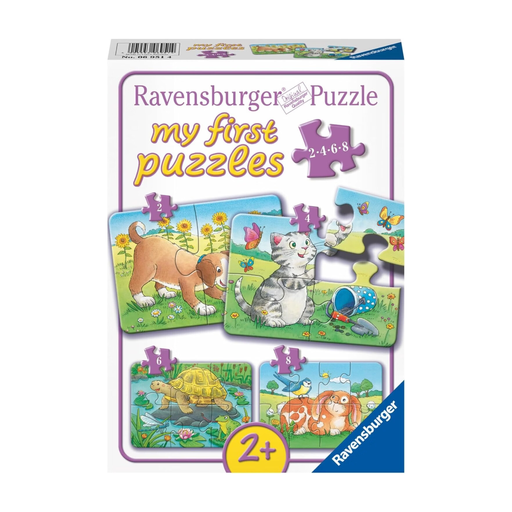
Why this product suits this profile: Four puzzles with increasing levels of difficulty and sturdy cardboard pieces are designed for children aged 2 and over. The pet-themed pictures provide a clear, calm introduction.
The graduated number of pieces ensures that the set is not limited to just one level of difficulty. According to the manufacturer’s information, no batteries are needed and the puzzles should be cleaned with a dry cloth.
Age recommendation of 2+, four puzzles, easy-to-grip cardboard pieces and manufactured in Germany according to the product information.

Why this product suits this profile: This fabric activity book is recommended for children aged 1 to 3 and includes 15 different activities, such as zips, buttons, lacing and hook-and-loop fasteners.
The format is designed for quiet play and does not require batteries. Because of the recommended age range and the possibility of small parts, adult supervision remains important.
Felt material, reinforced stitching, a compact format and activities inspired by everyday life.
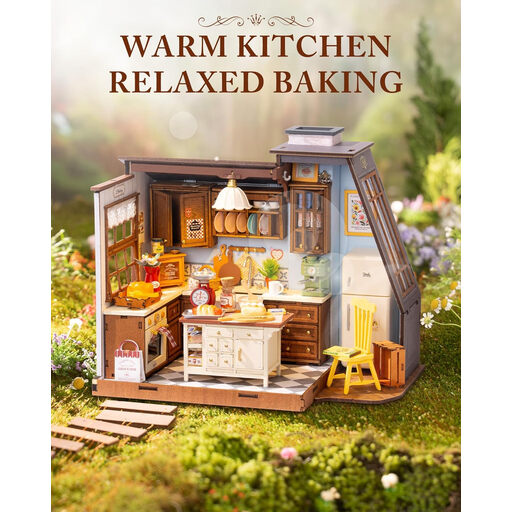
Why this product suits this profile: According to the product information, this miniature kit is intended for people aged 14 and over. Its 62 laser-cut wooden pieces create a kitchen scene measuring approximately 13.5 × 5.5 × 15 cm.
The clear age classification distinguishes this kit from activity toys for toddlers. Small, delicate parts and functional pointed components require careful handling and safe storage.
62 wooden pieces, no glue required according to the product information, a static model and the option to use it as decoration.
We have put together a complete, regularly updated list of products that fully meet these strict selection criteria and the safety regulations applicable in the EU.
For toddlers, products with large, sturdy and securely attached parts are worth considering. An activity book with buttons, zips or lacing can offer practical skills inspired by everyday life. Check the specific age recommendation, any small parts and the level of supervision required before buying.
Lifespan depends on the material, usage and care. ABS building blocks should be checked regularly for cracks and loose magnets. Puzzles generally last longer when stored in a dry place and handled carefully. Textile products should be protected from moisture and naked flames. Damaged parts should be removed from the play area.
Many puzzles, magnetic tiles, DIY craft kits and wooden toys work without batteries. With electronic products, parents should check whether batteries are included, which type is needed and whether replacement batteries will be required. Consumables such as glue, paints or additional craft materials can also affect future costs.