
Lieferung heute & morgen

Qualitätsgarantie

Willkommens-Angebote freischalten: KOSTENLOSE Lieferung | Bis zu 80 % RABATT | Kostenlose 30-Tage-JoyPlus-Testphase
App herunterladen
Educational toys for children should do more than keep them occupied. They should also suit their age, interests and the family’s everyday routine. Educational toys, children’s puzzles, construction toys and creative DIY toys can differ considerably in terms of their purpose, materials, space requirements and safety considerations.
To avoid disappointment after a short time, it is worth looking at specific product details rather than relying on general marketing claims.
“From 3 years” does not automatically mean that a toy is suitable for every three-year-old child. Other important factors include the number and size of the pieces, the fine motor skills required and whether the child can understand the instructions independently.
A challenging logic game may be suitable for an older child, while a construction toy with small connecting parts should only be used under supervision by younger children.
Lights, music and Bluetooth may be appealing, but they are not necessarily an advantage for every child. Additional features may require batteries, distract from the actual purpose of the game or limit where it can be used.
When choosing educational games for children, first ask what the child will actually do: build, sort, combine, tell stories, make things or play together? Technical extras are easier to assess afterwards.
A comprehensive craft kit for children needs space and a way to keep everything organised. With puzzles and card games, missing pieces can quickly become a problem. For train journeys or holidays, compact products with a closed case are usually more practical than large game boxes.
For children’s games from 2 years, large, easy-to-grip pieces, simple pictures and short play sessions are a good choice. According to the product details, the Ravensburger “My First Puzzle” set is intended for children from 2 years and contains four puzzles with increasing levels of difficulty. For children from 6 years, more complex logic tasks or cooperative board games may be suitable. Games from 6 years should still be assessed in terms of reading ability, playing time and number of players.
Check the material information, look for rounded edges and read the safety instructions. Small parts can pose a choking hazard, and many products are not suitable for children under 3 years. With wooden toys, the surface should be free from visible splinters. For plastic products, material details such as ABS or BPA-free can be helpful, but they do not replace checking the manufacturer’s information and packaging warnings.
The CE marking indicates that the manufacturer has taken the relevant EU requirements into account. However, it is not a quality seal and, on its own, says nothing about a toy’s educational value or durability.
Check whether batteries are required, whether replacement materials will be needed and how much space the game will take up in everyday life. A battery-free puzzle or card game does not incur ongoing energy costs after purchase. For products with light and sound features, pay attention to the battery compartment, battery type and safe storage.
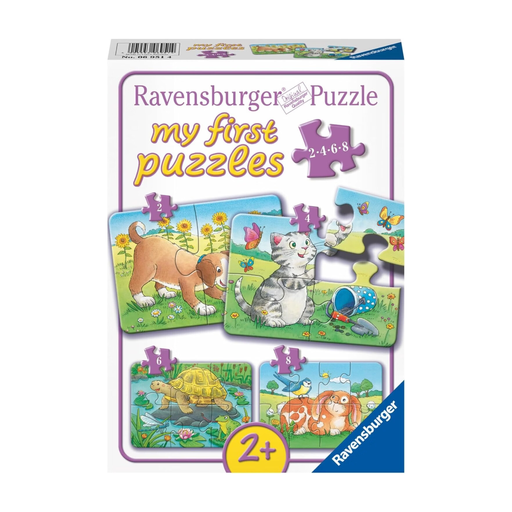
Why this product suits this profile: Four pictures with increasing levels of difficulty provide an easy introduction to puzzles for children from 2 years. The set does not require batteries and is suitable for playing at a table.
The age group and increasing level of difficulty are clearly stated. The sturdy cardboard pieces are designed for small hands; the safety instructions should nevertheless be followed.
Four puzzles, paper or cardboard as the main material, and a battery-free design.
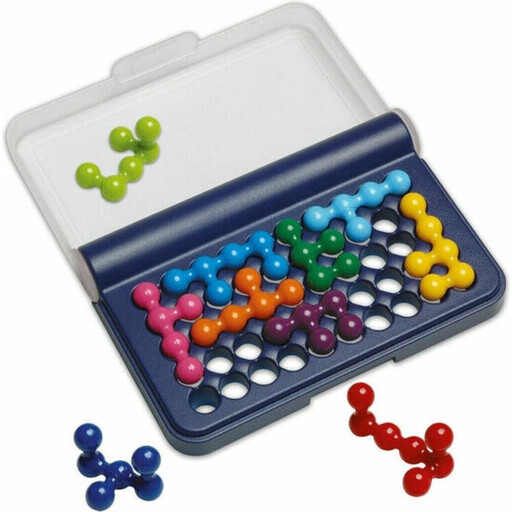
Why this product suits this profile: This compact single-player game is intended for children from 6 years and can be played with a booklet of challenges at different levels of difficulty.
It focuses on spatial challenges rather than constantly changing additional features. The case, measuring 9,8 × 3,2 × 14,4 cm, makes storage and transport easier.
Designed for one player, made from ABS plastic and usable without batteries.
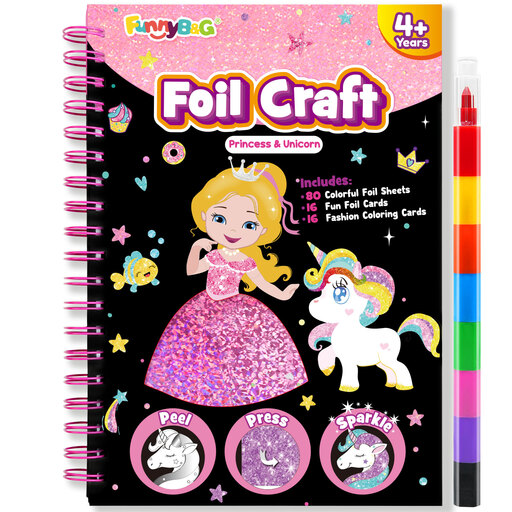
Why this product suits this profile: The set is specified for children aged 4 to 10 and is suitable as a quiet activity at home or as a travel toy for longer journeys.
According to the product description, the foils are applied without glue or scissors. This keeps cleaning to a minimum, although the many individual pieces should still be stored safely and completely.
112 components according to the product details, including foils, design sheets and a rotating pen with eight colours.
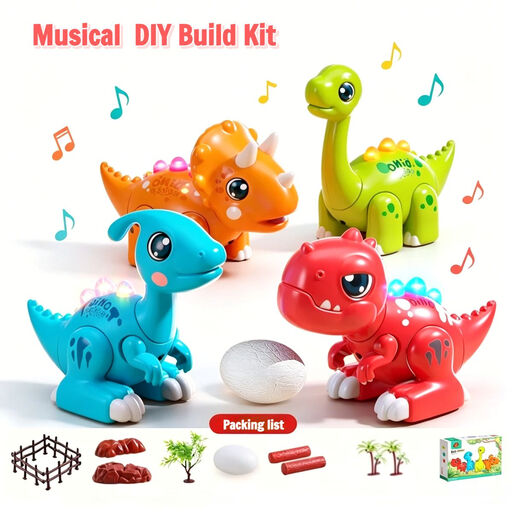
Why this product suits this profile: The set combines screwing or connecting parts together with imaginative play afterwards. It is ideal for children who enjoy combining construction toys with dinosaur stories.
The fun does not end once the model has been built: four dinosaurs and additional landscape pieces create opportunities for further play scenarios. Small parts and button cells mean that the warnings must be followed and children supervised.
ABS plastic, four dinosaurs and light and sound features according to the product description; intended for ages 3 to 6.
We have put together a complete, regularly updated list of products that fully meet these strict selection criteria and the safety regulations applicable in the EU.
Depending on the child’s age and the situation, other product groups may also be worth considering:
For children from 2 years, large, easy-to-grip pieces, simple matching games and age-appropriate puzzles are usually suitable. Check the recommended age group, piece size and any warning about a possible choking hazard. An adult can provide support during the first few games.
How long a toy remains usable depends on its materials, storage and play concept. Cardboard puzzles should be stored in a dry place, while plastic parts should be checked regularly for damage. Products with several levels of difficulty or open-ended play scenarios may remain interesting for longer than games with just one fixed sequence.
Battery-free puzzles, card games and many logic games do not normally incur ongoing energy costs. Toys with lights or sound may require batteries. Families should also check whether consumables such as paper, adhesive foils or replacement parts need to be purchased.