
Lieferung heute & morgen

Qualitätsgarantie

Willkommens-Angebote freischalten: KOSTENLOSE Lieferung | Bis zu 80 % RABATT | Kostenlose 30-Tage-JoyPlus-Testphase
App herunterladen
Children’s games and educational toys should entertain, encourage children to try things out and suit their stage of development. In practice, however, products are often chosen because they look appealing, yet fail to deliver in everyday use. The right choice therefore considers more than just the theme or price. It also takes into account age recommendation, materials, contents, safety information and intended use.
“From 4 years” does not automatically mean that every four-year-old can use the game without help. Language skills, fine motor skills and attention spans vary. A game with lots of rules may be too demanding for one four-year-old, while another child may already be able to play independently.
When choosing children’s games and board games, parents should also check:
Terms such as “STEM”, “educational game” or “encourages creativity” initially describe only a possible type of play. They do not replace information about materials, game mechanics or contents. Magnetic building blocks, for example, can support spatial thinking and fine motor skills when children are genuinely able to build and modify things independently. A puzzle can help develop concentration and shape recognition, provided the difficulty level is appropriate.
Such effects are not medical or therapeutic claims. What matters is whether the child wants to play with the product willingly and regularly.
For children’s card games or construction toys, the number of cards, components or accessories can have a major impact on the play value. A compact game with just a few components is often ideal for taking on the go. For regular building projects, however, a larger set may be more suitable. Storage should also be considered: a bag or metal box helps keep the pieces organised and reduces the risk of losing them.
The age rating on the packaging is a useful first guide. Educational games from age 4 are generally best when they involve short, easy-to-understand sequences. From around age 6, cooperative puzzles, more challenging children’s puzzles and themed board games can be added. Older children within the target age range may also enjoy more complex card games and family games.
The number of players determines how practical a game is for everyday use:
A stated playing time of around 10 to 30 minutes often fits into family life better than a game without a clear time frame.
When buying toys, parents should look for the CE marking, manufacturer information, warnings and compliance with the relevant EU requirements. The CE marking is a manufacturer’s declaration that the product complies with applicable EU regulations; it is not an independent quality mark.
Particular attention should be paid to:
The warning is particularly important for magnetic building blocks: swallowed magnets can cause serious injuries. Pieces should be checked regularly for cracks, loose magnets and damaged casings.
Card games, puzzles and construction sets benefit from a dedicated storage solution. A sorting box or supplied bag makes it easier to put everything away neatly. For plastic parts, a soft, slightly damp cloth is often sufficient; the manufacturer’s instructions should always be followed. Cardboard should be stored in a dry place.
When buying construction toys, it is also worth checking compatibility. Different block sizes and magnetic systems cannot always be safely connected to one another.
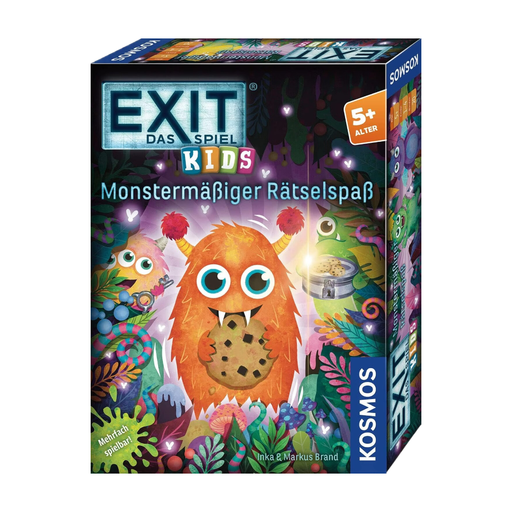
Why this product suits this profile: For families looking for a compact puzzle game to enjoy together on an afternoon. It is suitable for 1 to 4 players aged 5 and over and requires no batteries.
The number of players, age recommendation and optional app use are clearly stated. The game can also be played without the app.
Child-friendly puzzle mechanics, easy-to-understand rules and a format for 1 to 4 players.
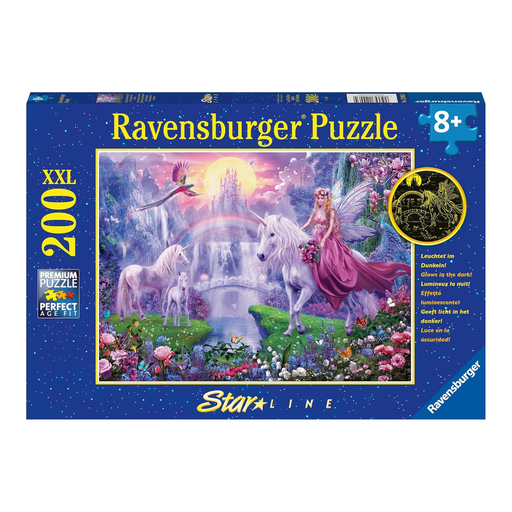
Why this product suits this profile: An option for children aged 8 and over who prefer a quiet individual project with a clear end result.
The number of pieces, finished size of 33 × 21 cm and age recommendation make it easier to assess the level of difficulty.
200 XXL pieces, a glow-in-the-dark design and dry storage listed as a clear care requirement.
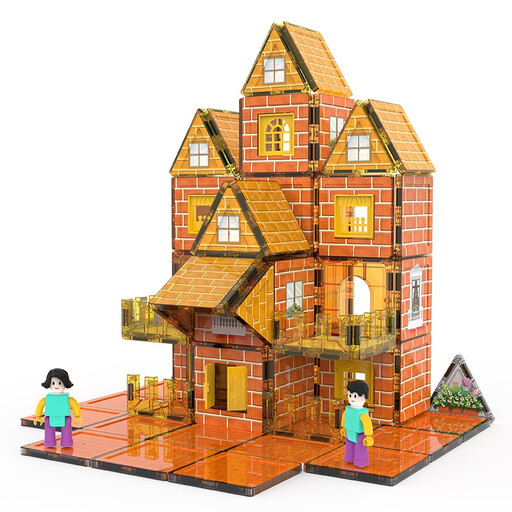
Why this product suits this profile: For children aged 3 and over who enjoy open-ended building. The set contains a range of basic shapes, 81 pieces and a storage bag.
The product information specifies the material, number of pieces, magnet warning and regular checks. Due to the magnets, supervision is particularly important.
81 pieces, 7.5-cm building blocks, sealed magnets according to the product description and a storage bag.

Why this product suits this profile: A gift for children aged 6 and over who enjoy performing in front of others and following step-by-step instructions.
The contents list 25 tricks, accessories and instructions. Small parts require the supervision stated on the packaging.
Magic hat, plush rabbit, magic wand and additional accessories; the instructions progress from simple to more advanced tricks.
We have put together a complete, regularly updated list of products that fully meet these strict selection criteria and the safety regulations applicable in the EU.
From age 4, short games with just a few rules, picture matching, simple counting tasks or reaction-based mechanics may be suitable. A manageable playing time is important, as is the option for an adult to guide the first round. Small parts and magnets should be checked especially carefully.
Durability depends on the thickness of the card, workmanship, storage and handling. Puzzles should be stored flat in a dry place. For board games and card games, a box is recommended to keep all the components together. Damaged pieces should no longer be used if they create a risk of injury or swallowing.
Many children’s puzzles, magnetic building blocks and traditional board games require neither batteries nor additional software. Some games may offer optional apps; before buying, check whether an app is required and which languages are available. For battery-powered products, the battery type and the contents are relevant purchasing criteria.