
Lieferung heute & morgen

Qualitätsgarantie

Willkommens-Angebote freischalten: KOSTENLOSE Lieferung | Bis zu 80 % RABATT | Kostenlose 30-Tage-JoyPlus-Testphase
App herunterladen
Educational toys for children should do more than keep them occupied. They should also suit the child’s age, abilities and everyday life. However, there is often a gap between bold claims such as “supports development” and genuinely useful product features. Parents, grandparents and other family members should therefore take a closer look before buying.
A toy with lights, music, buttons and moving elements may appear versatile. For babies and toddlers, however, an overloaded design can be confusing. What matters is whether the features are easy for the child to access independently and whether they can understand cause and effect.
With an activity cube for toddlers, easily accessible controls, a stable shape and a clear layout are therefore more important than having the longest possible list of features.
Small parts, magnets or complex tasks may be unsuitable for younger children. The age recommendation is not merely a marketing detail; it should be considered alongside the safety information. Even with products officially deemed suitable, supervision remains advisable for babies and toddlers.
For example, a children’s puzzle from age 2 needs larger pieces that are easy to grip. Magnetic building blocks for children with small components are generally intended for children aged 3 and over.
Toys are often used on the floor, in a child’s bedroom or while out and about. Damage, loose parts or surfaces that are difficult to clean can limit how practical a toy is. Before buying, check the material, cleaning requirements, storage options and any areas that may be prone to wear.
Choose educational toys according to your child’s current stage of development:
The age recommendation does not replace supervision. Pay particular attention to the toy when several children of different ages are playing together.
For plastic toys, smooth, burr-free edges, a sturdy construction and enclosed housings are important features. With wooden toys, check the surface, paintwork and any areas where splinters could occur. The same applies to all products: toys with cracks, detached parts or damaged magnet housings should no longer be used.
Information such as CE and EN71 should be clearly provided in the product description. Such labelling is an important point of reference, but it does not replace checking the product yourself for damage or following the instructions for use.
Baby musical toys and interactive products often require batteries. Check before buying whether these are included. For products with music or light effects, parents should also check whether the volume can be adjusted and whether the toy is suitable for the intended environment.
Wipe-clean surfaces and space-saving storage are practical features. A portable container or storage box can help prevent small parts from getting lost.
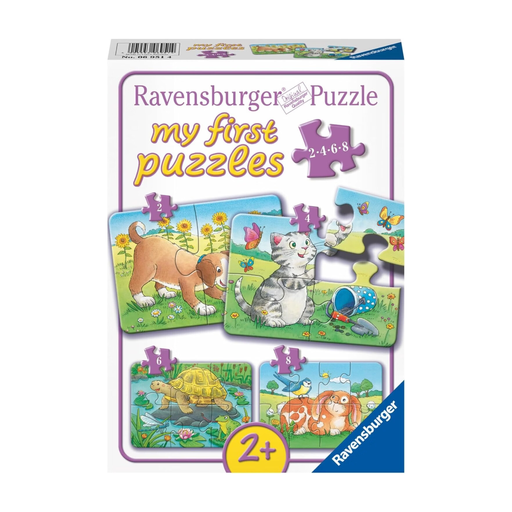
Why this product suits the profile: This set is designed for children aged 2 and over and includes four puzzles with increasing levels of difficulty. This allows children to build up their skills gradually.
The age recommendation, number of pieces and sturdy cardboard materials are clearly stated. There are no batteries or additional electronic features.
Four images with different levels of difficulty; large, sturdy puzzle pieces for beginners.

Why this product suits the profile: This cube combines several hands-on and musical play options in a compact format. It is listed as being made from ABS plastic, with rounded edges and dimensions of 23 × 23 × 24 cm.
The features are accessible directly on the cube and require no assembly. Check the product page before buying to confirm whether batteries are included and whether the volume is adjustable.
Eight play areas; carry handle and compact dimensions for use at home or on the go.

Why this product suits the profile: The 32 magnetic pieces are stored in a tin box. This makes the set suitable for travelling, visiting friends and family, or households where tidy storage and easy transport are important.
The piece size of 3.75 cm and recommendation for ages 3 and over are stated. If the casing is damaged or magnets are visible, the set must be taken out of use.
32 geometric pieces; storage in a portable tin box; for creating two-dimensional patterns and three-dimensional constructions.
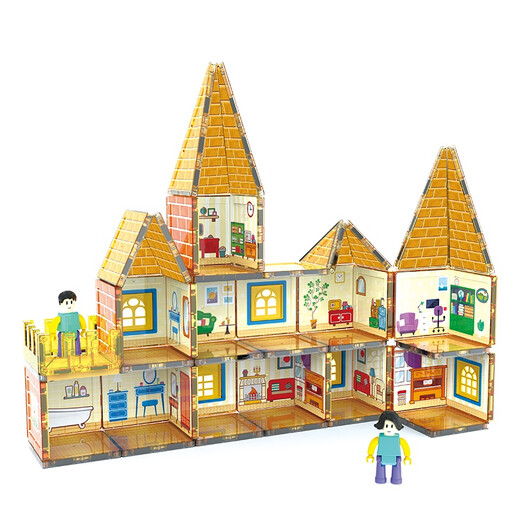
Why this product suits the profile: This set is aimed at children aged 3 and over who enjoy building houses, gardens and neighbourhoods. The themed elements encourage open-ended role play in small groups.
The age recommendation and warning about small parts and strong magnets are clearly stated. Damaged pieces should no longer be used.
58 pieces with roof and decoration elements; suitable for themed buildings and open-ended constructions.
We have put together a complete, regularly updated list of products that fully meet these strict selection criteria and the safety regulations applicable in the EU.
A realistic approach is helpful with educational toys too: a toy does not need to develop every skill at once. A simple motor skills toy or puzzle may be more useful than a product with numerous unused features.
For babies from around 6 months, consider large, easy-to-grip and robust products. Sensory toys for babies featuring movement, simple sounds or clearly visible light effects can support shared playtime. Battery compartments and housings should be enclosed. Small parts must be kept out of babies’ reach.
How long a toy remains useful depends on the level of play, not just the stated age. An activity cube can be used in different ways throughout the toddler years. Magnetic building blocks and construction toys often remain engaging as children learn to build increasingly complex shapes. Regardless of how long the toy has been in use, check it regularly for cracks, loose parts and visible magnets.
Not automatically. A suitable gift for children takes into account their age, interests, existing toys and home environment. A manageable puzzle may suit a two-year-old, while a three-year-old may benefit more from wooden toys, vehicles or magnetic building pieces. The key factors are clear product information and a play objective that suits the child.