
Lieferung heute & morgen

Qualitätsgarantie

Willkommens-Angebote freischalten: KOSTENLOSE Lieferung | Bis zu 80 % RABATT | Kostenlose 30-Tage-JoyPlus-Testphase
App herunterladen
Educational toys for children should be entertaining, encourage independent discovery and suit their stage of development. In practice, however, product descriptions often sound more convincing than how suitable the toy is for everyday use. Parents, grandparents and other family members should therefore look at specific details rather than general promises.
“Toddlers” does not describe one uniform stage of development. A toy with small shapes to slot into place may be unsuitable for a one-year-old, while a sturdy shape-sorter or sound toy may be suitable for the same age. The key factors are the specific age recommendation, any small parts and the amount of hand strength required.
The “from 3 years” recommendation is particularly important: small parts in vehicle toys, building toys and construction toys may present a choking hazard. The warning does not replace supervision; it indicates an important usage limit.
An activity cube with music, lights, buttons and rotating mechanisms sounds versatile. What matters is whether the functions suit the child, are easy to reach and can be used without constant help. A toy with too many stimuli may also seem confusing.
For babies, simple cause-and-effect interactions are often enough: pressing, turning, grasping or pushing, followed by observing a visible or audible response. For older children, games with rules, building toys or a busy book for toddlers may be more suitable.
Terms such as “BPA-free”, “rounded edges” or “CE” are individual product details, not a blanket guarantee for every play situation. You should also check:
First, choose according to the child’s actual stage of development rather than simply the occasion. Toys from 1 year should be easy to grasp and work without complicated rules. With toys from 3 years, the tasks can be more challenging, but warnings about small parts remain relevant. From around six years, logic games, more demanding construction toys and travel toys for children are also suitable.
Also consider where the toy will be used. A large vehicle with a moving tipper body is better suited to a child’s bedroom or a sandpit than to a small restaurant table. A lightweight LCD writing tablet or a compact logic game may be more practical when you are out and about.
ABS plastic is used in many baby toys, motor-skills toys and vehicle models. What matters is not only the material information, but also smooth edges, secure connections and durable moving components. With a construction vehicle, for example, you should check the axles, tipping mechanism and wheels before use.
For textile products such as a busy book, secure stitching, firmly attached elements and suitable cleaning are essential. Damaged parts should no longer be used, regardless of the original age recommendation.
Musical toys can quickly become disruptive in everyday life if they do not have volume control. With electronic sensory toys, look for volume controls, a possible silent mode and information on whether batteries are included. The battery compartment closure should be checked regularly.
Mechanical toys that do not require batteries can reduce ongoing costs. A friction-powered vehicle, for example, needs no power supply, while a musical toy may require batteries to be replaced regularly. Clean toys after use in sand or outdoors, and check them for cracks and loose components before each further use.
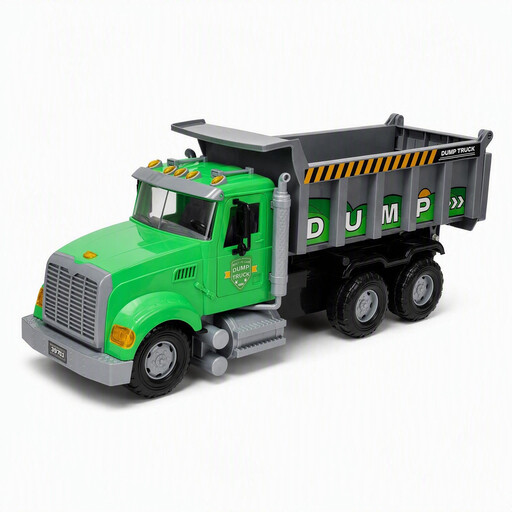
Why this product suits the profile: According to the product details, this mechanical vehicle toy is intended for children aged 3 and over and does not require batteries. It is suitable for indoor play and sand play.
The vehicle is powered by pushing, so there is no need to keep replacing batteries. The tipping mechanism, wheels and plastic should be checked for damage before every use.
A liftable tipper body, large dimensions of approximately 59,69 × 17,27 × 25,40 cm and soft plastic wheels, according to the product description.
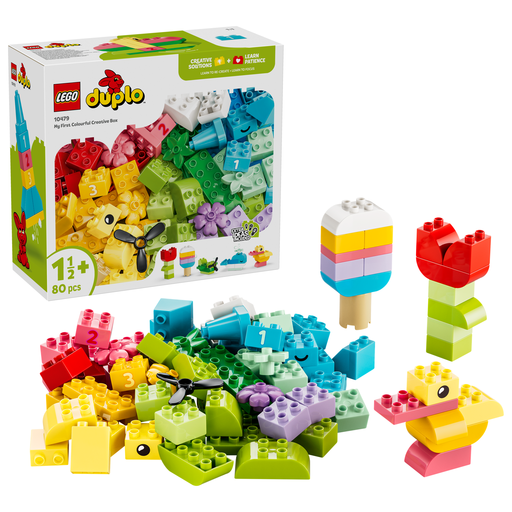
Why this product suits the profile: According to the supplier, the box is intended for children aged 18 months and over. It contains 80 building bricks for open-ended building, along with ideas for creating first models.
The number of pieces and age recommendation are clearly stated. Even so, the bricks should be collected after play and kept away from children below the recommended age.
80 pieces, reusable building and numbered bricks for introducing first number games, according to the product description.

Why this product suits the profile: This compact busy book for toddlers is designed for journeys, waiting times and quiet activities at home. According to the product details, it is aimed at children aged around 1 to 3 years.
It focuses on hands-on activities such as zips, buttons, hook-and-loop fasteners and lacing rather than batteries or continuous sounds. Stitching and fastenings should be checked regularly.
15 interactive activities, soft felt material and a compact format for travel and everyday situations, according to the product description.
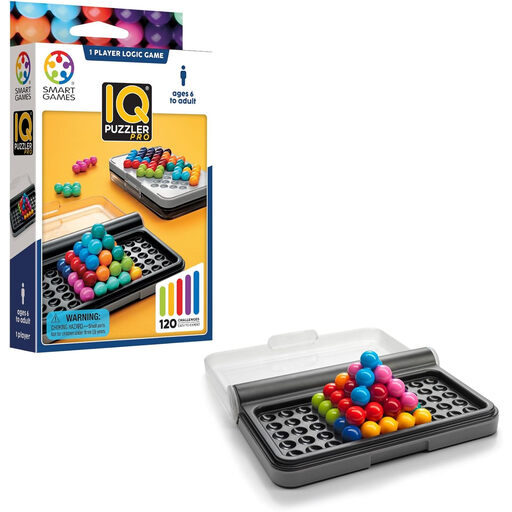
Why this product suits the profile: According to the product information, this single-player game is suitable for children aged 6 and over. Its compact size also makes it suitable as a travel game for children.
It does not depend on batteries or internet access. Because it contains small parts, the age limit remains important; children under 3 years must not use the game.
120 challenges in three game modes, including 2D and 3D challenges, as well as a single-player game, according to the supplier’s information.
We have put together a complete, regularly updated list of products that fully meet these strict selection criteria and the safety regulations applicable in the EU.
For babies from around 6 months, consider toys that are easy to grasp, stable when standing and straightforward to understand. A musical baby toy with buttons, drum surfaces, shapes and colours can offer a range of play prompts. Check the age recommendation, volume, battery compartment and all moving parts. Children should always play under appropriate supervision.
Lifespan depends on the materials, construction and how the toy is used. Mechanical motor-skills toys without electronics have fewer components that can fail. With electronic products, the battery compartment, buttons and speaker are typical points to check. Store toys in a dry place, remove batteries if they will not be used for an extended period and stop using damaged products.
In addition to the purchase price, you may need to buy batteries and, where applicable, replacement parts. Look out for information stating “batteries not included”, volume control and a possible silent function. If the toy is used frequently, rechargeable batteries may be a practical option, provided the product is suitable for them. For a children’s birthday present, it is a good idea to budget separately for the required batteries.