
Lieferung heute & morgen

Qualitätsgarantie

Willkommens-Angebote freischalten: KOSTENLOSE Lieferung | Bis zu 80 % RABATT | Kostenlose 30-Tage-JoyPlus-Testphase
App herunterladen
Educational toys for children should keep them engaged while also developing skills such as fine motor skills, concentration and logical thinking. However, many products in this category promise more than their actual features deliver. Parents, grandparents and other family members should therefore take a close look at the recommended age, materials, play mechanics and safety information.
A toy with music, lights and lots of buttons may initially seem versatile. For a one-year-old, however, too many stimuli can be confusing. What matters is whether the controls are suitable for the child’s hand size and stage of development. An Activity Cube Baby for ages 1 to 3, for example, should offer clearly identifiable play stations that are easy to reach.
“From age 3” is not a general statement about quality, but an important safety and usage recommendation. If a product contains small parts, it must not be used by younger children. Even children’s games for ages 3 and over can differ considerably in terms of rules, playing time and the level of concentration required.
Wooden toys are often associated with durability, but their edges, surface treatment and construction should still be checked. For plastic products, details such as ABS, BPA-free, rounded edges and available safety markings are relevant. Magnetic toys require an additional check: strong magnets must not be accessible and must never be swallowed.
First, consider what the child actually wants to practise or discover:
The recommended age does not replace supervision. Small parts must be strictly avoided, especially for children who still put objects in their mouths.
For wooden toys, a smooth surface, sturdy connections and practical storage space are useful features. When buying, you should also compare the product dimensions with the space where it is intended to be used. A small travel game is suitable for taking on the go, while a larger sorting or construction game is more likely to require a dedicated play area.
For magnetic toys, the magnet size, secure embedding and warning about swallowable magnets are important. For example, the XINQIYUAN set contains 28 components with a stated size of 5.5 cm and clearly warns that it contains strong magnets and requires supervision. Damaged parts should no longer be used.
A product is not automatically more useful because it combines several play modes. Check whether the child can use the features independently and whether they encourage repeat play. A fine motor skills toy with a few well-accessible activities may be more suitable for everyday use than a complicated set with lots of accessories.
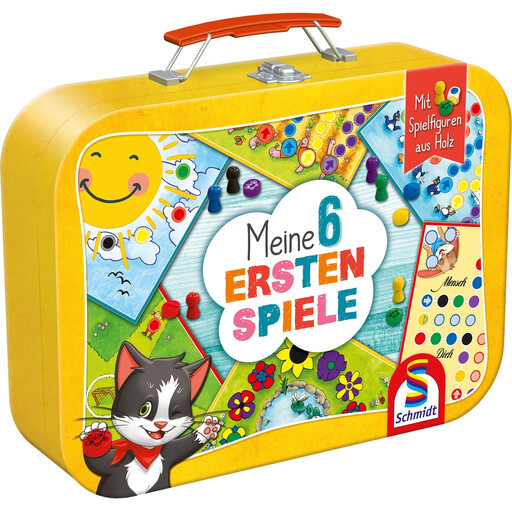
Why this product suits this profile: Designed for children aged 3 and over, this collection requires no batteries and includes six colour and skill games for 2 to 4 players. It is a great introduction to playing games together.
Instead of requiring several separate purchases, the box contains six clearly defined games with simple rules and a recommended age of 3 and over.
Six game variations, 2 to 4 players, no batteries and a child-friendly colour version of MENSCH ÄRGERE DICH NICHT.
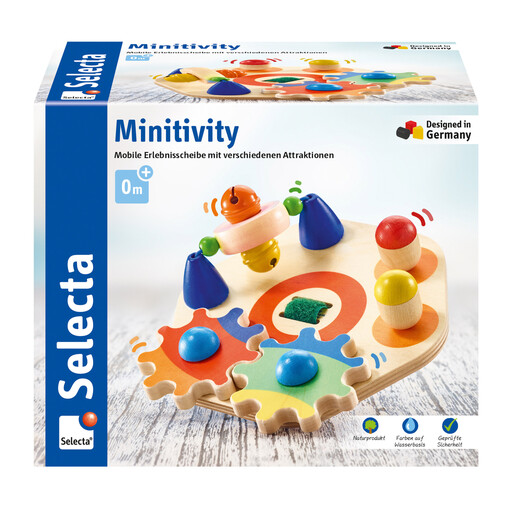
Why this product suits this profile: According to the supplier, this 14 cm product is made from natural wood, manufactured in Germany and offers three play stations: gears, movable elements and bell spinners.
The features are described clearly and do not depend on additional electronic functions. The hook-and-loop fastening should be checked before every use.
Natural wood, three manual play stations, 14 cm size and fastening options for a cot, playpen or buggy.
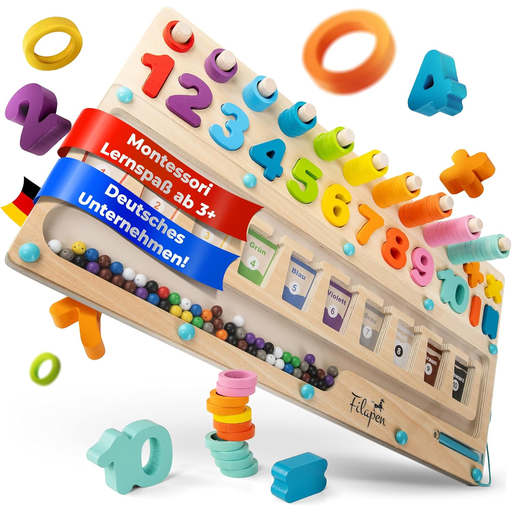
Why this product suits this profile: This fine motor skills board combines a magnetic maze with colour matching and numbers from 1 to 10. The product description recommends it for children aged approximately 3 to 6.
The activities are not limited to colours; they also include numbers and a guided maze. Small parts require direct supervision.
Solid wood, a magnetic pen, colour matching and a number peg activity in one product; no batteries required.
We have put together a complete, regularly updated list of products that fully meet these strict selection criteria and the safety regulations applicable in the EU.
Plan short, regular play sessions and explain the activity initially without correcting the child. With a children’s puzzle, it can help to sort the edge pieces or distinctive colours first. A logic game for children should begin with simple tasks. For children’s board games, clear rules, visible moves and a foreseeable ending are helpful.
Check toys regularly for cracks, loose parts, sharp edges or damaged magnets. Also follow the cleaning instructions and store accessories where younger siblings cannot reach them.
For children aged 1 and over, simple sorting and peg games, sturdy wooden building blocks or an Activity Cube Baby with large, easy-to-reach controls may be suitable. Small parts, freely accessible magnets and long cords should be avoided. The manufacturer’s specific age recommendation is decisive.
Montessori toys are often designed around a clearly defined activity such as sorting, matching or grasping. However, the term alone does not guarantee a particular educational suitability. You should therefore always check the materials, activity, recommended age and safety information.
The service life depends on the materials, construction, intensity of use and storage. Wooden toys with sturdy connections may be suitable for regular use. For puzzles and games, look for accurately fitting pieces and robust game boards. Damaged components should be removed from the play area regardless of the product’s age.