
Lieferung heute & morgen

Qualitätsgarantie

Willkommens-Angebote freischalten: KOSTENLOSE Lieferung | Bis zu 80 % RABATT | Kostenlose 30-Tage-JoyPlus-Testphase
App herunterladen
Educational toys for children should be entertaining while also providing playful learning opportunities. In practice, however, choosing the right product is not always easy: a toy with lots of features is not automatically suitable, and eye-catching packaging says little about everyday usability, safety or durability. Parents, grandparents and relatives should therefore check a few specific details before buying.
Music, lights, buttons and moving elements can seem appealing. For a baby or toddler, however, too many stimuli can quickly become overwhelming. What matters is whether the features suit the child’s stage of development and interests. A simple motor skills toy with easy-to-reach switches may be more useful in everyday life than a complex product that only holds their attention for a short time.
The description “for children” is not enough. A toy with small parts, magnets or moving wheels may be suitable as a toy for children aged 3 and over, but not for babies. The age recommendation is an important safety and usage guideline, not merely marketing information.
Batteries, charging accessories or difficult-to-clean surfaces are sometimes mentioned only in passing in product descriptions. When buying interactive toys, a remote-controlled car or musical toys, shoppers should therefore check which batteries are required, whether a rechargeable battery is included and how the product should be cleaned.
For babies from around 6 months, large, easy-to-grip elements without loose small parts are suitable. A sensory toy with lights, sounds or movement can focus their attention and introduce early cause-and-effect experiences. For toddlers aged 1 to 3, rotary knobs, gears, buttons and sorting elements are interesting. From the age of 3, role-play toys, figures and construction sets can be added.
The manufacturer’s age recommendation should always be considered alongside the child’s individual development. Even when the stated age range is appropriate, younger children should only use toys with small parts or magnets under supervision.
Look for rounded edges, a sturdy construction and securely attached parts. Details such as ABS plastic or BPA-free material relate to the product description, but they do not replace checking the actual item before use.
The CE mark indicates that the manufacturer has declared compliance with the relevant EU requirements. However, it is not an independent quality seal. Warning notices should be taken particularly seriously with magnetic construction toys: swallowed magnets can cause serious injuries. Damaged or loose parts should no longer be given to children.
For baby toys with music or lights, volume control, the battery compartment and an on/off switch are practical considerations. Also check the dimensions: an activity cube with a carry handle is more suitable for travelling than a large play table. With a remote-controlled car, charging time, range, the surface it can be used on and how easy the remote control is to operate are also important.
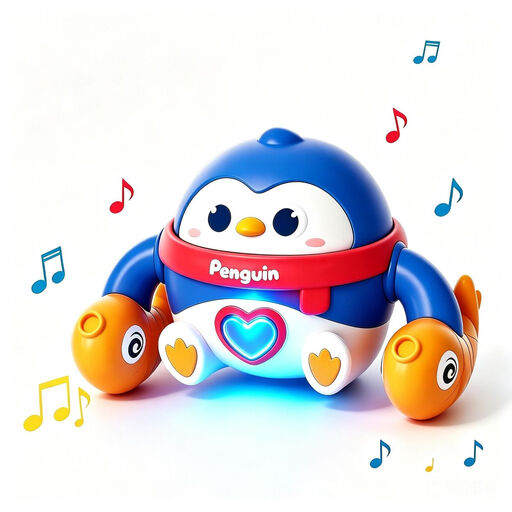
Why this product suits this profile: This rolling baby toy is recommended for ages 6 to 36 months and combines movement, music and lights in a compact design. It is suitable for families looking for a manageable sensory toy for floor play.
The product details specify an age range of 6 to 36 months, as well as BPA-free ABS with rounded edges. Batteries are not included, so this should be taken into account before buying.
360-degree rolling movement, a motion sensor, plus light and music effects; according to the product details, it is intended for children aged 6 to 36 months.
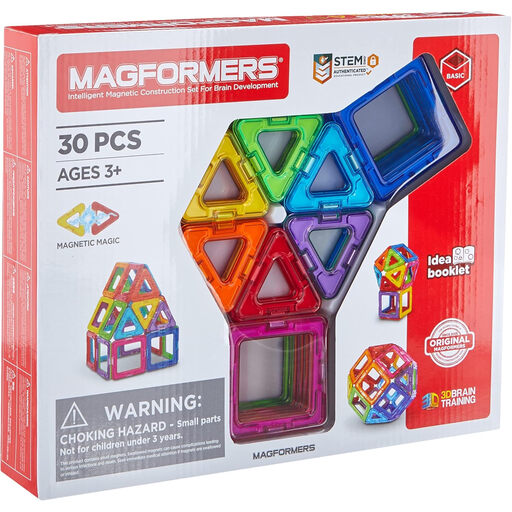
Why this product suits this profile: According to the description, this set is aimed at children aged 3 and over and contains 30 magnetic building pieces. It is a good match for children who enjoy building, taking things apart and creating their own shapes time and again.
The description clearly highlights the small parts and strong magnets. This makes the age restriction easy to identify; the set should not be given to younger children.
30 pieces, no batteries required and reusable magnetic connections for 2D and 3D constructions.
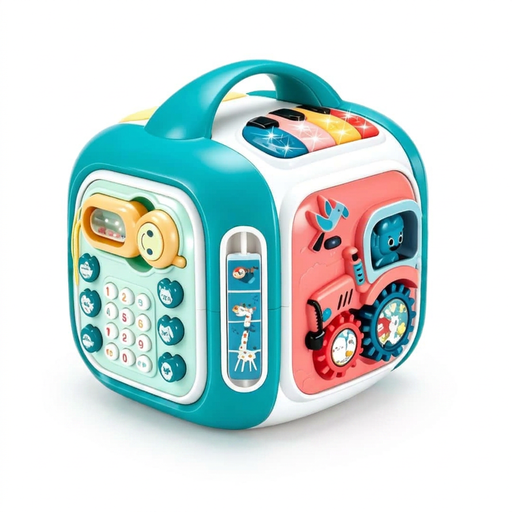
Why this product suits this profile: Measuring 23 × 23 × 24 cm, this activity cube combines eight play areas. It is therefore suitable for households looking for several ways to keep a child occupied in one portable baby toy.
The functions are clearly listed: piano, guitar, telephone, gears and windmill. Buyers can check in advance whether these types of play suit the child and the intended surroundings.
Compact design with a carry handle and several manual controls; according to the product details, it is made from ABS plastic, is BPA-free and has rounded edges.
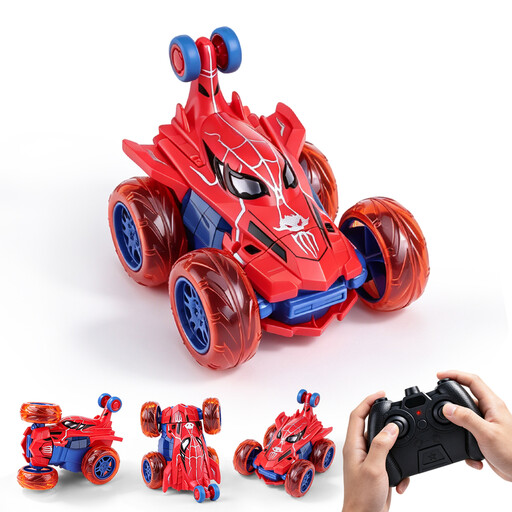
Why this product suits this profile: According to the product details, this remote-controlled car is intended for children aged 4 and over and is suitable for flat outdoor surfaces and indoor use. It is a good choice for children who enjoy combining movement with vehicle control.
The power requirements are clearly stated: an integrated 3.7-volt rechargeable battery with USB cable; the remote control requires two AA batteries, which are not included.
2.4 GHz remote control, 4WD, 360-degree stunts and LED wheels; the safety warnings state that direct adult supervision is required.
We have put together a complete, regularly updated list of products that fully meet these strict selection criteria and the safety regulations applicable in the EU.
For babies from 6 months, large, easy-to-grip elements, simple sorting games, rattles, musical toys and rolling figures are suitable options. A suitable age recommendation, sturdy components and supervised use are important. Small parts and strong magnets should be avoided at this age.
How long a toy remains useful depends less on its marketing claims than on the child’s age, interests and ways of playing. Products with several manual functions can remain engaging for longer when shared play gradually increases the level of challenge. With electronic toys, battery consumption, the rechargeable battery and care requirements affect everyday usability.
No. “Montessori-inspired” initially describes a design concept, but it is not a standardised, legally protected quality assessment for every product. You should therefore look closely at what the child does with the toy, whether they can use it independently, and whether the material, size and age recommendation are suitable. What matters is how the toy is actually used, not simply what it is called.