
Lieferung heute & morgen

Qualitätsgarantie

Willkommens-Angebote freischalten: KOSTENLOSE Lieferung | Bis zu 80 % RABATT | Kostenlose 30-Tage-JoyPlus-Testphase
App herunterladen
Educational toys should keep children engaged without ending up unused in a cupboard after a short time. But choosing the right one isn’t always easy for parents, grandparents and other family members. Packaging may feature words such as ‘creative’, ‘educational’ or ‘supports development’, while important details about age suitability, piece size and storage are less prominent.
That’s why it’s worth taking a clear-eyed look at a product’s actual features before you buy. The right children’s jigsaw, sturdy construction toy or creative building brick box doesn’t need to have as many features as possible. What matters is whether it suits the child’s age and abilities, and how you plan to use it.
A toy for children aged 1.5 and over has different requirements from one for children aged 4 and over or 6 and over. Large, easy-to-grip building bricks are suitable for little hands, while a 100-piece jigsaw may quickly prove too challenging for younger children.
However, the age recommendation doesn’t guarantee that every child will find the product equally easy to use. Children develop at different rates. You should also consider:
484 LEGO Classic bricks or 790 pieces may sound like a lot at first. But a very wide choice can be overwhelming for a child who’s just starting to build. On the other hand, an older child may quickly find a small set too limiting.
The number of pieces is just one factor. Grip size, how well the pieces can be combined, themed elements and storage matter more. For example, a set with wheels, windows and baseplates offers different possibilities from a box containing only basic bricks.
Loose jigsaw pieces and building bricks are easy to lose. As a result, even a suitable toy can end up incomplete over time. A jigsaw in a metal case or a building brick box with a lid can make everyday use easier.
Before you buy, check whether the container feels sturdy, whether all the pieces fit inside and whether the child can open and close it independently. If the toy contains small parts, it should also be stored out of reach of children under three.
For a jigsaw for children aged 4 and over, clear pictures, larger pieces and a manageable piece count are helpful. According to the product details, the Schmidt Spiele 56508 ‘Vehicles’ children’s jigsaw includes four pictures, with 2 × 26 and 2 × 48 pieces, and is suitable for children aged 4 and over. Jigsaw posters with outlines can help beginners find their way around.
Toys for children aged 6 and over can offer more of a challenge. The Schmidt Spiele 56495 dinosaur jigsaw includes four puzzles with 2 × 60 and 2 × 100 pieces. The Schmidt Spiele 56509 Bibi & Tina set has 2 × 100 and 2 × 150 pieces. Both sets come with a metal case for storage.
For jigsaws, precise cutting, sturdy cardboard and a clearly visible surface are practical things to look for. According to the product description, a matt, linen-textured surface can reduce reflections. This can make colours and shapes easier to identify in different lighting conditions, but it doesn’t replace suitable lighting.
When buying building bricks, check the material information provided by the manufacturer, the size of the pieces and any warnings. LEGO Classic bricks are intended for children aged 4 and over and contain small parts. LEGO DUPLO bricks are larger and designed for younger children, but you should still follow the relevant manufacturer’s information and warnings.
Clean toys according to the care instructions. Building bricks can usually be wiped with a soft, dry or slightly damp cloth. Store jigsaw boxes in a dry place to prevent the pieces from warping.
Check for the CE mark, manufacturer’s information, age recommendation and warnings. Small parts can pose a choking risk for children under three. An age recommendation of 4 or 6 and over reflects the intended use, but it doesn’t replace adult supervision when the play situation calls for it.
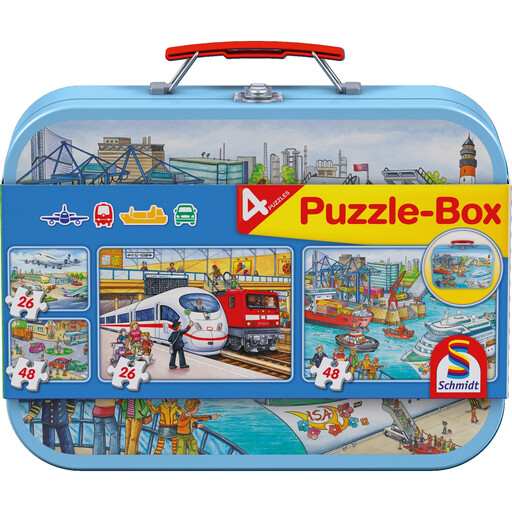
Why this product suits this need: Four vehicle pictures and two different piece sizes offer a manageable introduction for children aged 4 and over.
The pieces aren’t all devoted to a single challenging picture. The jigsaw posters help beginners get started.
Four pictures, a metal case, 2 × 26 and 2 × 48 pieces, plus a matt surface according to the product details.
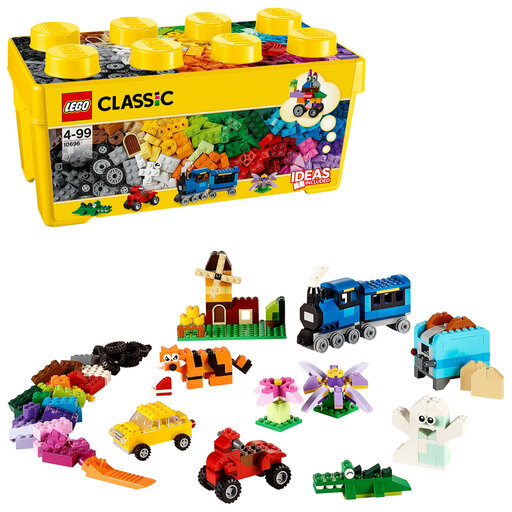
Why this product suits this need: Children aged 4 and over can enjoy free building with 484 pieces in different colours, including wheels, windows and baseplates.
The box isn’t limited to pre-designed models and can also be combined with existing LEGO sets.
484 pieces, a storage box, building ideas and special pieces such as wheels, eyes and windows, according to the manufacturer.
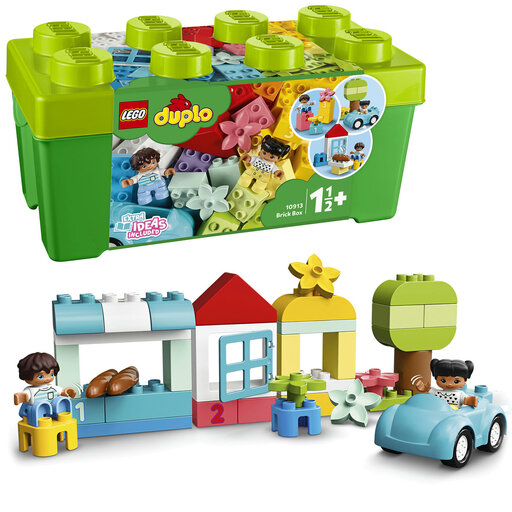
Why this product suits this need: The larger building bricks and 65 pieces are designed for children aged 1.5 and over, making them suitable for early building attempts.
The pieces are designed for little hands. However, you should still follow the age recommendation and small-parts warning.
65 pieces, number bricks, figures, a vehicle and a storage box with a lid.
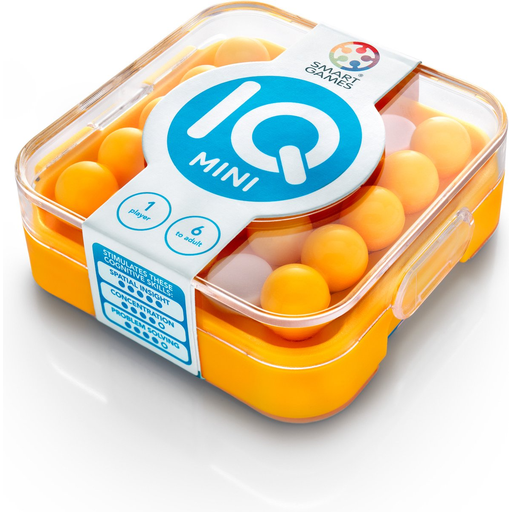
Why this product suits this need: This compact logic game for children aged 6 and over is ideal for trips and short periods of play.
It doesn’t need batteries and can be used without a large playing area. According to the product details, the colour is supplied at random.
Pocket-sized format, sliding blockers and extra challenges via QR code, according to the product description.
We’ve put together a complete, regularly updated list of products that meet these strict selection criteria and fully comply with the safety regulations in force in the EU.
For children aged 1.5 and over, choose large, easy-to-grip building bricks, simple connecting pieces and clearly defined shapes. LEGO DUPLO building bricks, such as sets 10913 and 10914, contain larger pieces and are intended for this age group according to the product details. Keep small parts away from children under three.
It depends on their experience, the picture and their ability to concentrate. A children’s jigsaw with 26 to 48 pieces can offer a manageable introduction. More experienced children may enjoy larger puzzles too. If you’re unsure, several smaller jigsaws are often more practical than one very large one.
Store jigsaws in their box, complete and in a dry place. Building bricks can be sorted after play and cleaned with a slightly damp cloth. Keeping everything neatly stored helps prevent pieces from going missing and makes it easier to start playing next time. Also check regularly for damaged pieces and make sure the warnings are still relevant to the way the toy is being used.