
Lieferung heute & morgen

Qualitätsgarantie

Willkommens-Angebote freischalten: KOSTENLOSE Lieferung | Bis zu 80 % RABATT | Kostenlose 30-Tage-JoyPlus-Testphase
App herunterladen
Educational toys for children should offer more than eye-catching packaging. Parents, grandparents and relatives often look for educational value, durable materials and a suitable age recommendation. At the same time, not every product described as “STEM”, “Montessori” or “educationally valuable” is automatically suitable for every child.
Three points particularly often lead to unsuitable purchases:
Ongoing costs should also be taken into account. Many educational games work without batteries. Products with lights or sound, however, may require batteries, which are not always included.
The manufacturer’s age recommendation is a useful starting point, but it does not replace the family’s own judgement. For example, larger magnetic building blocks with a manageable number of parts may be suitable for children aged three and over. Sets with small, powerful magnets should only be used under direct supervision. If magnets are swallowed, there is a serious health risk; if this is suspected, seek medical help immediately.
Educational toys for children aged six and over can involve more complex tasks. Even so, a children’s experiment kit should include clear, step-by-step instructions. For construction sets with lots of small parts, preparing them together and using a storage box is recommended.
ABS plastic is used in many magnetic and construction sets. In practical terms, smooth, burr-free edges, well-fitting connections and a visible check for cracks or loose parts are important. With magnetic building blocks, the magnets should be fully enclosed within each component. After every play session, check whether the casing or connections have been damaged.
For children’s puzzles and board games, sturdy cardboard pieces, clear printing and a part size suitable for the age group are useful. A high piece count alone says little about whether a product is suitable.
Before buying, ask yourself:
An experiment set such as the KOSMOS Student Lab uses some household items and includes instructions for more than 50 experiments. A cooperative board game for children aged 6 and over, on the other hand, mainly needs clear rules and a suitable group size.
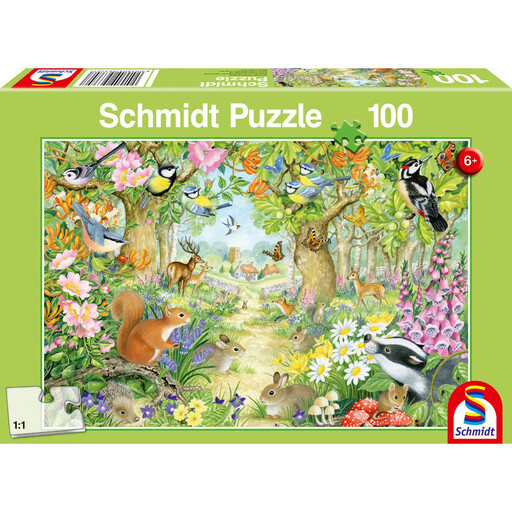
Why this product suits this profile: This 100-piece children’s puzzle is designed for children aged 6 and over, offering a clearly defined introduction to logical and creative play.
The piece count and age recommendation are clearly specified. A puzzle poster with cut lines can make it easier to get started, without requiring any additional materials.
Nature-themed design, 100 cardboard pieces, a matt finish and dimensions of 27,5 × 19 × 3,8 cm.
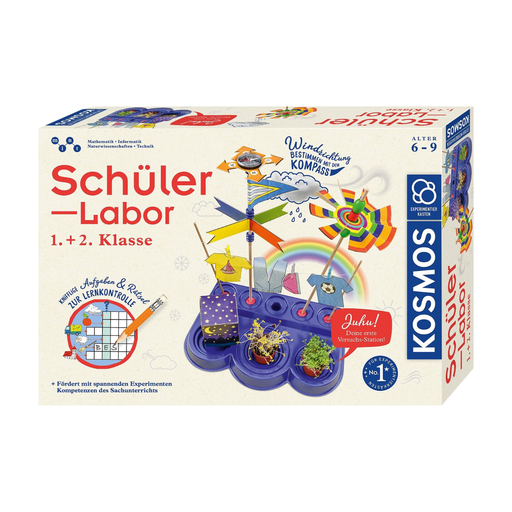
Why this product suits this profile: This children’s experiment kit is aimed at 6- to 9-year-olds and combines nature and technology topics with illustrated instructions.
The contents are not simply described in general terms as educational: the set includes more than 50 experiments covering topics such as light, shadows, air, water and the senses.
29,5 × 42,5 × 8 cm, 1,38 kg, manual use and a recommended age range of 6 to 9 years.

Why this product suits this profile: This set is ideal for families who want to combine 2D and 3D constructions with a marble run.
The piece count, material and battery requirements are clearly stated. The light function requires 3 AA batteries, which must be provided separately.
126 pieces, transparent building elements, marble-run components and a gift box measuring 29,5 × 39 × 7 cm.

Why this product suits this profile: This cooperative detective game is designed for 2 to 4 players aged 6 and over, and takes around 20 minutes according to the product details.
The number of players, playing time and age recommendation are clearly stated. This makes it easy to check whether the format suits your family before buying.
Cooperative gameplay, no batteries required and compact dimensions of 18,3 × 11,4 × 3,8 cm.
We have put together a complete, regularly updated list of products that fully meet these strict selection criteria and the safety regulations applicable in the EU.
Products with easy-to-grip parts, clear instructions and a manageable number of components are suitable for children aged 3 and over. Safety labelling is particularly important for magnetic building blocks. Small parts and magnets should not be handled by children under three. An adult should supervise the initial play session and check the components regularly.
Lifespan depends more on the material, usage and storage conditions than on any marketing promise. Smooth ABS parts, sturdy cardboard pieces and dry storage can help maintain everyday usability. After playing, all pieces should be collected and damaged building blocks, loose magnets or torn puzzle pieces should be removed from use.
Many educational games, children’s puzzles and classic board games for children aged 6 and over do not require batteries. For sets with a light function, check the battery information. For example, the TOKKY marble-run set requires 3 AA batteries; according to the product details, these are not included. Experiment kits may also require household materials. Before buying, check the full list of included items.