
Lieferung heute & morgen

Qualitätsgarantie

Willkommens-Angebote freischalten: KOSTENLOSE Lieferung | Bis zu 80 % RABATT | Kostenlose 30-Tage-JoyPlus-Testphase
App herunterladen
Educational toys for children should offer more than a short-term distraction. Parents, grandparents and other family members look for products that are suitable for the child’s age, offer a range of ways to play and will not be left unused after just a few weeks. There is a wide choice available, including creative toys, construction toys, Montessori toys, motor skills toys, puzzles for children and vehicle toys. These differ considerably in terms of materials, how they are played with and their safety requirements.
Attractive packaging or a lengthy product description does not automatically tell you whether a toy is suitable for a particular child. Small components can pose a choking risk to children under three. Even a product labelled as suitable for children aged three and over can be problematic if younger siblings have easy access to its parts.
The key factors are therefore the age recommendation, warning notices and the child’s actual stage of development. A puzzle with large pieces may be more suitable for a two-year-old than a complex construction toy containing many small parts.
Lights, sounds and buttons may seem appealing at first glance. However, they can dominate the play experience if the child mainly presses buttons and has little opportunity to make their own decisions. When choosing a toy, it is worth asking: are there several ways to play, or just one pre-programmed response?
Building blocks, a children’s drawing tablet or a vehicle with movable parts are good examples of open-ended play options. These products can be incorporated into different play situations and used independently or together with an adult.
For plastic toys, there should be clear information about the material, rounded edges and cleaning. Products that use batteries should also include details about the power supply and how to replace the batteries. Magnetic toys require particular care: damaged parts must be removed immediately, as swallowed magnets can cause serious harm.
First, check the manufacturer’s age recommendation. For example, the Ravensburger My First Puzzle “Cute Pets” is described as suitable from the age of two; at the same time, the product information highlights small parts and recommends supervision for younger children. The DOUBLE E manual excavator and the large Dreamora tipper truck, on the other hand, are explicitly not suitable for children under three and should be used under the direct supervision of an adult.
Look for clear, understandable information about the materials and workmanship. The LEGO Classic Set 10696 specifies ABS plastic; the product description also includes a warning about small parts. For toys containing magnets, you should also check regularly for cracks or any magnets becoming exposed.
The CE marking and references to relevant European requirements can provide useful guidance. However, they do not replace checking the age suitability, construction and intended use of the product. Statements such as “non-toxic” or “particularly safe” should always be understood as manufacturer or product information, rather than interpreted as medical or therapeutic assurances.
The size of a toy affects whether it is practical to use at home, in the child’s bedroom or when travelling. A large tipper truck requires considerably more space than a puzzle or an LCD drawing tablet. Toys used in a sandpit should have their moving parts cleaned after use. For musical toys designed for babies, check whether the volume, battery compartment and stability are suitable for the intended environment.
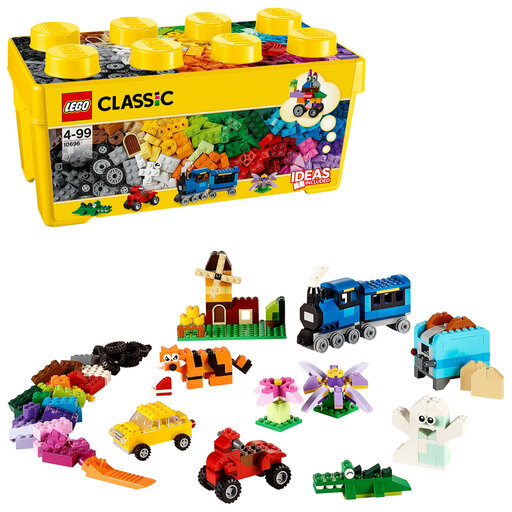
Why this product suits this profile: The box contains 484 pieces, including bricks in 35 colours, wheels, windows and eyes. This means it can be used to build vehicles, animals and simple constructions.
It offers more than a single predefined function, with plenty of open-ended building options. The storage box also helps keep the many pieces organised.
484 pieces, several model ideas and compatibility with other LEGO bricks. According to the product information, it is suitable from the age of four.
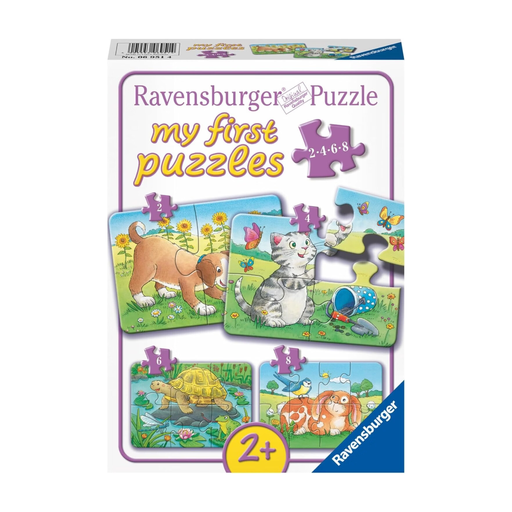
Why this product suits this profile: Four puzzles with increasing levels of difficulty provide a gradual introduction. According to the product description, the sturdy cardboard pieces are designed for small hands.
The age recommendation and increasing number of pieces make the level of challenge easier to assess than with a set without clear progression.
Four designs, sturdy cardboard pieces, no batteries required and, according to the supplier, suitable from the age of two.
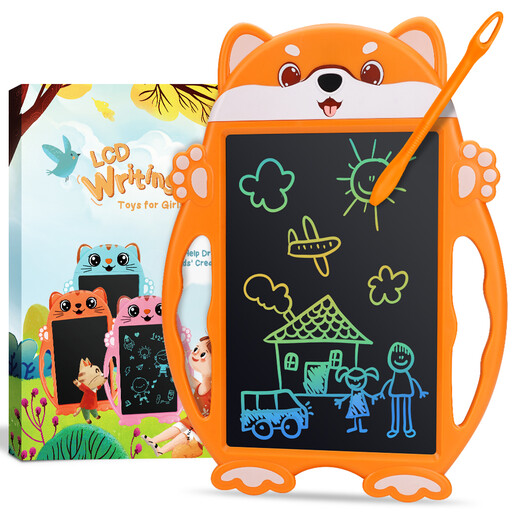
Why this product suits this profile: Measuring 26.5 × 20.31 × 1 cm and weighing 0.178 kg, the tablet is described as suitable for drawing, taking notes and use on the go.
According to the description, it does not require sheets of paper and can be cleared at the touch of a button. This avoids using drawing paper when out and about.
Lightweight format, reusable LCD writing surface and use without visible paper waste; according to the supplier, suitable for children aged three to eight.
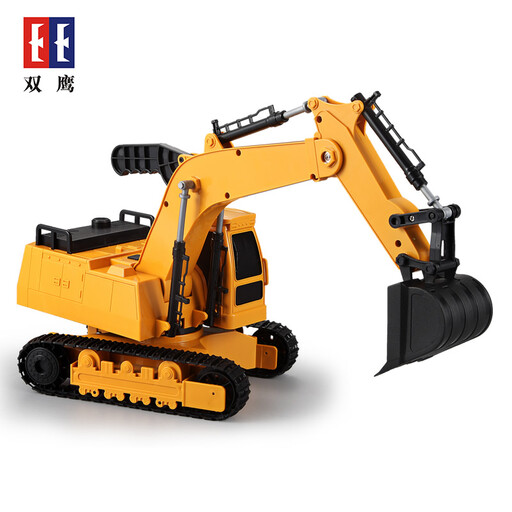
Why this product suits this profile: The manual excavator features a movable arm, tilting bucket, 360° rotating cab and rubber tracks. This supports open-ended vehicle and construction-site play from the age of three.
Play is based on visible mechanical functions rather than just lights or sound effects. The warning that it is unsuitable for children under three must still be observed.
Manual movement, rotating cab and rubber tracks. It can be used without batteries.
We have put together a complete, regularly updated list of products that fully meet these strict selection criteria and the safety regulations applicable in the EU.
Products with a clear age recommendation, easy-to-grip parts and straightforward rules can be suitable. These include simple building sets, vehicle toys, role-play toys and age-appropriate puzzles. Small parts, magnets and battery compartments should only be accessible with appropriate supervision.
How long a toy is used depends less on whether it is described as “educational” and more on the range of play options it offers. Open-ended products such as building blocks, a drawing tablet or a vehicle with moving features can be incorporated into a variety of scenarios. With electronic toys, batteries, volume and the range of functions can affect continued use.
Check the child’s age, interests, home environment and existing toys. A large vehicle will not suit every home, while a puzzle or box of building blocks is easier to store. When buying a present for a child, you should also consider the warnings, material information, batteries and level of supervision required before making your purchase.