
Lieferung heute & morgen

Qualitätsgarantie

Willkommens-Angebote freischalten: KOSTENLOSE Lieferung | Bis zu 80 % RABATT | Kostenlose 30-Tage-JoyPlus-Testphase
App herunterladen
Educational toys should do more than keep children occupied. They should encourage them to experiment, create and play together. But choosing the right one isn’t always easy for parents, grandparents and other family members. Product descriptions promise creativity, learning and versatile play, while important details about age suitability, materials and storage can be easy to overlook.
This buying guide explains what to look for in learning toys for children, creative toys, construction sets and musical toys. The criteria below can help you distinguish marketing claims from product features that matter in everyday use.
A toy labelled for ages 3+ isn’t automatically suitable for every three-year-old. You should also consider the size of the pieces, how complex the activity is and how much supervision is needed. Small building pieces, magnets or accessories such as dice and play figures can pose a risk to younger children.
For products labelled toys for ages 3+, compare the age recommendation with the child’s stage of development. For babies and toddlers up to 3 years old, larger pieces that are joined together securely or easy to grasp are usually more practical.
The term doesn’t describe a single, legally protected product feature. A puzzle may help children recognise shapes and make matches, while a craft kit could support fine motor skills and a construction toy might encourage spatial planning. However, these features don’t replace an assessment of what’s right for an individual child.
Look for clear, verifiable information such as the number of pieces, how the toy is played, its materials and dimensions, and the recommended age range.
Many sets contain lots of separate pieces. Without a suitable bag or box, the toy can quickly become incomplete. Modelling clay, magnetic building blocks and craft materials also need to be stored in a dry place and checked regularly. Don’t continue using damaged pieces.
Before buying, check:
Magnetic building blocks for children need particular care. Product information for several sets warns that swallowed magnets can cause serious injuries. Any damaged pieces with visible magnets should be removed immediately.
For plastic toys, it’s helpful to check details about the material, rounded edges and finish. Some sellers also list standards or testing information such as CE and EN 71. This information should be clearly documented in the product description rather than treated as a marketing claim alone.
For wooden toys, such as a stacking game, check the number of pieces, whether there are any small parts and how to clean them. Don’t use the product with children below the stated age limit.
Think about where and how the toy will be used:
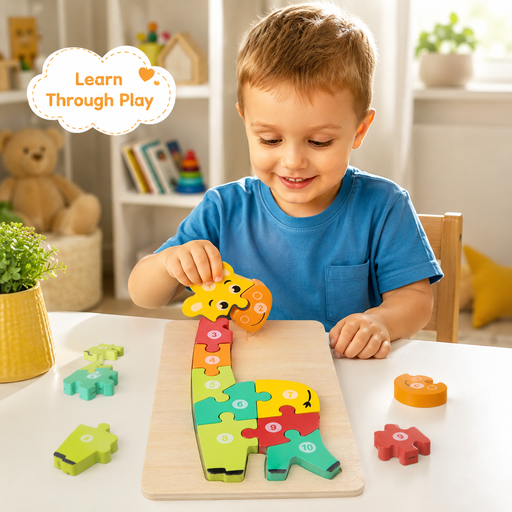
Why this product suits this profile: This wooden puzzle combines an animal design with numbers and matching in a manageable set for playing together at home.
The straightforward matching game needs no batteries or complex rules. The product description specifies large pieces and recommends use under supervision.
Wooden toy with shape-matching activity; designed for indoor play and family time together.
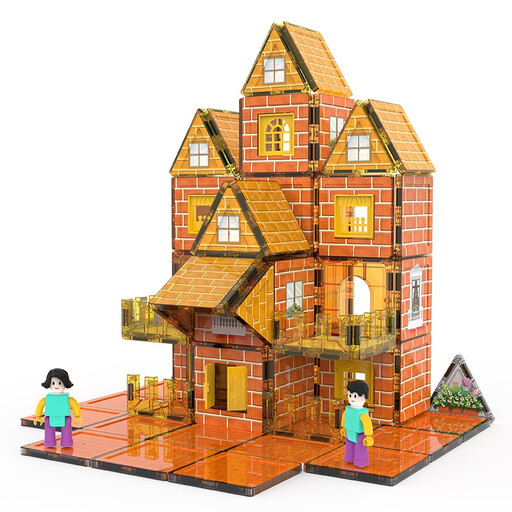
Why this product suits this profile: The set has a specified number of pieces, a storage bag and magnetic building elements for creating 2D and 3D structures.
The product information specifies enclosed magnets, regular checks and a clear minimum age of 3 years. This makes it easier to check the safety details before buying.
81 pieces; 7.5 cm magnet size; storage bag; manual play with no batteries required.
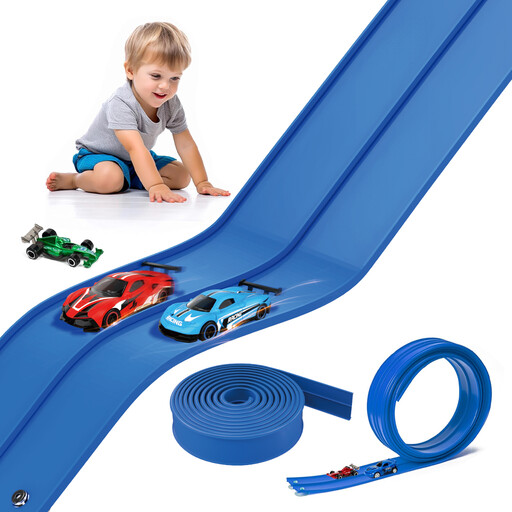
Why this product suits this profile: The roll-up track is designed for children aged 3 and over, and can be set up indoors or outdoors.
The track doesn’t need to be left assembled; it rolls away for storage. The product page also clearly highlights the small parts and the age recommendation of 3+.
4.5 m flexible racing track; two lanes; four cars; no batteries required.
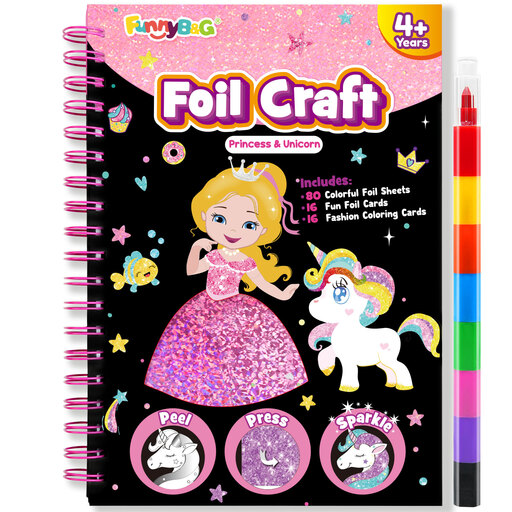
Why this product suits this profile: This craft kit for children aged 4 to 10 is designed for creative activities at home or on the go.
According to the product description, the set needs neither glue nor scissors. The age recommendation and included materials are clearly listed.
112 pieces; foil sheets, picture boards, cards and an 8-colour pen; compact dimensions for travel and indoor activities.
We’ve put together a complete, regularly updated list of products that meet these strict selection criteria and the safety regulations in force in the EU.
Simple puzzles, stacking games, construction toys and age-appropriate craft kits may be suitable. The key things to consider are the specific age recommendation, the size of the individual pieces and the level of supervision needed. Read the safety information particularly carefully when magnets or small parts are involved.
Their lifespan depends on the materials, how they’re used and how well they’re cared for. Storing them in a dry place, keeping all the pieces together and checking them regularly can help them stay in good working order for longer. Damaged plastic parts, loose magnets or torn play components should be replaced or disposed of.
Musical toys for babies and children may need batteries, while many manual toys, such as wooden puzzles, modelling clay and magnetic building blocks, don’t need a power source. Before buying, check whether batteries are included, what type is needed and whether the toy has adjustable volume.