
Lieferung heute & morgen

Qualitätsgarantie

Willkommens-Angebote freischalten: KOSTENLOSE Lieferung | Bis zu 80 % RABATT | Kostenlose 30-Tage-JoyPlus-Testphase
App herunterladen
Educational toys for children should offer more than a few minutes of entertainment. Depending on their age, they can support grasping, coordination, perception, creative thinking and early learning. Products also vary considerably in their materials, age recommendations, care requirements and safety risks.
If you focus only on lots of features or eye-catching packaging, it’s easy to buy something that doesn’t meet your child’s needs. Three common pitfalls are worth watching out for:
Large, easy-to-grip pieces without loose small parts are usually best for babies and young toddlers. A baby activity cube or a simple musical instrument can let them press, turn and explore cause and effect. From around age 3, children can enjoy more complex activities such as sorting, building and matching.
With a motor skills board, fastenings, shoelaces and moving parts should be firmly attached. A busy book for children aged 1 to 3 should still only be used under supervision if it has parts that could be pulled off or contains cords.
Depending on how they’re made, ABS plastic, wood, felt and EPE foam can all be suitable for different purposes. More important than the material name are:
A CE marking is required for toys in the EU, but it isn’t an independent quality mark. It indicates that the manufacturer is responsible for the product’s compliance. Take extra care with magnetic construction toys: swallowed magnets can cause serious injuries. Discard any damaged pieces straight away.
Before you buy, check the toy’s actual dimensions. A baby music table takes up more floor space than a motor skills board or a busy book. Electronic toys may need batteries, and running several devices can mean ongoing costs and extra maintenance.
For toys with sound and lights, look for a volume control or use them for short periods. Keep batteries out of children’s reach and insert them with the correct polarity. For battery-operated products, also check whether batteries are included.

Why this product suits this profile: This compact book offers several activities for on-the-go play and needs neither batteries nor much storage space. According to the product information, it’s for children aged 1 to 3.
The activities, such as fastening buttons, zips and hook-and-loop fasteners, and lacing, are clearly described. This makes it easier to assess what the book offers than a list of features alone.
Felt fabric, reinforced stitching, a lightweight design and a farm-themed setting. Supervision is still needed for this age group.
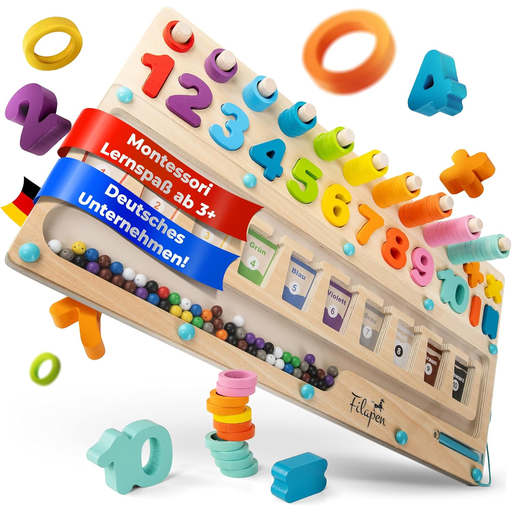
Why this product suits this profile: This wooden toy combines a magnetic maze with colour matching and numbers from 1 to 10. It’s designed to offer structured learning activities for children aged around 3 to 6.
The activities are easy to identify and don’t rely solely on electronic stimulation. However, make sure you follow the age warning about small parts.
Solid wood, no batteries, a magnetic pen, colour sorting and number slots. Use only under direct supervision.

Why this product suits this profile: With 76 pieces, this set is made for building again and again, playing together and creating different structures. It’s recommended for children aged 3 and over.
The number of pieces and their individual size of around 3.75 cm are specified. The product information also highlights the enclosed magnets and the need to check regularly for damage.
Clear ABS plastic, magnetic connections, geometric shapes and easy storage in a dry place. Not suitable for children under 3.
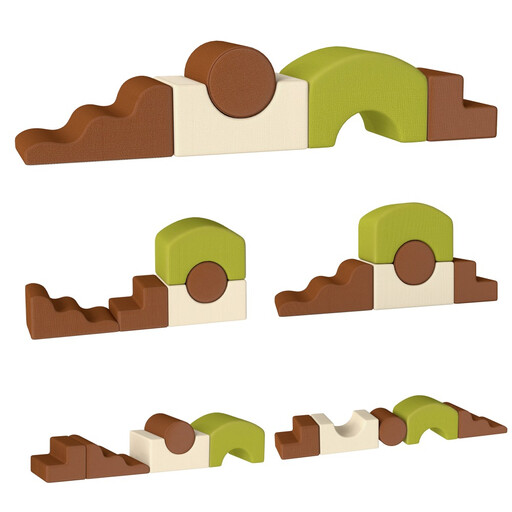
Why this product suits this profile: This soft foam play set with five modules is designed for active play in larger indoor spaces or a child’s bedroom.
Its modular design is better suited to active play than a small tabletop toy. Before buying, check the room size, supervision requirements and stability.
Five soft modules, a colourful corduroy cover and plenty of ways to practise gross motor skills.
We’ve put together a complete, regularly updated list of products that meet these strict selection criteria and fully comply with the safety regulations in force in the EU.
Clean toys according to the manufacturer’s instructions and store magnetic or electronic products in a dry place. Regularly check seams, casings, suction cups, foam edges and magnet covers. For an electronic bow with foam darts, don’t aim at the face or eyes; play only in a clear area and supervise children while they use it.
Place a baby music table or activity cube where your child can’t tip it over. A moderate volume is best for toys with sound; lights and sounds alone don’t mean a toy has educational value.
Educational toys are available for babies, provided they have large, securely attached parts and are designed for their age group. Small parts and strong magnets are particularly risky for children under 3. Always check the manufacturer’s age recommendation against your child’s abilities.
Durability depends on the materials, how the toy is used and how well it’s cared for. Wooden and plastic toys can last a long time if checked regularly. Check fabric toys for loose stitching, and remember that electronic devices also need their battery compartments and functions checked. Don’t continue using damaged parts.
For toys with lights, music or sound, the main ongoing cost is usually batteries. Check whether batteries are included, how many are needed and whether the toy has an automatic shut-off. Store battery-operated products in a dry place and clean them only as directed by the manufacturer.