
Lieferung heute & morgen

Qualitätsgarantie

Willkommens-Angebote freischalten: KOSTENLOSE Lieferung | Bis zu 80 % RABATT | Kostenlose 30-Tage-JoyPlus-Testphase
App herunterladen
Educational toys should offer more than a brief distraction. Parents, grandparents and other family members often look for toys that suit a child’s age, can be used safely and offer engaging ways to play over time. Eye-catching marketing claims, however, don’t necessarily help you make the right choice.
Three common pitfalls are worth keeping in mind:
The recommended age is an important part of choosing a toy, but you’ll also need to consider the individual child. For babies and toddlers, look for large, easy-to-grip pieces with no loose small parts. A baby activity cube with a variety of turning, pressing and sound features may suit children aged 1 to 3, provided the product information specifically says so.
For wooden toys for children aged 3 and over, or magnetic building blocks, parents should check the warnings. Small pieces can be swallowed. Swallowing magnets poses a particular risk, so damaged pieces should be removed straight away. Younger children should be directly supervised when playing with marble runs.
A high number of building pieces isn’t automatically an advantage. What matters is whether the toy offers different levels of challenge:
Montessori toys are often associated with independent discovery. Even so, check exactly what a toy allows a child to do and whether it’s suitable for their age. Terms such as ‘educational toys for toddlers’ don’t, on their own, indicate a particular educational standard.
For wooden toys, smooth surfaces, rounded edges and a clear parts list are practical things to check. Plastic toys should have no visible rough edges. For magnetic products, make sure the magnets are securely enclosed. The product description should also include cleaning and storage guidance.
Electronic musical toys need batteries or another power source. Check whether batteries are included, whether the volume can be adjusted and whether the toy can still be used meaningfully without sound. A carry case or bag makes it easier to keep all the pieces of construction sets and marble runs together.
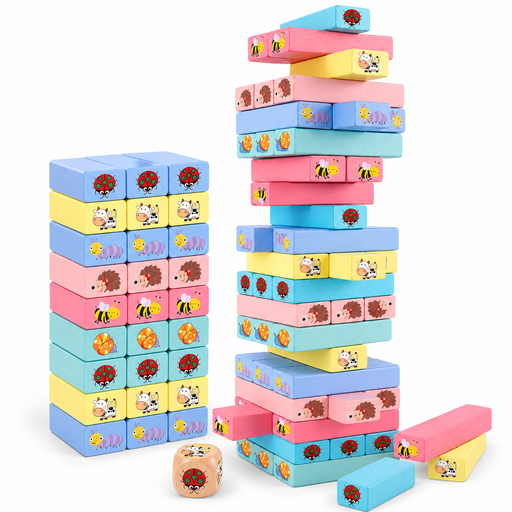
Why it suits this profile: This set contains 51 wooden pieces and a die. It’s a good choice for families looking for a screen-free game involving stacking, sorting and balancing.
The rules are easy to understand and there are no batteries, but you can also play freely. Take note of the age recommendation of 3+ and the warning about small parts.
51 pieces, a die and several ways to play; suitable for playing together at home or on the go.
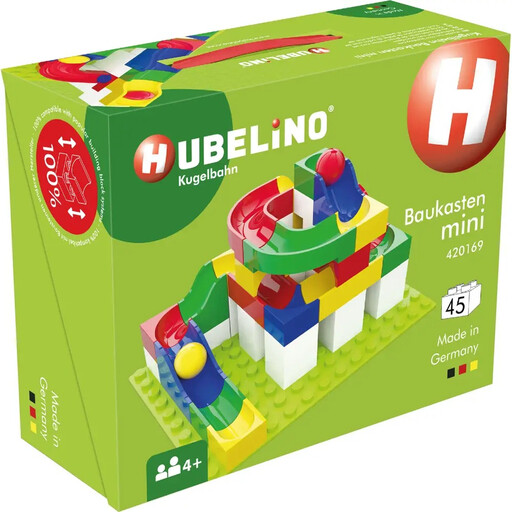
Why it suits this profile: This 45-piece set includes a base plate, building blocks, track pieces, marbles, instructions and a carry case. It’s designed for children aged 4 and over.
The instructions help children get started, while still leaving room to design their own tracks. Because the marbles are small, warnings and supervision are especially important.
45 pieces, a storage case and compatibility with other Hubelino products, according to the product description.

Why it suits this profile: This compact cube is designed for children aged 1 to 3 and combines features including a piano, guitar, pretend-play phone, gears and musical functions.
The different features are brought together in one portable cube. Before buying, check whether it needs batteries and whether the volume is suitable for your home.
Compact size of 23 × 23 × 24 cm; several ways to play during short sessions at home or on the go.

Why it suits this profile: This cooperative board game is designed for children aged 6 and over, and can be played by 1 to 4 people. The game includes a rotating board, dice and animal tokens.
The cooperative format gives everyone a shared goal rather than making it all about competition. Read the rules before your first game and explain them to younger players.
For 1 to 4 players; game materials made from cardboard and ABS plastic; suitable for family game nights with children aged 6 and over, according to the product information.
We’ve put together a complete, regularly updated list of products that meet these strict selection criteria and fully comply with the safety regulations applicable in the EU.
For toddlers, large, easy-to-grip pieces and simple cause-and-effect features are a good choice. An activity cube or musical toy may offer a variety of ways to play. What matters is the specific age recommendation, sturdy components and adult supervision.
It depends on the way the toy is played with and the child’s stage of development. Open-ended construction sets, wooden blocks and magnetic building blocks can hold a child’s interest for longer if they allow for free building and different levels of challenge. For board games, the number of players, the complexity of the rules and the playing time all affect how often they’re used.
Check the recommended age group, make sure the magnets are fully enclosed and look for clear warning information. Damaged pieces should not be used. Magnetic building blocks aren’t suitable for children who still often put small objects in their mouths. If magnets are swallowed, seek medical help immediately.