
Lieferung heute & morgen

Qualitätsgarantie

Willkommens-Angebote freischalten: KOSTENLOSE Lieferung | Bis zu 80 % RABATT | Kostenlose 30-Tage-JoyPlus-Testphase
App herunterladen
Educational toys for children should offer more than a few minutes of entertainment. Parents, grandparents and other family members are usually looking for a combination of age-appropriate handling, safe construction and meaningful ways to play. At the same time, product descriptions are often packed with terms such as “Montessori”, “early development” or “multisensory”. On their own, however, these labels reveal little about whether a toy is right for the child and their everyday routine.
A toy with lights, music, buttons and moving parts may appear versatile. For a baby, however, too many stimuli can be confusing. Older children, on the other hand, may find that it lacks a more challenging task. The key factor is therefore not the number of functions, but whether they suit the child’s stage of development and interests.
“From 6 months” does not automatically mean that a product is suitable for every baby of that age. Also check:
With baby toys and toys for children aged 6 months and over, particular care should be taken to rule out parts that could be swallowed. Many products have stricter requirements for children under three than for older children.
Information such as CE, EN 71 or BPA-free provides useful guidance, but it is not by itself proof of a perfect purchasing decision. CE is a manufacturer’s conformity marking, not an independent quality seal. You should therefore also check the material information, workmanship, battery cover, cleaning options and warnings.
For babies, grasping, pressing, observing and responding are the main activities. A sensory toy with easy-to-reach buttons, high-contrast colours and moderate volume can support these types of play without promising a specific developmental outcome.
For toddlers, simple sorting tasks as well as rotating and plugging-in elements can be suitable. An activity cube or Montessori toy should not merely be decorative: shapes, gears, flaps and buttons must be securely attached and accessible to small hands.
From around the age of three, creative construction toys, an LCD writing tablet for children or magnetic building blocks may be of interest. Magnets require particular care: strong magnets must not be swallowed, and damaged components should be removed from the play area immediately.
Look for:
Batteries or rechargeable batteries should also be taken into account with electronic toys. Some of the products featured here are supplied without batteries. This should be factored in before purchasing.
Musical toys can vary in practicality in a child’s bedroom, around the home or while travelling. Volume control or a quiet mode is useful for piano keys, drums and animal sounds. When travelling, low weight, a carry handle and easy cleaning are more important.
The amount of available space also matters: an activity cube measuring around 23 × 23 × 24 cm takes up less room than a fully assembled play table. An RC stunt car for children, on the other hand, should only be used where there is sufficient distance from fragile objects and other people.
Why this product suits this profile: According to the product information, the frog play centre combines drum surfaces, shape sorting, lights and animal sounds in a compact product for children aged 6 to 36 months.
The play options are built directly into the product and require no additional learning materials. Before purchasing, check the volume, battery requirements and supervision guidance.
ABS plastic, BPA-free material information, rounded edges and a non-slip base according to the product description.

Why this product suits this profile: Measuring around 23 × 23 × 24 cm, the cube offers several ways to play, including a piano, guitar, gears, telephone and windmill.
The functions are arranged on separate sides, inviting children to press, turn and choose. Nevertheless, it is advisable to check for loose parts and test the volume before first use.
Carry handle, compact design and several manual play modes; material and age information is provided in the product description.
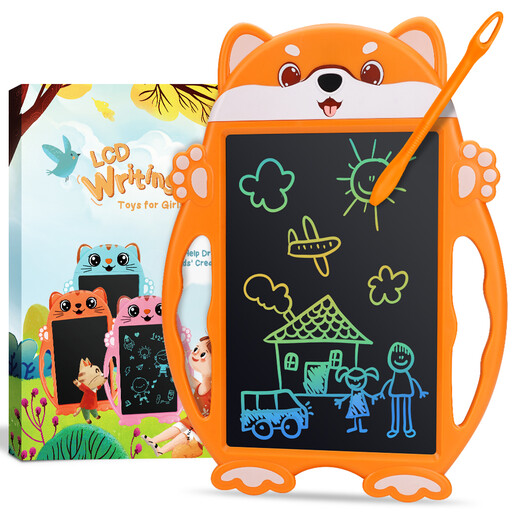
Why this product suits this profile: According to the product details, the lightweight writing tablet is designed for children aged 3 to 8 and is suitable for drawing, writing and making notes at home or while travelling.
It needs neither paper nor pens and can be cleared at the press of a button. Before purchasing, check whether you want permanent storage or simply a temporary display.
Approximately 178 g in weight, an 8.5-inch display and an ABS casing with rounded edges according to the product description.
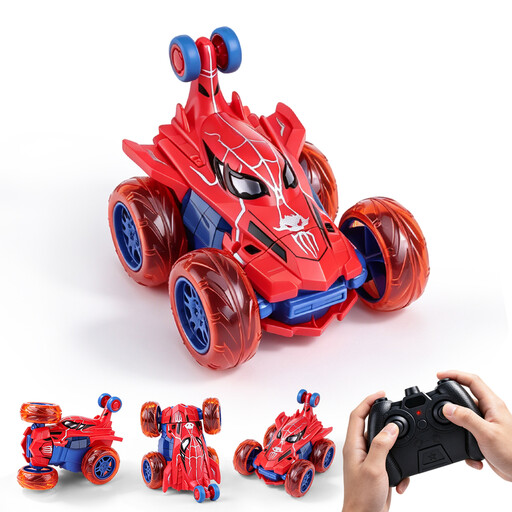
Why this product suits this profile: For children aged three and over who enjoy driving manoeuvres and action-packed play, this model offers a 2.4 GHz remote control, LED wheels and a rechargeable vehicle battery.
The age warning and information stating that two AA batteries are not included should be checked before purchasing. The toy should be used under adult supervision and with sufficient distance from obstacles and other people.
360-degree stunts, LED lighting, 4WD drive and a rechargeable 3.7-volt battery according to the product information.
We have put together a complete, regularly updated list of products that fully meet these strict selection criteria and the safety regulations applicable in the EU.
As a birthday present for children, a product that suits the child’s current age and existing interests is a good choice. For babies, simple cause-and-effect games, opportunities to grasp and shape-sorting activities are often more suitable than complex construction kits. For children aged three and over, LCD writing tablets, magnetic building blocks or creative construction toys may be worth considering.
A Christmas present for children can also be enjoyed for longer. It is therefore worth looking for expandable play options, replacement parts, battery life and safe storage. With magnetic building blocks, all parts should be checked regularly for cracks and exposed magnets. For RC vehicles, charging time, batteries for the remote control and suitable surfaces are relevant ongoing costs.
Age-appropriate grasping, sorting and musical toys without loose small parts may be suitable. Toys should stand securely, have rounded edges and only be used with appropriate supervision. A musical toy with adjustable volume is more practical around the home than a product without volume control.
How long a toy remains enjoyable depends more on its play options than on its marketing claims. Products with several difficulty levels, open-ended tasks or combinable parts can remain interesting for longer. With baby toys, however, the appropriate phase of use often ends once the child has mastered all the functions or can safely grasp small parts.
Check whether batteries are included, which battery size the remote control requires and whether a USB charging cable is supplied. With rechargeable products, charging time and storage become part of everyday use. Damaged parts, additional batteries or a suitable play area can also affect the actual cost of using the toy.