
Lieferung heute & morgen

Qualitätsgarantie

Willkommens-Angebote freischalten: KOSTENLOSE Lieferung | Bis zu 80 % RABATT | Kostenlose 30-Tage-JoyPlus-Testphase
App herunterladen
Educational toys for children should do more than simply keep them occupied. They should encourage them to experiment, build, sort and play together. However, choosing the right product is not always easy for parents, grandparents and other family members. Many products make claims about learning benefits, extensive accessories or particularly realistic functions. That is why clear criteria such as the recommended age, materials, play mechanics and storage are so important.
Lights, music and sounds can capture a child’s attention. However, they do not automatically replace a versatile play concept. A toy with a few clear functions can remain interesting for longer if children can create their own scenarios with it. For electronic products, parents should also check whether batteries are included, how the product is charged and whether it needs to be used under supervision.
A learning toy for ages 3 and up is not automatically suitable for every younger child. Small parts, balls and strong magnets may pose a choking hazard. For babies and toddlers, the recommended age range, warnings and the condition of the individual parts are particularly important. For older children, too, the recommended age should match their stage of development and motor skills.
A comprehensive marble run construction set, a large play mat or a construction set requires sufficient storage space. Before buying, it is worth checking the product dimensions, number of parts and available storage options. If there is no box or bag, small parts can be lost more easily. This affects the product’s practical suitability for everyday use more than a lengthy product description.
First, match the toy to the appropriate age:
The age recommendation is a guide and does not replace supervision. For products containing small parts, balls or magnets, read the safety information before buying and before each use.
Look for smooth edges, sturdy connections and clear information identifying the manufacturer or responsible person in the EU. For plastic toys, material details such as ABS can be helpful, but on their own they say nothing about the product’s actual durability in the home. Moving parts such as tipping skips, doors and cranes should be checked regularly for cracks and loose connections.
Magnetic building blocks require particular care: strong magnets must not be swallowed. Damaged parts with visible magnets should no longer be given to children. The “CPC/ASTM” information in a product description should not be treated as a blanket statement that all European requirements have been met. The warnings and conformity information listed on the product page are what matter.
Battery-free toys can be convenient in everyday life because there are no batteries to replace. For electronic products, charging time, battery type and whether the toy can be used while charging are all relevant details. A set with a play mat can make playing together easier, but it takes up more space after playtime. A storage bag or box helps keep all the parts together.
The following selection groups products not according to blanket quality judgements, but by age, type of play, features and typical use.
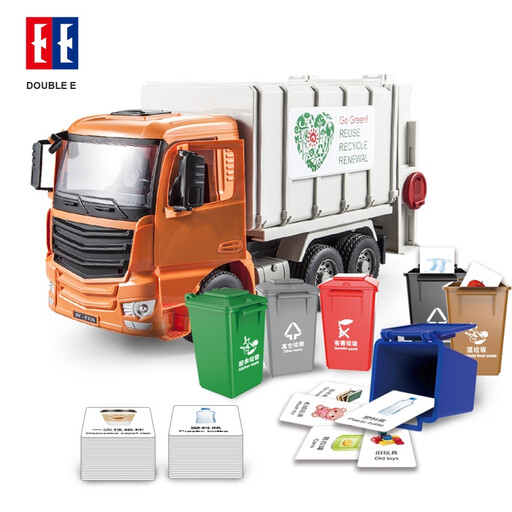
Why this product suits this profile: According to the product information, this manual vehicle is intended for children aged 3 and over and does not require batteries. Six containers and 100 cards provide a clear introduction to sorting and role-play games.
The set focuses on manual play activities rather than electronics running continuously. This means no battery replacements or charging schedule to worry about.
Six sorting containers, 100 cards and moving parts; suitable for playing together with adults.
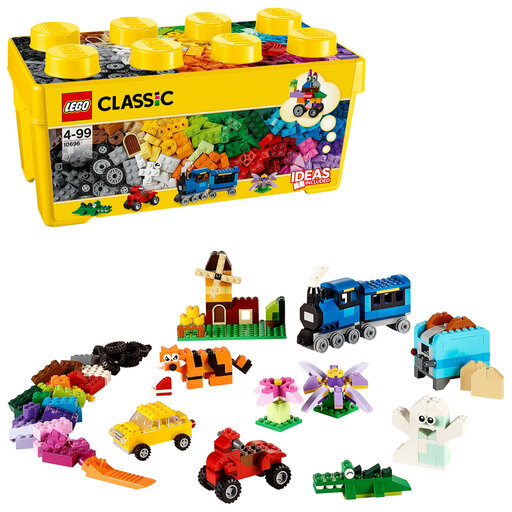
Why this product suits this profile: According to the product information, the box contains 484 elements, a storage box and parts such as wheels, windows and eyes. The recommended age starts at 4 years.
The number of parts and the box are clearly specified. Before buying, you should still check whether small components can be stored safely at home.
484 elements, 35 colours, wheels, baseplates and the option to combine it with other LEGO construction sets.
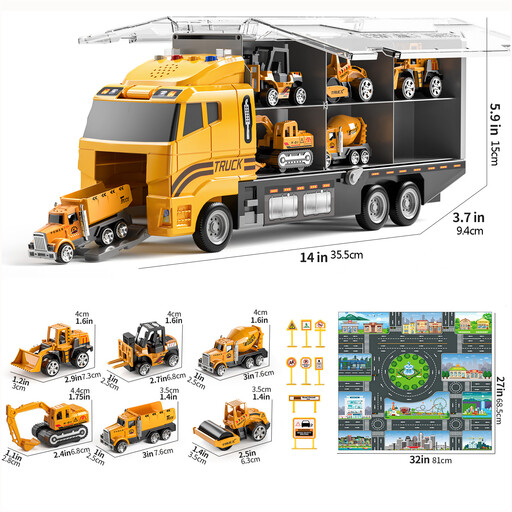
Why this product suits this profile: The set is designed for children aged 3 to 8 and includes several construction vehicles, a foldable play mat and accessories. It is intended for indoor use and, according to the product information, can also be used for playing with sand.
The play possibilities do not depend solely on sound and lights: the multiple vehicles and mat also allow manual role-play without electronic functions.
Eight-piece vehicle and accessory combination, foldable mat and four buttons for light and sound functions.
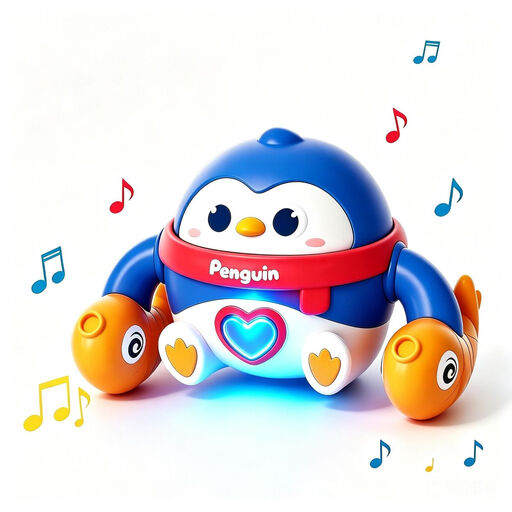
Why this product suits this profile: According to the product information, this rolling toy is intended for children aged 6 to 36 months. It combines movement, music and lights, and requires batteries, which are not included.
The age range and battery information are clearly stated. Before use, parents should check the battery compartment and casing regularly.
360-degree rolling movement, motion sensor and ABS plastic with rounded edges, according to the product description.
We have put together a complete, regularly updated list of products that fully meet these strict selection criteria and the safety regulations applicable in the EU.
From the age of 3, larger construction sets, sorting games, simple board games and role-play toys may be suitable. Always check the specific age recommendation, as the size and complexity of the parts vary from product to product.
This depends less on the advertised number of functions than on the open-ended play possibilities. Building blocks, magnetic building blocks and vehicles with moving parts can often be incorporated into a range of play scenarios. A parts box makes it easier to keep the toy complete and ready for use.
Battery-free products do not normally incur battery costs during everyday use. Electronic developmental toys for babies and flying toys, on the other hand, require batteries or charging accessories. Before buying, check the power supply details and safety information.