
Lieferung heute & morgen

Qualitätsgarantie

Willkommens-Angebote freischalten: KOSTENLOSE Lieferung | Bis zu 80 % RABATT | Kostenlose 30-Tage-JoyPlus-Testphase
App herunterladen
Educational toys for children should keep them engaged while providing age-appropriate learning opportunities. However, choosing the right product is not always easy for parents, grandparents and other family members: many products promote Montessori principles, STEM elements or particularly versatile functions. What matters is not making the most promises, but offering suitable age recommendations, clearly stated materials and a play concept that fits the child and everyday family life.
A toy with lights, music, buttons and several play modes may seem versatile at first glance. For younger children, however, an overloaded design can be confusing. Check whether the individual elements are easy to reach and whether your child can play with the toy without constant guidance.
“From 1 year” or “for toddlers” should not be accepted without checking. The specific age recommendation, any small parts and the warnings are all relevant. Magnetic building blocks and puzzles with small components are often unsuitable for children under three. Adult supervision remains important, particularly if parts could become detached.
Wooden toys are not automatically suitable for every situation, nor are plastic toys automatically unsuitable. More important are smoothly finished edges, a sturdy construction, clearly stated material information and a size that small hands can grip easily. You should also consider how much space the toy will take up at home.
For learning toys from 1 year, simple cause-and-effect games, large rotating and plug-in elements, and robust activity cubes are usually suitable. From around the age of three, number puzzles, mazes, colour matching and more complex construction toys may be useful.
The desired learning objective should be clearly defined:
For wooden toys, details such as the type of wood, surface treatment and edge finishing are relevant. For plastic products, the material, cleaning instructions and warnings should be clearly stated. Claims such as “BPA-free” or “rounded edges” should be understood as product information provided by the seller and checked against the official safety information.
In the European Union, the requirements of the Toy Safety Directive 2009/48/EC and the relevant standards in the EN 71 series apply to toys, among other things. The CE mark is a compulsory conformity marking for many toys, but it is not an independent quality seal. Wherever possible, buy from a seller that transparently provides manufacturer and responsible-party details as well as safety warnings.
A large activity cube requires fewer individual pieces than several separate learning toys, but it may be louder because of its music or lights. Magnetic building blocks need to be stored in an organised way so that missing pieces are noticed quickly. For small homes or travel, compact products with a handle or storage box are practical.
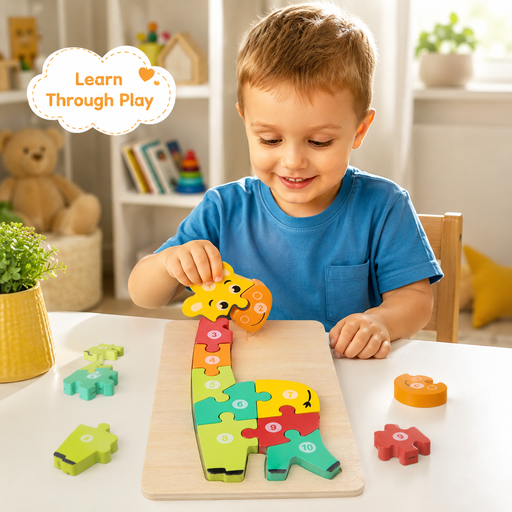
Why this product matches the profile: This large-piece wooden puzzle combines shapes and numbers in a manageable play format and is easy to incorporate into shared playtime.
The design focuses on clear matching rather than having many functions active at the same time. Age guidance and supervision recommendations should be checked before buying.
Large puzzle pieces, a simple play sequence, and the combination of shape matching and numbers.
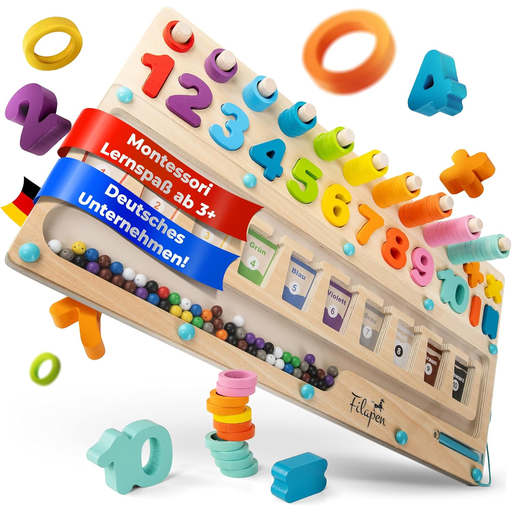
Why this product matches the profile: This wooden magnetic maze is specified for children aged three and over, combining colour matching, numbers 1 to 10 and guided hand movements.
The product description states the material, dimensions, age limit and warning about small parts. This makes it easier to assess whether the product is suitable before buying.
Solid wood according to the product information, no batteries required, and several clearly described matching activities.
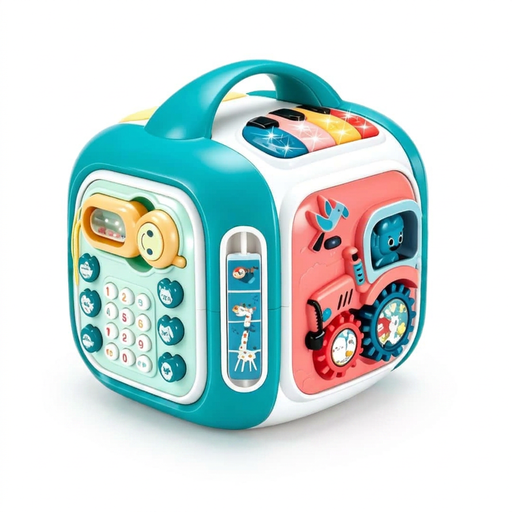
Why this product matches the profile: Measuring 23 × 23 × 24 cm, this activity cube offers several interactive surfaces for children aged 1 to 3 and is also suitable for travel.
The eight play modes are combined in one cube. Before buying, check the volume, battery requirements and the functions you actually want.
Compact format, carry handle, and music, turning, sliding and button functions according to the product description.
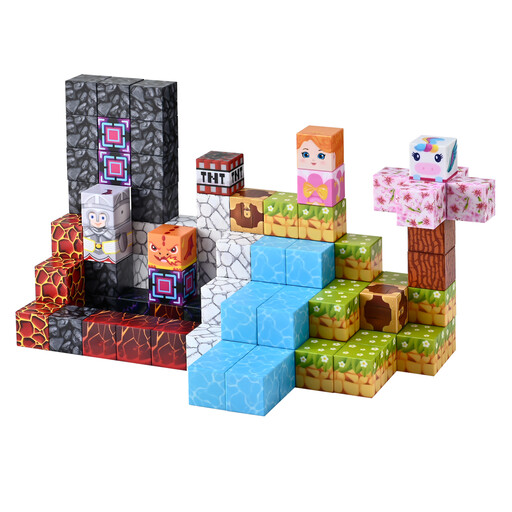
Why this product matches the profile: These magnetic building blocks are specified for children aged 3 and over and are aimed at families looking for creative construction toys that allow free-form building.
The product information states the piece count, material, individual size and specific magnetic warnings. If the casing is damaged or a magnet comes loose, stop using the product.
100 pieces, 2,5 cm pixel building blocks and a storage box according to the product description.
Check toys regularly for cracks, loose parts, sharp edges and missing magnets. Wooden surfaces should be cleaned dry in accordance with the care instructions. With magnetic products, a thorough inspection after falls or heavy pressure is particularly important.
Store sets together in a box wherever possible. This makes missing pieces easier to spot and keeps the toy organised. Shared playtime helps children use the toy correctly without imposing a particular solution on them.
We have put together a complete, regularly updated list of products that fully meet these strict selection criteria and the safety regulations applicable in the EU.
For children aged 1 and over, large, easy-to-grip elements without accessible small parts may be suitable. Activity cubes, simple peg toys and large sorting shapes can encourage early hand movements and cause-and-effect experiences. The age recommendation and warnings for the individual product are decisive.
How long a toy remains engaging depends on the play concept and the child’s stage of development. Open-ended building and sorting toys can offer different activities over a longer period. With a number puzzle or magnetic maze, the difficulty can be extended through counting, sorting and naming things together.
The price depends, among other things, on the material, number of pieces, functions and what is included. An inexpensive product may be perfectly adequate if the age group, play objective and construction are right. So do not compare only the purchase price; also consider the availability of replacement parts, battery costs, storage and the expected useful life.