
Lieferung heute & morgen

Qualitätsgarantie

Willkommens-Angebote freischalten: KOSTENLOSE Lieferung | Bis zu 80 % RABATT | Kostenlose 30-Tage-JoyPlus-Testphase
App herunterladen
Educational toys for children should do more than provide short-term entertainment. They should suit your child’s age and abilities, as well as the space you have available. However, parents, grandparents and other family members face a huge choice: Montessori toys, motor skills toys, baby activity toys, magnetic building blocks and sensory toys are often promoted with ambitious claims about child development.
Three common buying mistakes can make it harder to choose:
With educational toys for children aged 1 and over, detachable small parts are a particular concern. Check the age recommendation on the product page and see whether the manufacturer advises direct supervision. For babies, toys with securely attached parts, large handles and stable bases are usually a better choice. Small shapes, balls and strong magnets should be kept out of the hands of children under three.
The play environment matters too: a motor skills toy used on the floor needs a non-slip surface, while electronic toys should be kept away from water. A bow and arrow set needs a clear area, a safe distance and clear rules about where to aim.
Look for specific material information, such as ABS plastic, wood, EPE foam or felt. Rounded edges, enclosed casings and securely fitted parts help reduce common risks during everyday use. With magnetic building blocks, the magnets should be fully enclosed. Damaged pieces must be removed from use immediately, as swallowed magnets can cause serious injuries.
The CE marking indicates that the supplier declares the product meets the relevant EU requirements. However, it doesn’t replace checking age recommendations, warnings and product information. If EN71 is mentioned, also check which product and version the information applies to.
Electronic baby activity toys often need batteries, which may have to be bought separately. Check the battery type, volume control and battery compartment. For toys with lights and music, being able to turn the volume down or switch it off is useful in family life.
Care instructions are just as important: some products should only be cleaned with a dry or slightly damp cloth. Electronic components must not be immersed in water. With magnetic toys, check regularly for cracks, loose parts or exposed magnets.
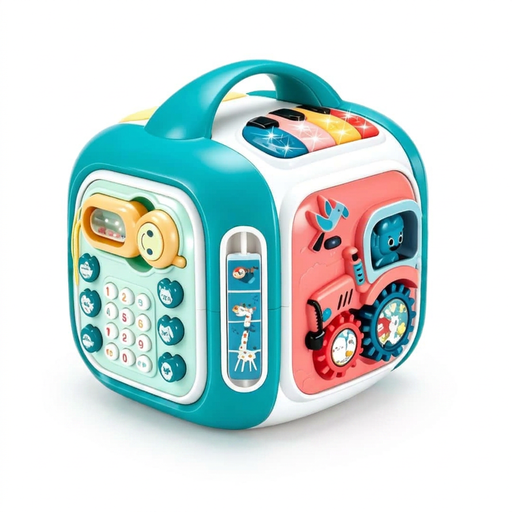
Why this product suits this buyer: This compact activity cube combines piano keys, gears, a pretend-play phone and a guitar in one toy for children aged 1 to 3. It’s a good fit for families short on space, with children who enjoy different kinds of play.
The age recommendation and compact dimensions of around 23 × 23 × 24 cm make it clearer where and how the toy can be used than a general claim about child development. The product description specifies BPA-free ABS plastic and rounded edges.
Several hands-on controls; portable design; battery-powered features, according to the product description.
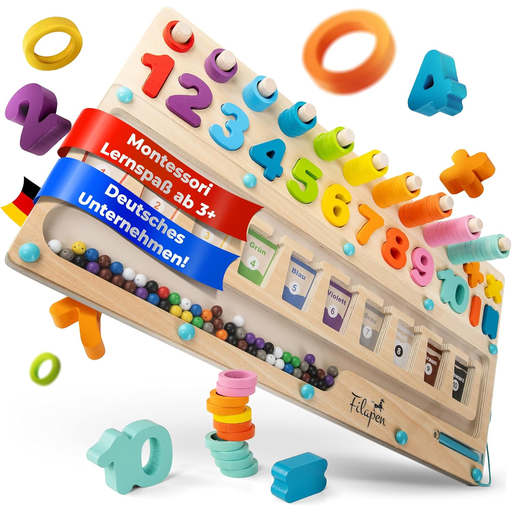
Why this product suits this buyer: This wooden toy combines a magnetic maze with colour matching and numbers from 1 to 10. It’s designed for children aged 3 and over, and offers a clearly structured alternative to electronic educational toys.
There are no batteries or changing sound effects. The activities are clearly defined by the magnetic pen, colours and numbers. Small parts mean direct supervision is needed.
Wooden construction; activities combining colours, numbers and fine motor skills; made in Germany.
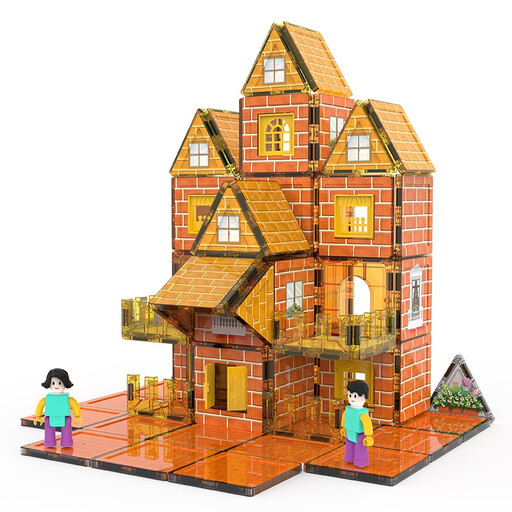
Why this product suits this buyer: This 81-piece set is designed for children aged 3 and over, and is well suited to building, rebuilding and adding to creations time and again. A storage bag makes it easy to use at home or take on trips.
The product description states that the magnets are fully enclosed and clearly flags the small parts and age limit. Blocks with damaged casings must be removed from use before play continues.
81 pieces; 7.5 cm elements; storage bag; according to the supplier, compatible with other magnetic building block systems of this size.

Why this product suits this buyer: This electronic archery set is intended for children aged 3 and over, and is aimed at families looking for an active game to play in a spacious outdoor area.
The instructions specify foam arrows, a safe distance and that you must never aim at faces or eyes. Children should only use the set under supervision, and not in confined spaces.
Bow length approximately 50 cm; arrows with soft suction-cup tips; sound and LED features; requires AA batteries, not included.
We’ve put together a complete, regularly updated list of products that meet these strict selection criteria and the safety regulations in force in the EU.
For children aged 1 and over, choose large, sturdy toys without small parts that can be accessed. Activity cubes, simple shape sorters, large gears or age-appropriate motor skills toys can encourage a range of gripping and turning movements. Always check the manufacturer’s information, the toy’s stability and the need for direct adult supervision.
Lifespan depends on the materials, how the toy is used and how well it’s cared for. ABS plastic and wood can last a long time if handled carefully. Electronic products need particular care around the battery compartment, cables and moisture. Check magnetic building blocks regularly for cracks and loose magnets. It isn’t possible to give a reliable estimate of lifespan without knowing how a toy will be used.
Magnetic building blocks are generally intended for children aged 3 and over. They contain small parts and strong magnets, which can be dangerous if swallowed. They are therefore not suitable for younger children. Check the blocks regularly and store them out of reach of babies and toddlers.