
Lieferung heute & morgen

Qualitätsgarantie

Willkommens-Angebote freischalten: KOSTENLOSE Lieferung | Bis zu 80 % RABATT | Kostenlose 30-Tage-JoyPlus-Testphase
App herunterladen
Educational toys for children should offer more than a brief distraction. Yet product descriptions are often packed with terms such as “STEM”, “Montessori” and “encourages creativity”, without clearly explaining the details that matter. That’s why parents, grandparents and educational settings need clear information about age suitability, materials, how the toy works and any safety risks.
A toy may encourage concentration, colour recognition or logical thinking. That doesn’t mean it’s suitable for every age. Small parts, strong magnets, delicate components or boiling water in science kits may not be suitable for younger children.
So check the specific age recommendation, the warnings and whether your child can use the toy independently and safely.
Large sets with lots of components can seem like great value. In practice, a lack of storage, hard-to-follow instructions or pieces that don’t work well together can mean the toy is quickly left unused. With arts and crafts toys and building toys, check whether the pieces can be combined in different ways and whether replacement or expansion pieces are available.
Terms such as “durable” or “non-toxic” are hard to assess without more information. More useful details include ABS plastic, solid wood, product dimensions, care instructions and information about the responsible person in the EU. With magnetic toys, it’s also important to check whether the magnets are securely enclosed and what to do if any parts are damaged.
For children aged 1 to 3, choose manageable activity toys with large, easy-to-grip controls. An activity cube, for example, can combine turning, pressing and flipping. However, small separate parts or removable pieces aren’t suitable for children who still put things in their mouths.
Toys for children aged 3 and over can be more complex. Magnetic building blocks, role-play toys and simple construction toys offer more ways to play. However, the age recommendation alone isn’t a guarantee of suitability: adult supervision is still important when toys contain small parts or strong magnets, or have challenging building instructions.
Before you buy, think about which activity you’d like to focus on:
A clear way to play is particularly helpful for younger children. For older children, an open-ended system with different ways to build can stay interesting for longer.
Before ordering, check:
CE and EN71 information can help you assess a product, but it doesn’t replace checking the condition of the specific item. Check magnetic toys regularly for cracks, loose magnets and other damage.

Why this product suits this need: This cube brings eight activities together in a compact design and, according to the product details, is intended for children aged 1 to 3. It’s a good choice for families who want to try different activities without buying several separate toys.
The age range, dimensions of 23 × 23 × 24 cm and different ways to play are all listed. The description says the cube needs batteries, so check whether these are included before buying.
ABS plastic, rounded edges and several manual and sound-based play modes. Children should use it under supervision, in line with the warnings.
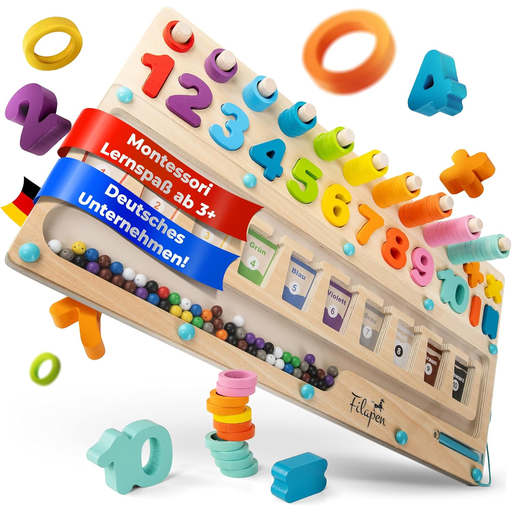
Why this product suits this need: The wooden board combines a magnetic maze with colour matching and numbers from 1 to 10. It’s a good fit for families looking for a calm, structured toy to help develop fine motor skills.
The materials, origin, dimensions of 23 × 43.5 × 4 cm and age recommendation of 3 and over are clearly listed. The Montessori approach is best seen as a guide, not a blanket promise of learning outcomes.
Solid wood, no batteries required and several clearly defined activities on one board.
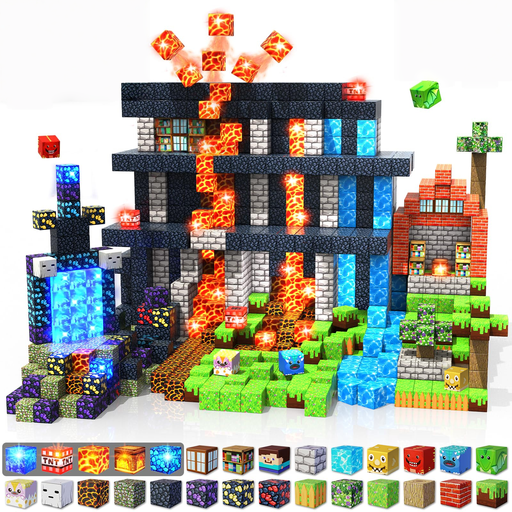
Why this product suits this need: According to the product description, this set is for children aged 3 and over. It includes 150 magnetic cubes, themed play worlds, figures and 24 light-up blocks. It’s designed for building together, rebuilding and open-ended construction.
The large number of pieces is supported by themed play worlds, figures and an idea booklet. As the set contains small parts, follow the warning: it’s not suitable for children under 3 and should be used under supervision.
The 150 building pieces allow for different constructions, while the light-up blocks add a visual element to play.
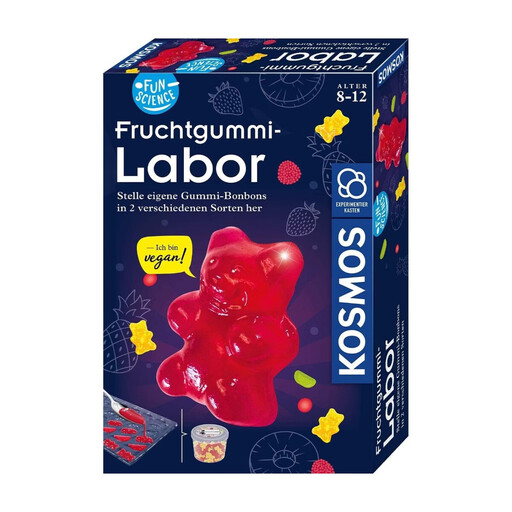
Why this product suits this need: This science kit is intended for children aged 8 and over. It combines making gummy sweets with explanations of gelling agents and states of matter.
The instructions, age limit and warning about small parts are listed. An adult must provide direct help when heating and handling the hot mixture.
According to the product description, the set includes two flavours, moulds, measuring cups and four decorative jars.
We’ve put together a complete, regularly updated list of products that meet these strict selection criteria and fully comply with the safety regulations in force in the EU.
Suitable options may include manageable magnetic building blocks, simple building toys, activity toys, role-play sets and sorting games. The key things to consider are the specific age recommendation, the size of the pieces and the level of supervision needed. If the toy contains magnets, parents should also look out for warnings about swallowable parts.
How long a child plays with a toy depends on how open-ended it is, its build quality and the child’s stage of development. Construction toys with different ways to build, or an arts and crafts set that leaves plenty of room for creativity, may last longer than a toy with just one fixed function. Keeping pieces neatly stored also helps prevent them from going missing.
You can’t judge the price by the number of pieces alone, or by marketing terms such as “STEM” or “Montessori”. Compare the materials, what’s included, age suitability, care requirements and whether the toy can be enjoyed together. A simple educational game may be a better fit than a large set if its play style suits your child’s abilities.