
Lieferung heute & morgen

Qualitätsgarantie

Willkommens-Angebote freischalten: KOSTENLOSE Lieferung | Bis zu 80 % RABATT | Kostenlose 30-Tage-JoyPlus-Testphase
App herunterladen
Educational toys should keep children entertained while giving them valuable opportunities to learn. In practice, though, choosing the right one isn’t always easy. Many products claim to “support development”, yet leave out important details about age suitability, materials, how to play or safety. So parents, grandparents and carers should look beyond colourful packaging and long lists of accessories.
A toy might suit a four-year-old but be too challenging or too easy for a younger or older child. The age recommendation on the front of the box isn’t the only thing to consider. Check:
Age recommendations are particularly important for products with small parts. They should match the child’s development and how they actually play.
Lights, sounds and electronic features can grab a child’s attention, but they don’t automatically make for a well-designed game. A good educational toy should make it clear what the child does: sort, build, balance, count, match or make decisions together.
For battery-powered toys, the battery type, what’s included and whether the batteries can be replaced are also important details. If this information is missing, you could face extra costs or a toy that can’t be used straight away.
Board games, jigsaw puzzles for children and toys that develop motor skills are handled, moved and put away regularly. Awkward packaging, fiddly pieces or a delicate finish can make them harder to use. So check the dimensions, material details, cleaning instructions and number of pieces included.
Look for a clear age recommendation and the manufacturer’s safety warnings. In the EU, information about small parts, choking hazards and intended use is particularly important. The CE mark is a useful indication that relevant EU requirements have been met, but it doesn’t replace your own checks of the child’s age, play environment and the product’s condition.
Children should always be supervised when using motor skills toys such as a balance board. Playing on a flat, dry, non-slip surface reduces the risk of accidents. Keep toys with marbles, cards or small building blocks away from children who still put these things in their mouths.
Choose a product that matches the type of play you’re looking for:
These categories are a guide, not a guarantee of a particular learning outcome. Your child should understand how to play and be happy to play again.
Compact games with fewer pieces are a good choice for smaller homes, children’s bedrooms or trips out. A balance board, on the other hand, needs a clear space. For family games, check how many people can play and whether the youngest child will understand the rules.
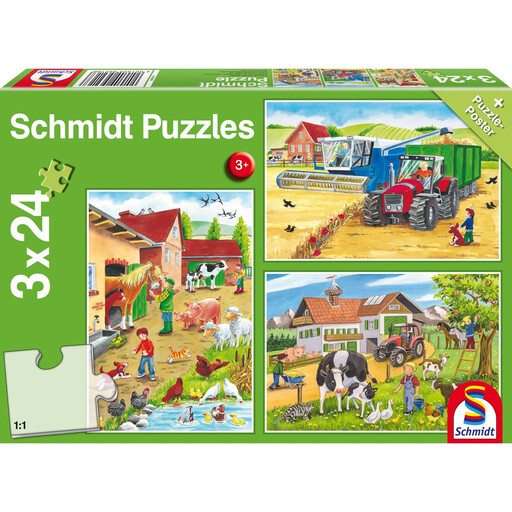
Why this product suits this profile: Three jigsaws, each with 24 pieces, offer a manageable introduction to puzzles from age 3. The farm scenes are ideal for short play sessions, alone or with an adult.
The number of pieces and recommended age are clearly stated, making it easier to judge the difficulty before you buy.
3 × 24 pieces, a matt linen-textured finish and product dimensions of 27.5 × 19 × 3.8 cm, according to the product details.
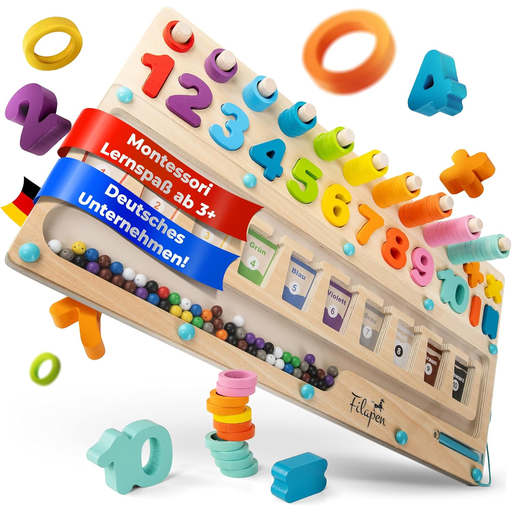
Why this product suits this profile: This wooden board combines a magnetic maze with colour-matching activities and numbers from 1 to 10. It’s a good fit for households looking for one toy that offers several simple activities.
The features are described as specific play activities. No batteries are needed, and the activities can be introduced one at a time.
Solid wood according to the product description, plus a magnetic pen, colour-matching activities and number slots; suitable from age 3.
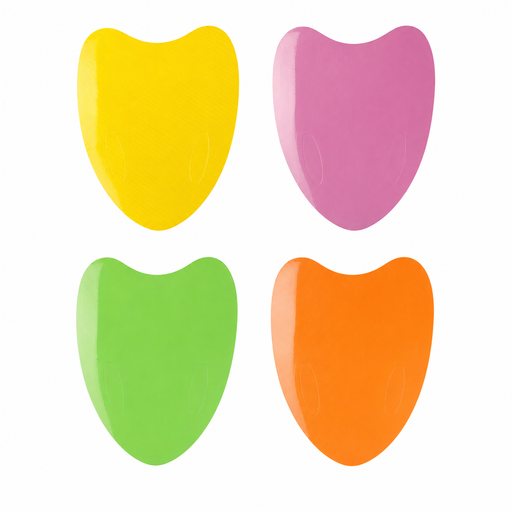
Why this product suits this profile: For children aged 3 to 8 who need active indoor play. It should be used under supervision on a dry, flat, non-slip surface.
The dimensions, age recommendation and safety instructions are provided. Check the board for cracks or damage before each use.
40 × 32.2 × 2.8 cm, a textured surface and A-shaped design, according to the product description; colour is sent at random.
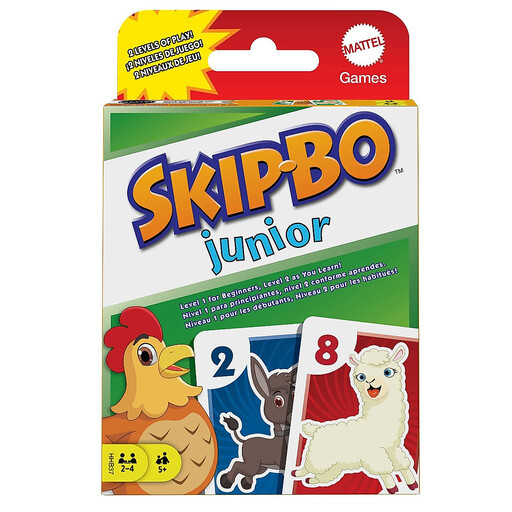
Why this product suits this profile: This card game is designed for 2 to 4 players aged 5 and over, making it a good choice for family game time. Two levels of play let you tailor the game to the players’ experience.
The basic rules are easy to follow, while the advanced version introduces extra decisions. That makes it clear what the game involves.
Number sequences from 1 to 10, two difficulty levels, 2–4 players and no batteries required, according to the product details.
We’ve put together a complete, regularly updated list of products that meet these strict selection criteria and fully comply with the safety regulations in force in the EU.
Games with clear, short activities and easy-to-hold pieces are a good choice. A 24-piece jigsaw, a simple sorting game or an age-appropriate motor skills toy can be a great way to get started. Watch out for small parts, and stay nearby while your child plays if needed.
Lifespan depends on the materials, build quality, how the toy is used and how it’s stored. Keep cardboard games dry, clean wooden toys according to the manufacturer’s instructions, and check moving parts regularly for damage. Stop using a toy if it has cracks, sharp edges or missing pieces.
Board games, jigsaws and many Montessori products don’t usually have ongoing costs. Electronic versions may need batteries, so check before you buy whether batteries are included, replaceable or sold separately.