
Lieferung heute & morgen

Qualitätsgarantie

Willkommens-Angebote freischalten: KOSTENLOSE Lieferung | Bis zu 80 % RABATT | Kostenlose 30-Tage-JoyPlus-Testphase
App herunterladen
By the Joybuy Product Recommendation Officer
Educational toys for children should keep them occupied, stimulate their curiosity and suit their age. In practice, however, unclear age recommendations, too many features and overlooked safety details can quickly lead to disappointing purchases. A toy may look educational on the packaging, but prove too noisy, too complicated or uninteresting after a short time in everyday use.
This 2026 selection helps parents, grandparents, relatives and childcare providers assess products according to age, play concept, materials, supervision and expandability.
A baby activity table with lights, buttons and sounds may appear versatile. What matters, however, is whether each element is accessible, easy to understand and safe to operate. For musical educational toys, you should also check the volume control, power supply and whether quiet play is possible.
‘From 12 months’ does not necessarily describe every possible play situation. Additional warnings, such as those concerning small parts or the need for supervision, are also relevant. This is especially important for stacking toys from 1 year, marble runs and experiment kits: parents should read the information on both the packaging and the product page.
Electronic toys often require batteries, which are not always included. With system toys, it may also be important to check whether a marble run extension is compatible with an existing starter set. Before buying, it is worth checking the contents, dimensions and replacement or additional parts.
The recommended age is a useful first filter, but it does not replace an assessment of the individual child. For babies from 6 months, simple elements that can be grasped, turned and used to make sounds are suitable. Toddlers benefit from manageable tasks such as sorting, stacking and pressing. From around 7 or 8 years, rule-based memory games, logic games or a crystal-growing experiment kit may be suitable.
For chemical experiment sets, the following applies: warning notices must be followed. According to the product description, the Clementoni set is intended for children aged 8 and over; adult supervision is recommended for children under 12.
Look for smooth surfaces, rounded edges and secure connections. For plastic products, details such as ABS or BPA-free materials can be helpful, but they do not replace checking for cracks and loose parts. The product should be inspected after unpacking and regularly during use.
The CE marking and references to EN 71 provide important information about compliance with European toy requirements. However, they are not a reason to overlook age-appropriate use or supervision. Small balls, game pieces, sticks and detachable parts should not be given to children for whom they are deemed unsuitable according to the warning notice.
Measure the available space before buying. An activity table should stand securely and must not block walkways. With a children’s musical instrument, volume is a practical consideration in the home. Battery-powered products should have an easily accessible volume control or silent mode.
Expandable systems, open-ended play tasks and several difficulty levels are well suited to long-term use. A children’s memory game can remain interesting for longer through increasingly complex sequences, while a marble run can be rearranged and extended using compatible elements.
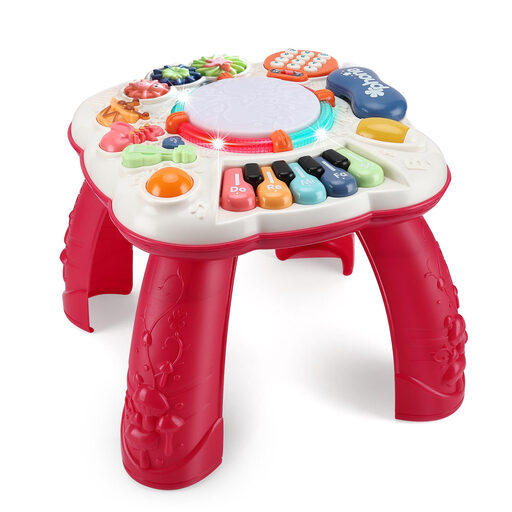
Why This Fits Their Persona: A versatile starting solution for families looking for several simple ways to keep little ones occupied in one product.
The product details mention six play areas, removable legs and volume control. Batteries are not included and should be factored in.
Can be used as a floor play panel or table; ABS material and rounded edges according to the product description.
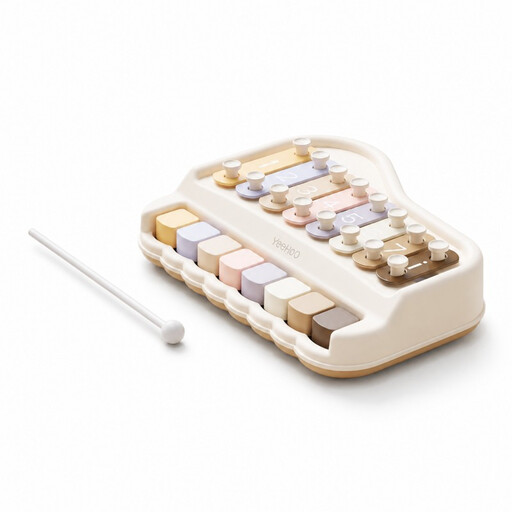
Why This Fits Their Persona: Suitable for households, nurseries or parent-and-child activities where an analogue children’s musical instrument is called for.
According to the product details, the instrument requires no batteries. Before use, the mallets and surface should be checked for damage.
Eight notes, two ways to play and a storage compartment for the mallets; recommended for ages 3 and over.

Why This Fits Their Persona: An option for children aged 8 and over who enjoy observing, documenting and following processes over several days.
The instructions guide users through the set-up step by step. However, the chemical components still require the explicitly stated adult supervision.
No batteries required; illustrated instructions and observations over several days.
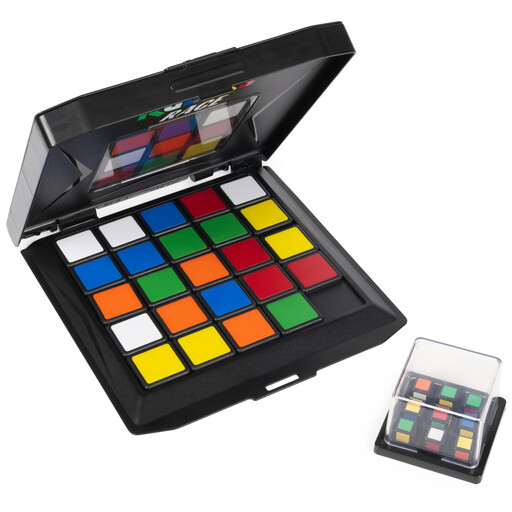
Why This Fits Their Persona: For children aged 7 and over, families and friends looking for a compact two-player game to enjoy at home or on the go.
The game has clearly defined rules and requires no batteries. Because it contains small parts, the warning applies to children under 3 years.
Two-player mode, folding game board, 48 coloured playing pieces and compact dimensions of approximately 17,5 × 19 × 2,1 cm.
Our selection includes more educational and activity games organised by age, type of play and intended use. Always check the latest product details and safety information before buying.
Simple games with large, easy-to-grasp elements are suitable, such as stacking, peg-in or sorting toys. Look for sturdy components, rounded edges and a warning notice that matches the intended use. For products containing small parts, read the age recommendation particularly carefully.
How long a toy remains in use depends less on the number of features than on whether the tasks can be varied. Expandable systems, such as a compatible marble run, or games with increasing difficulty can offer new ways to play over a longer period. With electronic toys, volume, battery consumption and robust controls are additional selection criteria.
No. A higher price may reflect the materials, brand, accessories or a more complex system. The specific details are more important when choosing: age recommendation, contents, rules, materials, safety warnings, batteries and possible extensions. This makes it possible to choose a creative gift for children objectively and appropriately.