
Lieferung heute & morgen

Qualitätsgarantie

Willkommens-Angebote freischalten: KOSTENLOSE Lieferung | Bis zu 80 % RABATT | Kostenlose 30-Tage-JoyPlus-Testphase
App herunterladen
Finding the right educational toy can be a challenge. The market is flooded with products that promise playful learning, but not all of them live up to the claims on their packaging. As a parent, grandparent, or relative, you want to give a gift that not only provides short-term excitement but also supports a child's development in a meaningful and lasting way.
This guide will help you avoid common purchasing pitfalls and understand the criteria that define educationally valuable toys. This way, you can make an informed decision that combines long-lasting fun with real learning benefits.
Before we turn to the selection criteria, it's helpful to know the typical problems that can lead to disappointment.
To avoid the pitfalls mentioned above, you should consider three key aspects in your decision. These will help you objectively assess a toy's quality and utility.
The manufacturer's age recommendation is more than just a rough guideline. It takes into account motor skills, cognitive capacity, and, most importantly, safety.
A toy's durability and safety are directly linked to its material and workmanship. Sturdy materials like high-quality, BPA-free plastic or certified wood are often a good choice. Check the finish for smooth surfaces, rounded edges, and stable connections. A well-made toy can withstand intensive play and bring joy for years to come.
Educational toys can be broadly divided into different categories that promote various skills:
To make your choice easier, we have compiled a few products based on the criteria mentioned, tailored for different profiles.
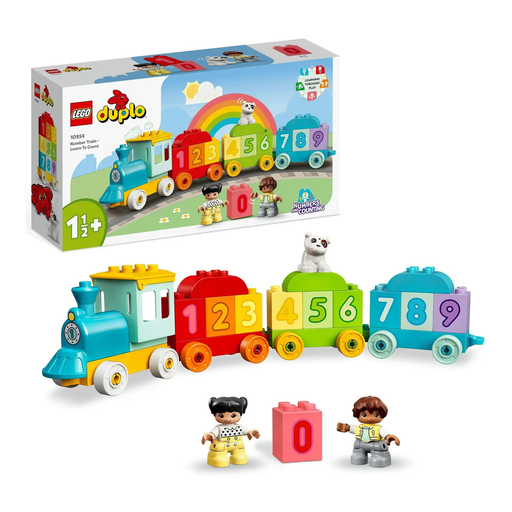
Why this product is a great fit: This set is ideal for toddlers to learn their first numbers and colours through play. The large, easy-to-grip bricks are safe and specifically promote fine motor skills as they stack, sort, and push the train.
It bypasses the "short-lived fun" trap because the train is compatible with all other LEGO DUPLO sets, allowing it to grow with the child and create ever-new play worlds.
Simultaneously promotes fine motor skills, colour recognition, and number recognition. Its robust and safe design is specially tailored to the needs of toddlers.
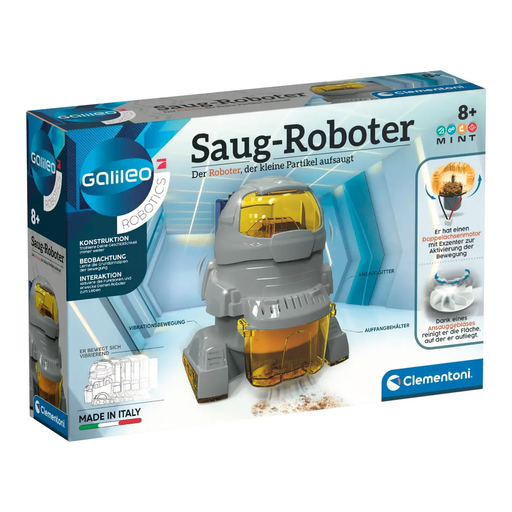
Why this product is a great fit: This STEM toy is designed for children interested in technology and mechanics. The kit offers a hands-on introduction to robotics, allowing kids to build a functioning robot themselves.
It counters the problem of "exaggerated learning claims" by delivering a tangible result. The child not only builds but also sees a functioning outcome of their work.
Teaches practical fundamentals of mechanics and electronics. The illustrated manual encourages independent work and problem-solving skills.

Why this product is a great fit: This globe combines geographical knowledge with interactive game modes. It's suitable for both independent exploration by the child and for joint quiz nights, making it a true family game.
The four different game modes (Explore, Quiz Show, Globe Detectives, World Tour) and over 9,000 facts provide variety and prevent the globe from becoming a mere decorative object.
Offers a wealth of audio-visual learning content that teaches about countries, cultures, and animals in an engaging and interactive way.
We've compiled a complete, up-to-date list of products that fully meet these strict selection criteria and EU safety regulations.
Look for the CE marking, which confirms the product complies with EU safety standards. Check the product description for information on the materials used (e.g., BPA-free plastic, non-toxic paints). High-quality workmanship is evident in rounded edges, sturdy components, and the absence of small parts that could easily detach (especially important for toys for children under three).
STEM is an acronym for Science, Technology, Engineering, and Mathematics. STEM toys are designed to introduce children to these disciplines in a playful way. Examples include science kits, robot-building sets, or programming games that promote logical thinking, problem-solving skills, and technical understanding.
The age recommendation is a crucial factor for both safety and enjoyment. A toy that is too complex can frustrate and overwhelm a child, while one that is too simple quickly becomes boring. Furthermore, the recommendation is based on safety aspects, such as the size of individual parts, to rule out a choking hazard for young children. It is advisable to adhere to this guideline to ensure a positive and safe play experience.