
Lieferung heute & morgen

Qualitätsgarantie

Willkommens-Angebote freischalten: KOSTENLOSE Lieferung | Bis zu 80 % RABATT | Kostenlose 30-Tage-JoyPlus-Testphase
App herunterladen
The search for the right educational toy for 3-year-olds can quickly become overwhelming. The market is filled with products that promise both fun and development. But not every toy that looks impressive at first glance lives up to its promise in daily use. As a Joybuy Product Recommendation Officer, I see every day which products truly add value and which ones quickly end up gathering dust. Before you make a decision, it's helpful to know three common pitfalls that often lead to regrettable purchases.
To avoid these traps and make an informed choice for a Christmas gift for a child or a birthday, you should pay attention to a few objective criteria. These will help you assess a toy's quality and utility, independent of advertising promises.
A child's safety is the top priority. A good educational toy is distinguished by its robust and child-safe design.
A toy is only beneficial if it matches the child's motor and cognitive abilities. For a three-year-old, simple, intuitive controls are crucial.
Good gift ideas for children are distinguished by the fact that they captivate for more than just one afternoon. They offer various incentives and can be rediscovered over and over again for a long time.
Based on these criteria, we have selected a few products from our range that are suitable for different needs and interests.

Why it fits this profile: Ideal for children who love to paint and draw without creating a mess. Its light weight and slim design make it a perfect travel toy for toddlers, providing quiet entertainment in the car, waiting room, or at a restaurant.
It avoids the complexity trap with a simple one-button erase function. The material trap is bypassed by using robust ABS plastic with rounded edges, making it safe and durable.
Promotes creativity without mess or wasted paper. Reusable and extremely portable.
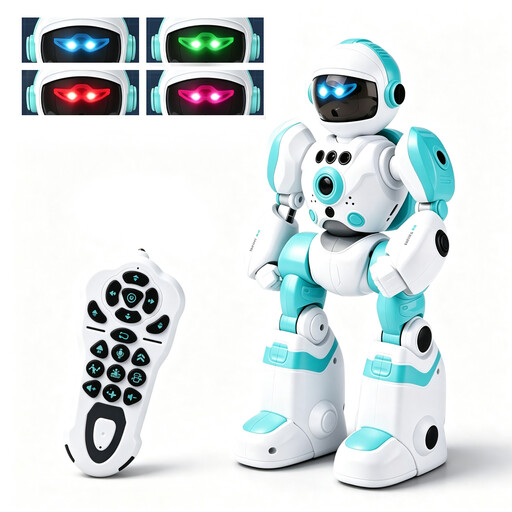
Why it fits this profile: This interactive toy is designed for children who are fascinated by technology and movement. It combines classic remote-controlled play with modern features like gesture control and simple programming, serving as a great first introduction to logical thinking.
It sidesteps the empty "educational value" trap by offering concrete, developmental features like one-key programming. The drop-resistant plastic material counteracts the material trap.
Fosters an understanding of technology and logical sequences. The combination of remote and gesture control ensures varied, engaging play.
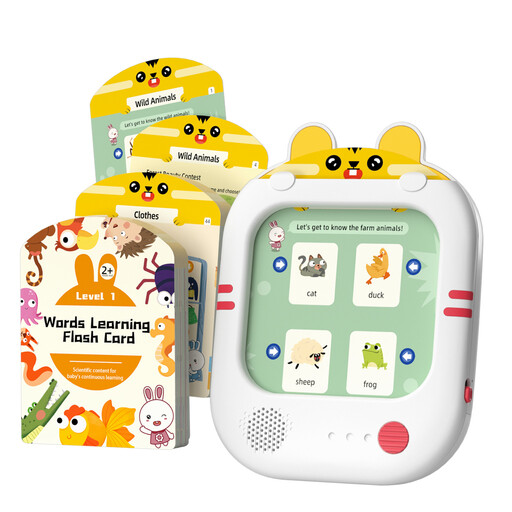
Why it fits this profile: An excellent choice for children who enjoy focused activities. This screen-free tablet specifically promotes language development and cognitive thinking with over 180 words and logic games, without overwhelming the child with the visual stimuli of a digital display.
It is the opposite of an overly complex toy, as it's based on a simple "press and listen" mechanic. The learning content is clearly defined (words, logic), which avoids the empty "educational value" label trap.
Enables screen-free, interactive learning. Encourages independent play and improves concentration skills.
Making the right choice is crucial for long-lasting fun. If you'd like to discover more products that meet our criteria for safety and educational value, you can find a more comprehensive selection here.
1. What should you look for regarding the safety of electronic toys? Besides the CE marking, it's important that the battery compartment is securely screwed shut and cannot be opened by children without a tool. This prevents small parts or batteries from being swallowed. Also, ensure that charging cables and ports are sturdily built.
2. How do you clean educational toys like LCD writing tablets or water-painting books? An LCD Writing Tablet should only be wiped with a soft, dry cloth. Do not use liquids or cleaning agents, as they can damage the electronics. For water-painting books, simply let the pages air-dry completely after use before closing the book. The water pen can be easily rinsed with clean water.
3. From what age is a remote control car suitable for a child? A simple remote control car with straightforward controls (forward/backward, left/right) is often suitable for ages 3 to 4. At this age, children are developing the necessary fine motor skills and the understanding of cause and effect to steer the vehicle intentionally. Models with more complex features like programming are better suited for children aged 4 or 5 and up.