
Lieferung heute & morgen

Qualitätsgarantie

Willkommens-Angebote freischalten: KOSTENLOSE Lieferung | Bis zu 80 % RABATT | Kostenlose 30-Tage-JoyPlus-Testphase
App herunterladen
Educational toys for children should not only look appealing, but also suit their age, abilities and family’s everyday life. With Montessori toys, wooden toys, motor skills toys and electronic options to choose from, finding the right product can be difficult. Some products promote numerous learning functions, but may only hold a child’s interest briefly because of small parts, complicated game rules or impractical storage.
A toy for children aged 1 and over is not automatically suitable for every toddler. Important factors include the size of the individual parts, complexity and the amount of hand strength required. A puzzle with small pieces may be suitable for older children, while baby toys for children aged 1 and over need larger, easy-to-grip elements.
The manufacturer’s age recommendation is therefore an important starting point. However, it does not replace parents’ judgement. Even when the stated age is appropriate, young children should be supervised during use.
Descriptions such as “educationally valuable” or “Montessori-inspired” say little on their own about how a product is actually used. Instead, look for verifiable information:
A shape-sorting game with a small number of clearly distinguishable shapes may be more suitable for beginners than an overloaded set with numerous functions.
A toy may appear versatile on paper and still be rarely used in everyday life. Bulky products require sufficient space. With wooden toys, smooth surfaces, sturdy connections and regular checks for damage are also important. When choosing a balance bike for children, factors such as seat height, handle design and the intended surroundings matter just as much as the weight.
Check the age recommendation directly on the product page and packaging. Warnings such as “Not suitable for children under 36 months” or “Contains small parts” are particularly important. Toys for younger children should not contain loose small parts that could be put in the mouth.
The CE marking indicates that the manufacturer has taken the applicable EU requirements into account. However, it is not an independent quality seal. You should also be able to verify the manufacturer’s details, warnings and the responsible contact address.
Wooden toys made from FSC-certified wood can provide clear information about the material’s origin. The certification relates to where the wood comes from, not automatically to every characteristic of the finished toy. You should therefore also check:
For electronic educational toys, the battery compartment, volume control and automatic shut-off function are useful points to check. A product with light and sound effects should not be chosen solely because it offers numerous functions.
Compact dimensions and easy storage are helpful for everyday use. A shape-sorting game in which the blocks can be stored inside the casing helps reduce loose pieces lying around. For a balance bike, weight, wheel size, seat adjustment and steering angle are key factors. The right model should be easy for the child to control and used only on suitable, protected surfaces.
The following products cover different age groups and play situations. The information is based on the respective product descriptions. Before buying, read the full safety information on the product page.
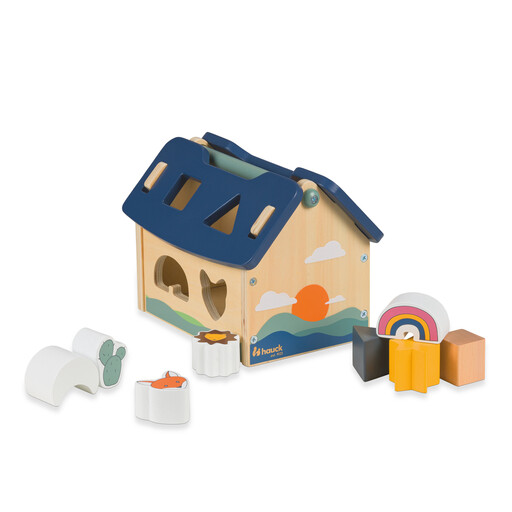
Why this product suits the profile: According to the product description, this shape-sorting game is intended for children aged 12 months and over. It combines sorting, placing and storage in one casing.
The age recommendation, the eight included blocks and the warning about small parts are clearly stated. The blocks can be stored inside the house.
FSC-certified wood according to the supplier, a removable roof and a carry handle for transport and tidy storage.
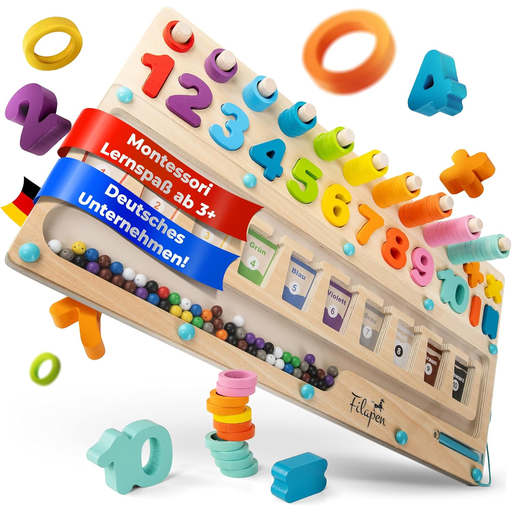
Why this product suits the profile: This Montessori-inspired motor skills toy combines a magnetic maze with colour and number matching. According to the description, it is designed for children aged 3 and over.
Instead of making general learning claims, the product description lists specific tasks: guiding balls through a maze and matching numbers from 1 to 10. Small parts and the need for supervision are stated.
Wooden construction, no batteries required, and activities focused on fine motor skills, colours and numbers.
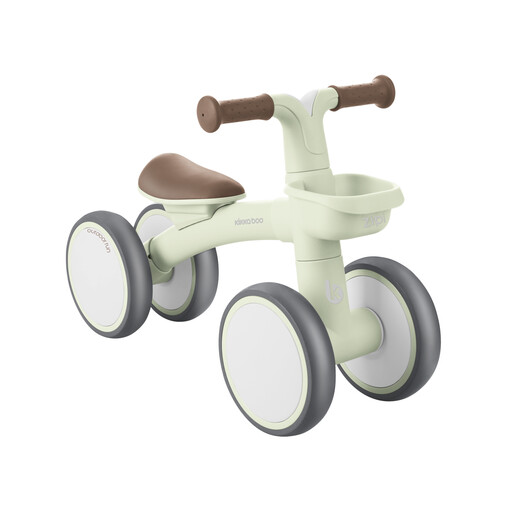
Why this product suits the profile: According to the product details, this balance bike is suitable for active families and features a weight of 2 kg, EVA wheels and an adjustable seat for children aged 1 to 3 years.
The product details specify the dimensions, weight, age range and limited steering angle. This makes it easier to compare the bike’s suitability with the child’s height and intended surroundings before buying.
Lightweight aluminium frame, quiet EVA wheels, adjustable seat and removable basket.
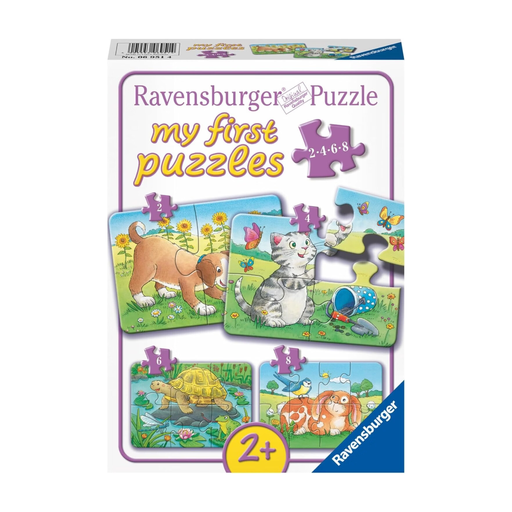
Why this product suits the profile: This puzzle for children aged 2 and over contains four pictures with increasing levels of difficulty. It is suitable for calm playtime alone or together.
The number of puzzles, age range and material are clearly described. Sturdy cardboard pieces are easier for small hands to handle than very thin individual pieces.
Four pictures with different levels of difficulty, easy-to-grip cardboard pieces and battery-free play.
For babies and toddlers up to around 2 years old, manageable options such as a baby play mat with a play arch, a large wooden puzzle or a simple stacking toy are usually suitable. According to its description, the roba Montessori Baby Play Arch is intended for use from the early baby stage. A level standing surface, checks of all connections and close supervision are important.
From around 2 to 4 years old, children’s puzzles, sorting games and their first number or colour games can become a more regular part of everyday life. For children aged 3 and over, more complex motor skills toys and magnetic games with clear tasks can be introduced. Small parts must not be allowed to enter the mouth.
Movement-focused products may also be suitable for children between 3 and 7 years old. A balance bike should only be used under direct supervision and on suitable, protected surfaces. Depending on the situation, a helmet and suitable protective equipment may be advisable. A balance bike is not a substitute for road safety education and is not intended for use on public roads if the manufacturer excludes this.
We have put together a complete, regularly updated list of products that fully meet these strict selection criteria and the safety regulations applicable in the EU.
Large, easy-to-grip blocks, a simple shape-sorting game, a wooden puzzle with handles or a stacking toy may be suitable. Check the age recommendation, make sure there are no small parts and look for a product that can be cleaned easily. Young children should be supervised during use.
How long a toy remains in use depends on the child’s interests, stage of development and play opportunities. Products with several levels of difficulty, such as a puzzle set with different pictures or a sorting game with additional storage functions, may remain relevant for longer. However, there is no guarantee of a specific period of use.
Wooden toys can be sturdy and durable when the material and workmanship are clearly stated. However, they are not automatically suitable for every child or situation. Electronic toys, cardboard puzzles and movement toys serve different purposes. Age, safety information, dimensions, care requirements and the child’s individual interests remain the deciding factors.