
Lieferung heute & morgen

Qualitätsgarantie

Willkommens-Angebote freischalten: KOSTENLOSE Lieferung | Bis zu 80 % RABATT | Kostenlose 30-Tage-JoyPlus-Testphase
App herunterladen
Educational toys for children should offer more than a brief distraction. Parents, grandparents, relatives and educational settings often look for products that are suitable for the child’s age, easy to use and suited to their stage of development. At the same time, the sheer amount of choice can make it difficult to decide. Terms such as educational toys, Montessori toys and STEM toys do not automatically guarantee that a product is of the right quality.
A children’s educational game is not suitable simply because it is described as “educationally valuable”. What matters is what the child actually does: sorting pieces, recognising patterns, connecting components, following rules or practising everyday tasks. So, check the product description for clear, practical features rather than relying on general marketing claims.
A product may be interesting for a five-year-old but pose a safety risk to a toddler. Small play pieces, magnets, cords and removable accessories must be suitable for the stated age group. The warning is especially important for magnetic building blocks for children: swallowing magnets can have serious health consequences. An age recommendation also does not replace supervision where the play situation calls for it.
Large construction toys need storage space and a suitable area for play. With activity toys for toddlers, light weight, compact dimensions and easy cleaning are often more important. Before buying, also check how many pieces are included, whether batteries are needed and whether accessories need to be stored separately.
For children aged 1 to 3, choose manageable activities with pieces that are easy to grasp, securely attached or large enough. An activity book with zips, buttons and hook-and-loop fastenings can recreate everyday tasks through play. Children aged 3 to 7 can take on more complex challenges, such as puzzles for children, memory games, construction activities or simple strategy games.
The age guidance on the packaging and product page should match how the toy will actually be used. For nurseries and educational settings, it can also be helpful to use the toy in small groups under supervision and count the pieces after each use.
Look for:
For example, the XINQIYUAN magnetic tile set lists 100 pieces, 2.5 cm tiles, ABS plastic, a storage bag and an age recommendation of 3+. The product description specifically warns about small parts and magnets. Information such as CPC or ASTM should not be taken as a blanket statement that every European safety requirement has been met. Always check the labelling and warnings for the specific product.
Good value for money is about more than the number of pieces. Ask yourself:
A memory game, a dice puzzle or a classic board game for children can be played regularly in short sessions. A workbench or large construction toy is better suited to a dedicated play area.
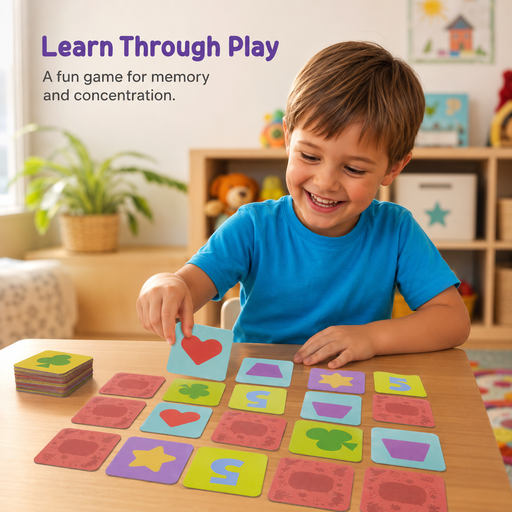
Why this product suits this profile: This memory game pairs matching cards with shape and colour recognition, and doesn’t take up much space.
The aim of the game is clear, so your purchase doesn’t depend on vague learning promises or extra accessories.
Compact design, suitable for family play, and a combination of memory, colour and shape recognition.
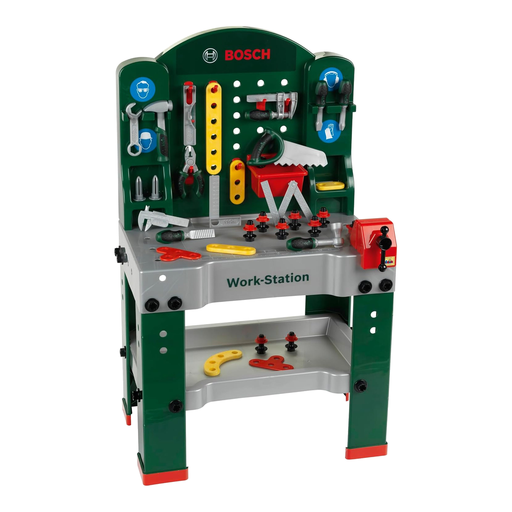
Why this product suits this profile: Designed for children aged 3+, this workbench comes with 44 pieces, a work surface, a vice and storage space.
The product dimensions of 61 × 44,5 × 101 cm and the number of pieces are listed, so you can check how much space it needs and what’s included before buying.
A range of clearly named tools, no batteries required and tidy storage at the workbench.
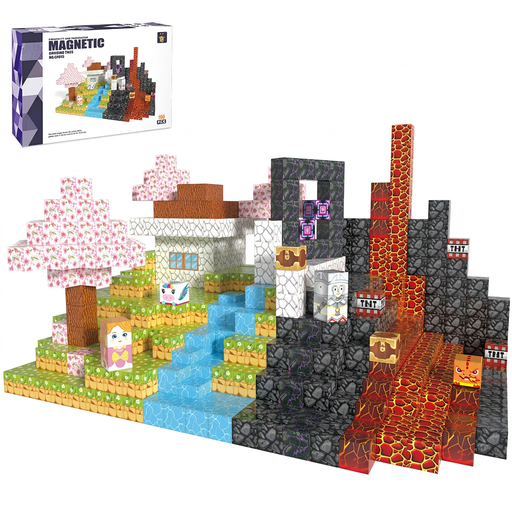
Why this product suits this profile: Suitable for children aged 3+, this set includes geometric shapes for open-ended building at home, at school or while travelling.
The number of pieces, tile size, material and magnet warning are all clearly stated, making it easier to plan how the set will be used and what safety precautions are needed.
100 pieces, a storage bag and compatibility with other magnetic tiles measuring 2,5 cm.

Why this product suits this profile: This 15-in-1 activity book is described as suitable for toddlers aged 1 to 3 and can be used at home or on the go.
It focuses on practical everyday tasks such as fastening buttons, tying laces, using zips and hook-and-loop fastenings, rather than making only a general claim about learning.
Lightweight felt, a compact design and quiet play without batteries, according to the product description.
We’ve put together a complete, regularly updated list of products that meet these strict selection criteria and fully comply with the safety regulations in force in the EU.
For children aged 1 and over, look for simple, easy-to-grasp activities with clear age guidance. A busy book can recreate everyday tasks. Avoid small parts, magnets and loose accessories for this age group. Adult supervision may still be needed, depending on the product and how it is used.
How long a toy lasts depends on its materials, construction, variety of play and how it is stored. A set with several building shapes or levels of difficulty may hold a child’s interest for longer than a product with just one activity. Clean the surfaces according to the manufacturer’s instructions and store all the pieces somewhere dry, making sure they’re all together.
The price depends on factors such as the materials, number of pieces, size and range of features. An inexpensive puzzle or memory game may be enough for short play sessions. Larger sets, such as magnetic building blocks or a children’s workbench, need more storage space but offer several ways to play. So, the purchase price isn’t the only thing to consider: what matters is whether the product suits the child’s age, interests and everyday life.