
Lieferung heute & morgen

Qualitätsgarantie

Willkommens-Angebote freischalten: KOSTENLOSE Lieferung | Bis zu 80 % RABATT | Kostenlose 30-Tage-JoyPlus-Testphase
App herunterladen
Educational toys for children should offer more than just a quick distraction. Parents, grandparents and relatives often look for creativity, learning opportunities and safe construction. At the same time, the choice is vast: construction toys, craft kits, role-play toys and themed play worlds differ significantly in age recommendation, number of parts and the level of supervision required.
Three common buying mistakes frequently lead to unsuitable products:
The manufacturer's age recommendation is your first point of reference. For children under three, toys with small parts are generally a concern because of the potential choking hazard. Even a product recommended for age three and up should initially be used under supervision if it contains many individual pieces.
Examples from the selection:
Look for clear details about materials, edges and care. With plastic toys, for example, rounded edges, an understandable instruction manual and information about batteries are important. The CE marking is mandatory in the EU, but it does not replace reading the safety warnings.
Also practically important are:
With eco-friendly craft toys, the material information should be specific. Playmais Classic is described as being made from corn starch, water and food colouring, and is biodegradable. The pieces are joined together using a damp sponge. However, it is not intended for eating and contains small parts – so the age recommendation of 3 years and the supervision advice remain relevant.
A large set is not automatically the right choice. For travel, compact, quiet activities are ideal. At home, more extensive construction or role-play sets can be more suitable. Check before you buy:
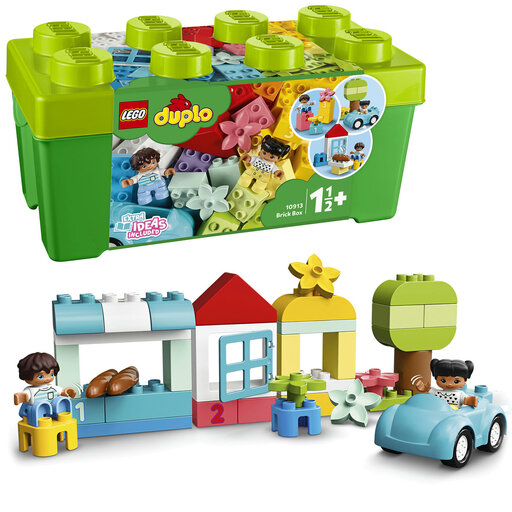
Why this product suits the profile: The box contains 65 pieces, including figures, number bricks, a vehicle and storage options. It is suitable for first building and sorting games from around 18 months.
The specific number of pieces and the age recommendation make the choice clear. The box also helps keep individual parts organised after play.
65 chunky bricks, numbers 1 to 3 and two figures support free building and simple role-play.
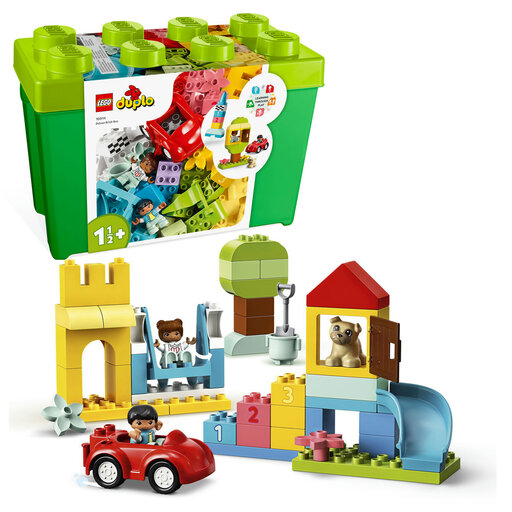
Why this product suits the profile: The Deluxe Box offers 85 pieces, including figures, a vehicle, number bricks and accessories for everyday scenes. It is aimed at children from around 1.5 years.
The product details list the number of pieces, age group, materials and care instructions. This makes it easier to match the set to your available space before buying.
85 building pieces and a sturdy storage box offer multiple construction and role-play possibilities.
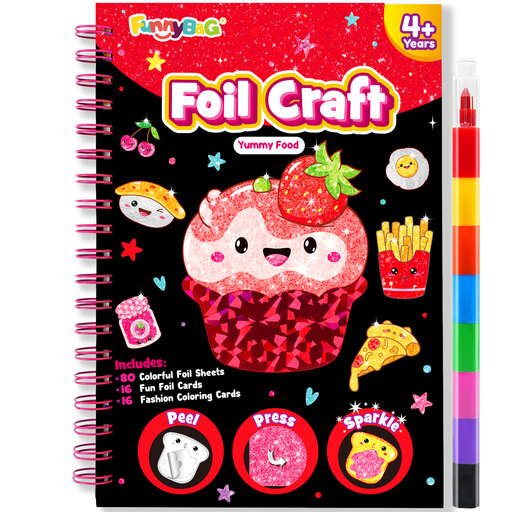
Why this product suits the profile: For travel, waiting times and quiet afternoons, this compact craft kit is designed for children aged 4 and up. The theme includes cake, pizza, sushi and sweets.
According to the description, the set requires neither glue nor scissors. With 112 pieces and a compact format, its purpose is clearly focused on creative individual projects.
80 foils, 16 design boards, 16 colouring cards and a spinning stylus with eight colours; the process involves peeling, placing and pressing.
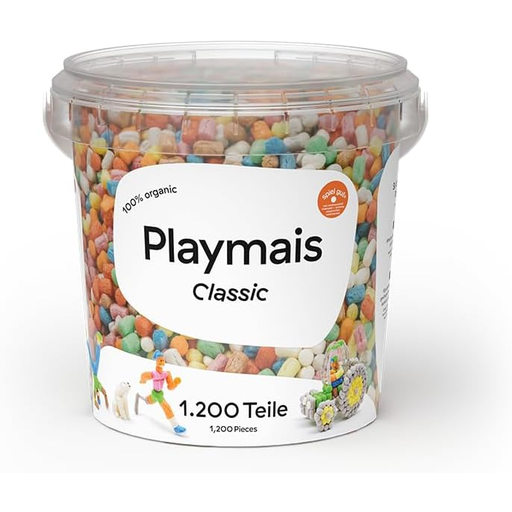
Why this product suits the profile: The large quantity is ideal for repeated craft projects at home. The set is intended for children aged 3 and up and includes a sponge and craft knife.
Joining with water means no extra glue is needed. The material, quantity and storage advice are clearly stated; however, the small parts still require supervision.
1,200 coloured pieces made from corn starch, water and food colouring; described as biodegradable and usable without batteries.
We have put together a complete, regularly updated list of products that fully meet these strict selection criteria and the safety regulations in force in the EU.
For children from around 1 year old, large, easy-to-grip building blocks with few complicated functions are ideal. LEGO DUPLO sets from 1.5 years, for example, contain larger building elements and simple accessories. Small individual pieces should be kept out of reach of younger siblings.
How long a toy stays interesting depends more on open-ended play possibilities than on the number of advertised features. Building blocks, figures and craft materials can often be used in different scenarios. With electronic features, you should also check the battery type, battery availability and the scope of manual play.
For on the go, compact craft kits for children such as a foil art set are practical because no glue or scissors are needed. Small construction sets can also work, provided the individual pieces are transported safely and collected completely after use. The age recommendation remains important regardless of where the toy is used.