
Lieferung heute & morgen

Qualitätsgarantie

Willkommens-Angebote freischalten: KOSTENLOSE Lieferung | Bis zu 80 % RABATT | Kostenlose 30-Tage-JoyPlus-Testphase
App herunterladen
Educational toys for children should do more than simply keep them occupied. They should encourage active thinking, building, movement or communication. However, choosing the right product can often lead to disappointing purchases: a toy may seem particularly versatile because it has lots of functions, but barely get used after a short time. Other products may not be suitable for the child’s age or may contain small parts that are easily overlooked in everyday family life.
Lights, music, buttons and sensors do not automatically provide educational value. What matters is whether the child can act independently and recognise connections. A toy with just a few clear functions can remain more engaging over time than a product packed with sound effects.
“From 3 years” is not a general recommendation for every child. The child’s stage of development, interests and ability to follow rules are also important. With magnetic building blocks, marble runs and construction toys, particular attention must be paid to warnings about small parts. Babies have different requirements from children’s toys intended for ages 3 and over.
Before buying, it should be clear where the toy will be used and how it will be stored. A large marble run requires a level surface, while an electronic interactive children’s toy may need batteries or a charging connection. With role-play toys such as a children’s cash register, it is also important to check whether all the accessories can be stored away neatly.
The manufacturer’s age recommendation is the first filter. For babies and toddlers, choose products without loose small parts and with easy-to-grip, rounded shapes. Baby toys should always be used within reach of a supervising adult.
For children aged 3 and over, suitable options may include children’s construction vehicles, role-play toys, simple board games and larger building blocks. From around the age of 6, more complex models, construction toys, hand-control toys or larger magnetic building sets may be appealing. However, an age recommendation does not replace the need for supervision.
Pay attention to:
Magnetic toys require particular care. If magnets are swallowed, they can cause serious injury. Magnetic building blocks should therefore be kept away from children who still put objects in their mouths. Damaged parts with visible magnets should be removed immediately.
Taking an objective look at the specific function can help you make the right decision. For example, a construction vehicle with a movable tipping bed allows children to load and unload materials manually. A children’s cash register with a calculator, scanner and play money provides opportunities for counting and role play. A hand-control toy, on the other hand, requires enough clear space and clear safety rules.
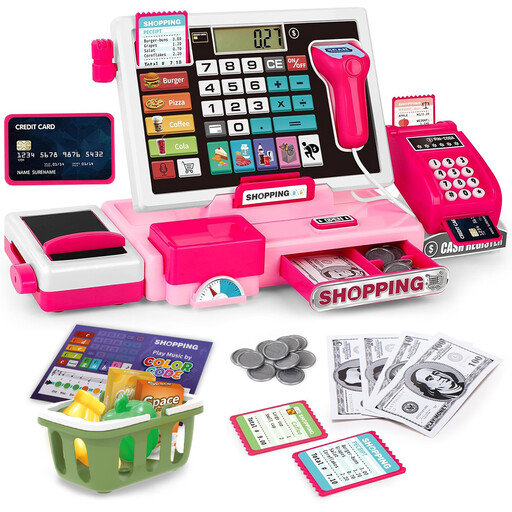
Why this product suits this profile: This children’s cash register combines role play with simple maths and counting activities. It is intended for children aged 3 and over and requires batteries, which are not included according to the product information.
The functions are clearly listed: calculator, scanner, play money, pretend card, lights and sound. This makes it easy to check before buying whether the accessories suit the type of role play you have in mind.
37.49 × 8.99 × 19 cm, 720 g, plastic, rounded edges and an integrated calculator.
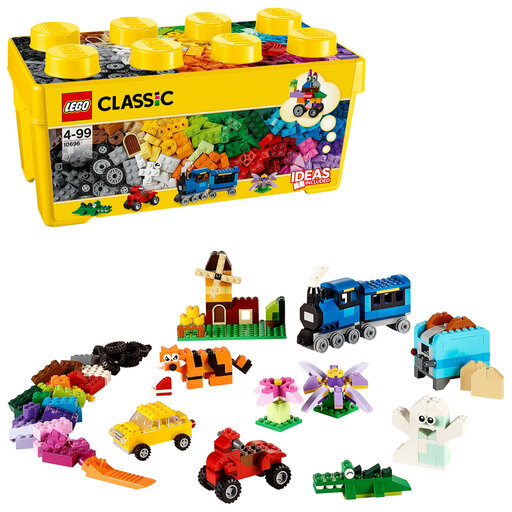
Why this product suits this profile: The box contains 484 elements, including wheels, windows, eyes and baseplates. It is suitable for open-ended building and can be combined with existing LEGO Classic bricks.
The number of pieces and the shapes included are clearly specified. The storage box makes sorting the pieces after play less of a chore.
ABS plastic, 484 elements, storage box, building ideas and age recommendation from 4 years.

Why this product suits this profile: The four PVC floor tiles are designed for playrooms, movement areas or sensory play spaces. When stepped on, the visible liquid inside the sealed tiles shifts.
The format and pack contents are clearly stated. According to the product description, the sealed surface can be wiped clean; check it for damage before use.
Four tiles, each approximately 29.97 × 29.97 cm, made from PVC with visible liquid movement under pressure.
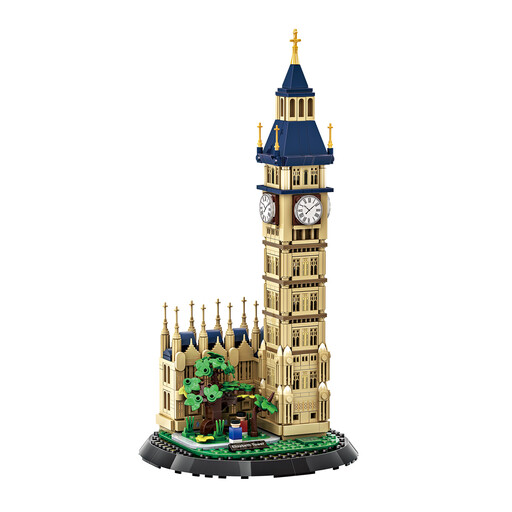
Why this product suits this profile: This architectural model is aimed at older children from around 6 years, as well as adults who want to build together or display models. The 783 pieces require more time and a dedicated space for assembly.
The number of pieces, ABS material and recommended supervision are specified. Because it contains small parts, the set is not suitable for children under 3 years.
783 ABS pieces, architectural subject, gift box and use as a building or display model.
We have put together a complete, regularly updated list of products that fully meet these strict selection criteria and the safety regulations applicable in the EU.
Suitable options may include larger building blocks, role-play toys, simple children’s construction vehicles and age-appropriate board games. Always check the specific manufacturer’s information. Small parts, marbles and strong magnets should be kept away from children who could swallow them.
Their lifespan depends on the material, mechanism, storage conditions and how intensively they are used. Fully mechanical products such as building blocks or a construction vehicle do not require batteries and can be used for a long time if stored carefully. With electronic toys, the battery compartment, cables, charging connection and moving parts should be checked regularly.
Battery-powered products incur the cost of replacement batteries. USB-rechargeable models require a suitable charger or power supply. Also check whether batteries are included. Manually operated products such as LEGO building blocks, magnetic building blocks or a traditional marble run have no ongoing energy costs.