
Lieferung heute & morgen

Qualitätsgarantie

Willkommens-Angebote freischalten: KOSTENLOSE Lieferung | Bis zu 80 % RABATT | Kostenlose 30-Tage-JoyPlus-Testphase
App herunterladen
Educational toys for children should do more than simply keep them occupied. They should encourage active exploration, building, movement or sorting. However, choosing the right product can often be confusing for parents, grandparents and carers: age recommendations may be interpreted differently, accessories may be missing or a product may not suit the child’s actual stage of development.
That is why it is worth looking at specific product details before buying, rather than relying on general marketing claims.
A large number of building blocks or accessories may sound appealing at first. For younger children, however, an extensive set can quickly become overwhelming. What matters is whether the toy is easy to understand and can be expanded step by step. A small starter set with clear instructions may be more useful than a large collection that is difficult to sort.
‘Toy for ages 3 and up’ does not automatically mean that every child from this age can play with it without supervision. Marbles, magnets and other small parts may pose a choking risk. The manufacturer’s specific warning, the size of the components and the level of supervision required should therefore always be considered together.
A balance bike for children or a baby walker requires a safe, level area free from obstacles. Stairs, sloping paths, cables and thresholds can restrict how the product is used. When choosing a movement toy, you should therefore consider not only its design, but also where it is intended to be used.
For babies and toddlers from around 9 months, products that enable simple grasping, pushing or turning movements may be suitable. For example, a baby walker with manual activity elements can combine several different hand movements. The Chicco Happy Hippy Walker product description states that it is suitable for 9 to 24 months and for children who can sit independently.
For children aged 3 and over, Montessori motor-skills toys, simple sorting activities and construction toys are often suitable. For example, a magnetic maze with number and colour matching combines several play steps without requiring batteries.
When choosing a marble run for children, the minimum age should be checked particularly carefully. According to the product information, Hubelino sets are intended for children aged 4 and over. Because they contain small marbles, younger children require direct supervision.
Look out for the following information:
The XINQIYUAN magnetic building block set specifically warns that it contains small, powerful magnets. The pieces should be checked for cracks and damage. If a magnet becomes visible or loose, the toy should no longer be used.
For movement toys, seat height, weight, wheel configuration and the base area are all relevant factors. A four-wheeled baby walker may offer a different level of stability by design than a traditional two-wheeled model. Even so, the fit must be right for the child and their height.
For construction sets, storage matters just as much as the number of pieces. A carry bag or case can help keep all the small parts together and ensure that the toy is stored neatly between uses.
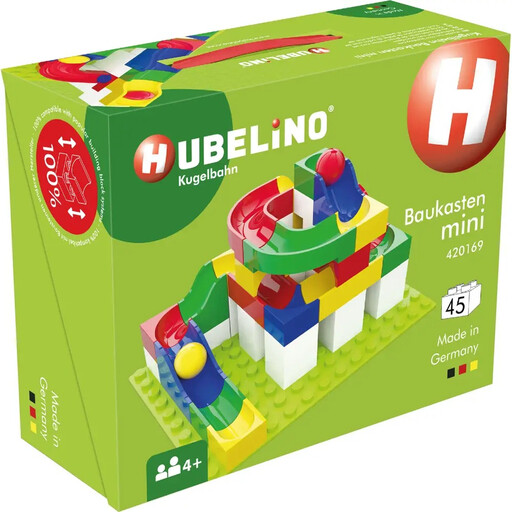
Why this product suits this profile: The 45-piece set offers a clear introduction to the marble-run system and includes a base plate, building blocks, track elements, marbles and instructions.
The number of pieces remains manageable, while the instructions make it easier to create the first designs. Storing everything in the case reduces the risk of losing important small parts.
45 pieces, no batteries required, suitable from 4 years according to the product information and compatible with other Hubelino products.
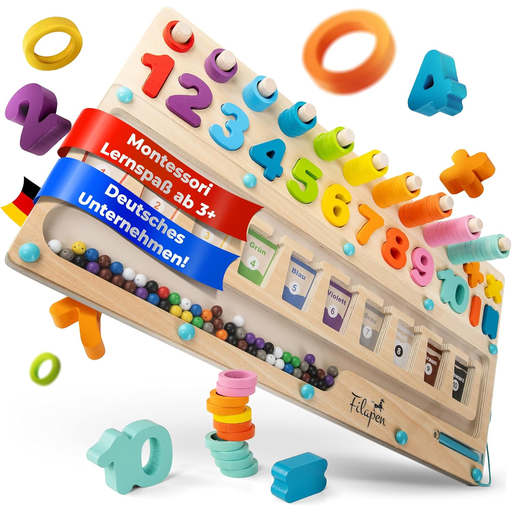
Why this product suits this profile: This wooden toy combines a magnetic maze with colour matching and numbers from 1 to 10. This makes it suitable for a range of different play activities.
Rather than relying solely on colourful design, the board includes specific matching activities. The product information refers to certified materials and use under direct supervision.
Solid wood, numbers 1–10, magnetic pen, no batteries and suitable from 3 years according to the product information.
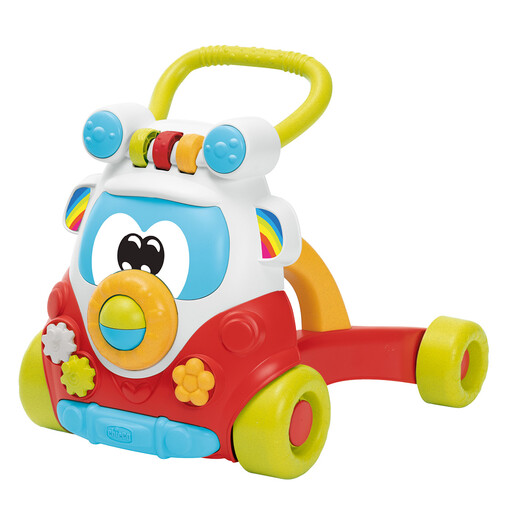
Why this product suits this profile: The baby walker combines push-along support with a manual activity centre and, according to the product information, is intended for children aged 9 to 24 months.
Use is subject to clear conditions: the child must be able to sit independently, must not be left unsupervised and should not use the product near stairs or on sloping surfaces.
2-in-1 design, four large wheels, five manual activities and easy care with a damp cloth.
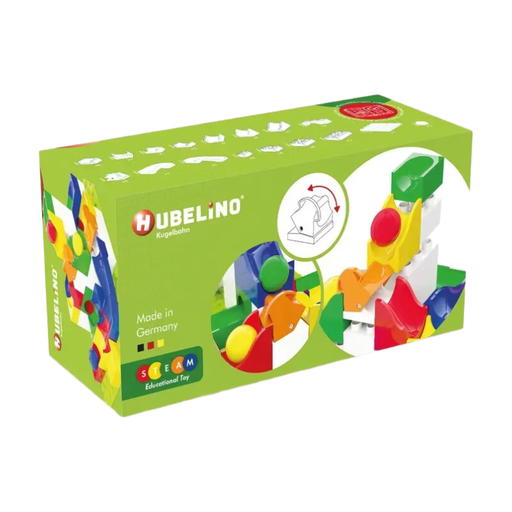
Why this product suits this profile: This 43-piece expansion set is suitable for families who want to extend an existing marble run.
This is explicitly an expansion set. Before buying, you can therefore check whether you already have compatible building blocks and the necessary base set.
43 pieces, ABS plastic, suitable from 4 years, compatible with popular building-block brands and no batteries required.
We have put together a complete, regularly updated list of products that fully meet these strict selection criteria and the safety requirements applicable in the EU.
Depending on their stage of development, children aged 3 and over may enjoy Montessori motor-skills toys, simple construction sets, colour and number games or magnetic building blocks. The specific age marking, the size of the pieces and the child’s ability to follow safe-use rules are all important.
How long a toy remains useful depends less on the marketing term ‘grows with your child’ than on the different ways it can be played with. Products with several difficulty levels, open-ended building tasks or combinable elements can be used for longer. For a set, you should also consider replacement and expansion options, as well as storage.
Many motor-skills boards, marble runs and building-block sets work without batteries. Ongoing costs usually only arise from optional expansions, replacement parts or consumable materials. Before buying, check whether the product can be used fully as a starter set or requires additional accessories.