
Lieferung heute & morgen

Qualitätsgarantie

Willkommens-Angebote freischalten: KOSTENLOSE Lieferung | Bis zu 80 % RABATT | Kostenlose 30-Tage-JoyPlus-Testphase
App herunterladen
The search for the right educational toys can quickly feel overwhelming. The market is filled with products that promise playful learning, but not all of them live up to their claims. As a parent, grandparent, or relative, you want to give a gift that not only brings joy but also meaningfully supports a child's development.
Many buyers invest in toys that are ignored after a short time or turn out to be unsuitable for the child's developmental stage. This guide will help you navigate the typical pitfalls and make an informed decision.
Before you make a purchase, it's helpful to know the most common issues that lead to disappointment and unnecessary expenses.
To avoid a bad buy, focus on three objective criteria that determine the true value of an educational toy.
The child's safety is the top priority. Pay attention to the following points:
A good educational toy adapts to the child, not the other way around.
The right level of challenge is crucial for fun and learning.
Here are some product recommendations tailored to different needs and developmental stages.

Why it's a great fit: Ideal for infants who are beginning to grasp purposefully. The light weight and flexible structure make it easy for little hands to grab, hold, and explore the ball without causing frustration.
The open-ended design with 32 holes is extremely versatile—it can be rolled, thrown, and squished. This keeps it interesting for months, avoiding the short-lived fascination trap.
The patented, flexible design is free of BPA, PVC, and latex. The smooth surface is easy to clean, which simplifies hygiene in a baby's daily life.

Why it's a great fit: Perfect for parents looking for a screen-free, quiet activity for on the go, such as in the car, waiting room, or at a restaurant. It specifically promotes fine motor skills and concentration.
This book offers 15 different activities, from zippers to buttons. This variety ensures long-lasting interest and prevents monotony. The age range (1-3 years) is precisely tailored to the development of fine motor skills during this period.
Made from soft, durable felt with reinforced stitching. All parts are securely attached to minimise safety risks. Its lightweight and compact format makes it a convenient travel companion.
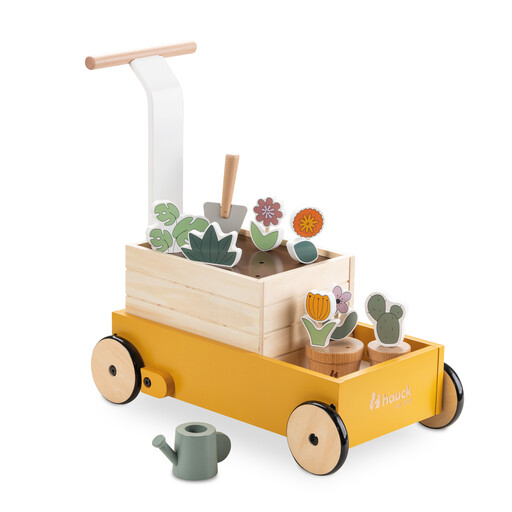
Why it's a great fit: For families who value sustainable materials and multifunctional design. It not only serves as a support for first steps but also as a play centre and a wagon for other toys.
The 2-in-1 function as a walker and role-playing toy ensures a long lifespan. The braking system on the wheels allows for speed adjustment and increases safety, a feature often missing from simpler walkers.
Made from durable wood from FSC-certified forests. The robust construction offers stability and safety for children taking their first steps.
We've compiled a complete, up-to-date list of products that fully meet these strict selection criteria and German safety regulations.
1. How can I identify safe educational toys? In addition to the mandatory CE mark, look for voluntary test seals like the GS mark ("Geprüfte Sicherheit" or "Tested Safety"), which is awarded by an independent body. Check the product description for information on non-toxic materials (e.g., BPA-free, solvent-free paints). For toys intended for children under three, it is a legal requirement that they must not contain any small parts that can be swallowed.
2. What exactly does "Montessori Toy" mean? The term is not protected, but it refers to play materials that follow the principles of Maria Montessori. Typical features include: the use of natural materials like wood, a realistic design (instead of fantasy figures), and a focus on promoting independence and practical life skills. A "Busy Board" for practising with fasteners is a classic example.
3. How many educational toys are appropriate for a child? Here, quality often trumps quantity. An excessive amount of toys can lead to overstimulation and difficulty concentrating. A smaller selection of high-quality, open-ended toys that offer various play possibilities is often more valuable. Regularly rotating the available toys can also re-spark interest.