
Lieferung heute & morgen

Qualitätsgarantie

Willkommens-Angebote freischalten: KOSTENLOSE Lieferung | Bis zu 80 % RABATT | Kostenlose 30-Tage-JoyPlus-Testphase
App herunterladen
The selection of educational toys is vast, and manufacturers' promises are often grand. But not every toy advertised as "educationally valuable" lives up to its claim. As a Joybuy Product Recommendation Officer, I see daily which products bring joy and which ones quickly gather dust in a corner. This guide will help you navigate the common pitfalls and make an informed decision that benefits both your child and your wallet.
Before we turn to the best-in-class examples, it's important to understand the most common problems. Many well-intentioned purchases turn into disappointments for these reasons:
To avoid the pitfalls mentioned above, you should check three core aspects before purchasing. These will help you objectively evaluate the quality and long-term value of a toy.
Safety is the highest priority, especially with toys for toddlers. Look for the CE mark, which confirms that the product meets EU safety requirements. Robust materials like high-quality ABS plastic are often more durable than brittle plastic and can withstand even intensive play. Also, check the finish for sharp edges or small loose parts that could pose a choking hazard.
A good educational toy promotes skills without being prescriptive. Open-ended play concepts, where there is no single correct solution, often have the advantage here. STEM toys (Science, Technology, Engineering, Mathematics) and creative children's toys like building blocks or expandable marble run systems stimulate the imagination and can be combined in new ways again and again. A high replay value often justifies a higher purchase price, as the toy will be used for a much longer period.
The ideal educational toy grows with the child or offers different levels of difficulty. Look for products that are either part of an expandable system (e.g., LEGO DUPLO, GraviTrax) or offer different play modes for various age groups. This keeps the toy relevant for years. Family games are also a great choice, as they are often designed so that both younger and older family members can have fun together.
Here are some product recommendations tailored to different needs and age groups, all of which meet the criteria mentioned above.
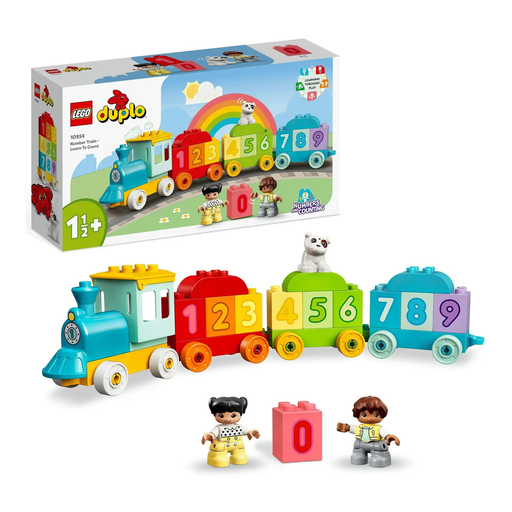
Why this product is a great fit: Perfect for toddlers to playfully learn their first numbers, colours, and the concept of cause and effect. The large, easy-to-grip bricks are safe and promote fine motor skills.
This set avoids the "one and done" effect because, as an open-ended building system, it's compatible with all other LEGO DUPLO products, offering countless play possibilities.
Develops fine motor skills and early number recognition. Its high material quality and compatibility ensure long-lasting fun.
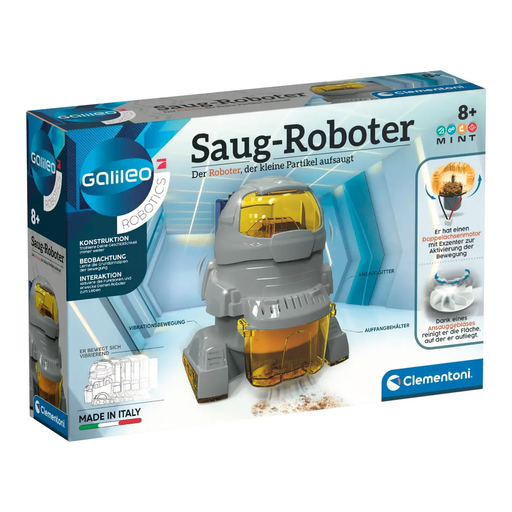
Why this product is a great fit: For tech-savvy school children who don't just want to play, but also want to understand how things work. The assembly process teaches fundamental principles of mechanics and robotics.
The fun here lies in the building process and the subsequent experimentation. It's a project-based toy that encourages concentration and logical thinking over an extended period.
Provides a hands-on introduction to STEM concepts. The illustrated manual allows for an independent sense of achievement in building a functional robot.
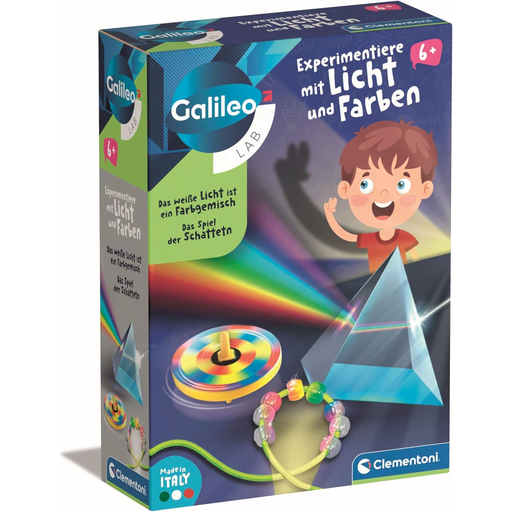
Why this product is a great fit: A classic science kit that makes scientific phenomena tangible. Ideal as a gift for children who love to get to the bottom of things and understand how the world works.
The set includes materials for several different experiments. It provides a structured guide that encourages repeated, varied activities, thus maintaining long-term interest.
Makes abstract physics concepts like light refraction and colour mixing understandable through practical experiments. All necessary special materials are included.
We have compiled a complete, up-to-date list of products that fully meet these strict selection criteria and European safety regulations.
Look for the CE mark on the packaging, which confirms compliance with EU standards. Check the toy for a sturdy construction and high-quality materials like solid wood or robust ABS plastic. Read the warning labels, especially regarding small parts that can be swallowed by children under three years old.
The manufacturer's age rating is a starting point. However, you should primarily consider your child's individual interests and developmental stage. A child who is already very skilled at building might enjoy a set for a slightly older age group, while another child might prefer a simpler, more open-ended play concept. When in doubt, expandable systems are a great choice as they grow with the child's abilities.
STEM stands for Science, Technology, Engineering, and Mathematics. STEM toys aim to foster curiosity, logical thinking, and problem-solving skills in these fields through playful approaches. They are by no means just for future scientists. Skills like analytical thinking and creative problem-solving are beneficial for every child. Examples range from simple construction sets and marble runs to complex robotics kits.