
Lieferung heute & morgen

Qualitätsgarantie

Willkommens-Angebote freischalten: KOSTENLOSE Lieferung | Bis zu 80 % RABATT | Kostenlose 30-Tage-JoyPlus-Testphase
App herunterladen
The selection of educational toys is vast, and finding the right product can be a challenge. Many parents and grandparents want to give a meaningful gift for children that not only entertains but also supports their development. But often, toys end up gathering dust in a corner because they don't meet expectations or prove to be impractical. As your Joybuy Product Recommendation Officer, I'm here to help you identify common pitfalls and make an informed decision.
This guide focuses on objective criteria to help you distinguish durable, developmentally appropriate toys from short-lived trends.
Before we dive into the selection criteria, it's important to understand the most common reasons for a bad buy. This will help you specifically look for products that avoid these issues.
To avoid the pitfalls mentioned above, you should check three key aspects. These will help you objectively assess a toy's quality and educational value.
Safety is the top priority. In Europe, all toys must meet the requirements of the EN 71 standard and bear a CE marking. This standard regulates, among other things:
Look for clean workmanship, robust materials, and the absence of strong chemical odours.
A good educational toy matches the child's current developmental stage and specifically promotes skills without being overwhelming.
A toy is sustainable when it is used for a long time and in various ways. Products that "grow with the child" or offer different play incentives are often the better choice. A simple set of wooden building blocks can be used for new constructions for years, whereas a single-function toy quickly loses its appeal.
Here are some product recommendations that align with the criteria above, suitable for different needs and age groups.
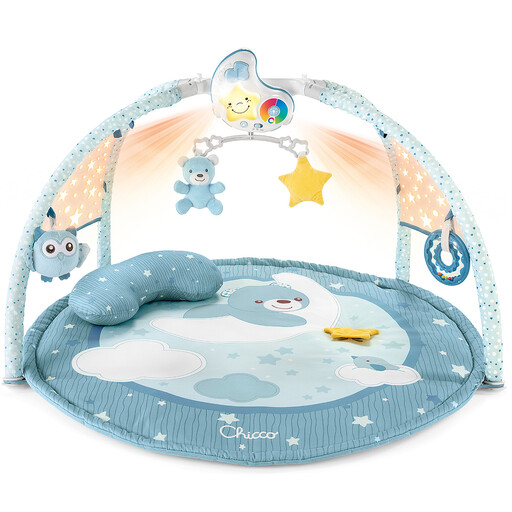
Why it's a good fit: This 3-in-1 play centre is designed as an electronic baby gym, a round play mat with a cushion, and a detachable nightlight. It accompanies the baby from birth through various developmental stages, promoting sensory perception with light projections and melodies.
Its multifunctionality as a play gym, activity mat, and later as a nightlight ensures long-term use and prevents short-lived fascination.
Three different projection and melody modes (Fun, Relax, Entertainment); the cushion and play mat are machine washable for easy hygiene.
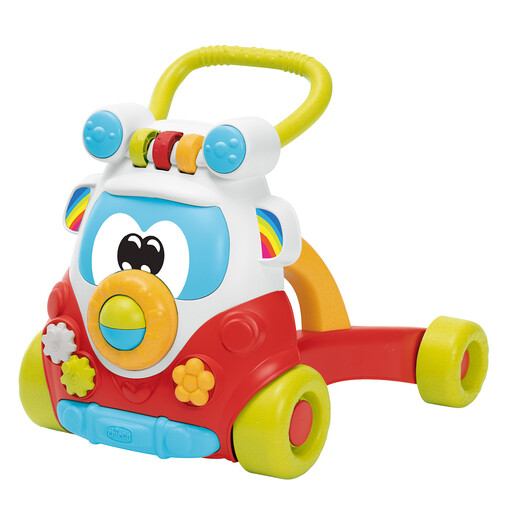
Why it's a good fit: This vintage-style baby walker is a 2-in-1 solution that gives toddlers secure support during their first steps while also serving as an activity centre to promote fine motor skills. Ideal for children who are starting to pull themselves up and walk.
The dual function as a walking aid and a motor skills toy provides long-lasting play value, even after the child can walk confidently. The four large, wide wheels ensure stability and avoid the safety risks of unstable models.
Combines the promotion of gross motor skills (walking) with five manual activities to train fine motor skills and coordination. The design is stable and built for safety.
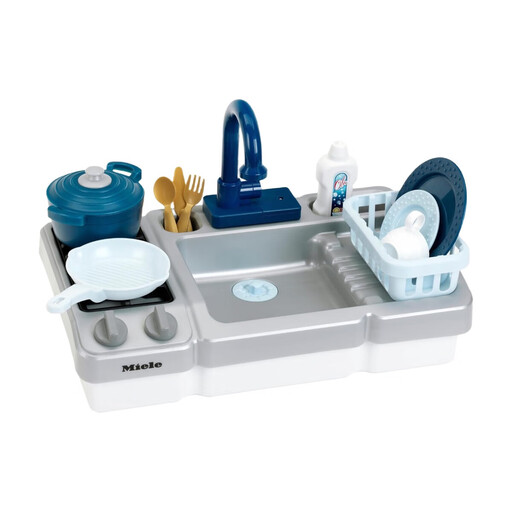
Why it's a good fit: This Miele-design play kitchen sink is ideal for children who love to imitate everyday tasks. It promotes imagination, social skills, and an understanding of household routines through creative role-play.
As an open-ended role-playing toy, it can be reinterpreted and combined with other toys again and again. This prevents it from becoming boring after a short time. The robust design is built for long-lasting fun.
The working water pump provides an especially realistic play experience. The set includes accessories like a plate, pot, and cutlery, so the fun can start right away.
We have compiled a complete, up-to-date list of products that fully meet these strict selection criteria and German safety regulations.
1. How can I identify safe educational toys? Look for the CE marking, which is mandatory for toys sold in the EU. An additional GS mark (Geprüfte Sicherheit / Tested Safety) is another indicator of high standards. Physically inspect the toy: Are there any sharp edges or detachable small parts (especially important for toys for children under 36 months)? A strong chemical smell can indicate questionable materials. The EN 71 standard is the definitive European benchmark for toy safety.
2. How do I clean educational toys properly? The cleaning method depends on the material. Wooden toys should only be wiped with a damp cloth and not submerged in water. Most plastic toys can be cleaned with a mild soap solution. For stuffed animals or play mats, follow the manufacturer's care instructions; many are machine washable. Electronic toys should only be cleaned superficially with a dry or slightly damp cloth, and batteries should be removed beforehand.
3. From what age is an interactive toy useful? Simple interactive toys that react to a button press with light or sound can be interesting for babies from around six months old to learn the principle of cause and effect. More complex interactive products, such as those that respond to voice commands or present small tasks, are generally suitable for toddlers from two to three years old, once their language and cognitive skills are sufficiently developed.