
Lieferung heute & morgen

Qualitätsgarantie

Willkommens-Angebote freischalten: KOSTENLOSE Lieferung | Bis zu 80 % RABATT | Kostenlose 30-Tage-JoyPlus-Testphase
App herunterladen
Educational toys for children should do more than just keep them occupied – they should inspire them to try things out, build, sort, and create. For parents, grandparents, and educational settings, however, the choice isn’t always straightforward: age recommendations, material descriptions, and bold advertising claims can be hard to compare.
This buying guide highlights what really matters when it comes to learning toys, STEM toys, wooden toys, and construction toys.
“Ages 3+” or “Ages 8+” is a useful starting point, but it doesn’t tell you everything about how the toy will actually be used. A set may be suitable for the recommended age and still contain small pieces that younger siblings shouldn’t be able to reach. That’s why, with building sets for children, building blocks, and science kits, safe storage should be part of your purchase.
Look out for:
A toy might feature numbers, shapes, or science topics, but that doesn’t mean it matches the child’s developmental stage. A construction toy that’s too difficult will quickly become frustrating; one that’s too simple will soon lose its appeal.
For toys for ages 3+, manageable tasks like stacking, matching, and simple sound experiments are usually best. Toys for ages 6+ can already include multi-step instructions and more complex constructions. Toys for ages 8+ often involve experiments, technical models, and detailed building kits.
With a cheap learning toy, you need to check whether batteries, consumables, or additional components are required. A science kit may include powders, granules, moulds, and an instruction booklet. With a marble run, what matters is whether the pieces you get are enough to build varied tracks.
Storage also counts: lots of small pieces need a lidded box or separate compartments. This not only prevents loss but also makes it easier to set up the next play session.
The age recommendation should match the child’s abilities. For toddlers, larger, easy-to-grip pieces are best. The YEEHOO Navia Forest Mystery Set contains 22 building blocks according to the product details and is designed for children aged 12 months and up. For chemical or scientific experiments, on the other hand, you should plan for adult supervision.
With wooden toys, rounded edges, a smooth surface, and clear care instructions are important features. Plastic parts should fit together cleanly and must not have visible cracks or sharp burrs. Metal parts, such as those on a xylophone for children, must be securely attached.
Also useful are:
Before you buy, consider the available space and how long a typical play session lasts. A large building set with several hundred pieces needs a dedicated play area and safe storage. A small musical instrument for children, on the other hand, is easier to keep on a shelf or in a nursery music corner.
With a science kit, the instructions should be clearly laid out. With a marble run, what counts is whether children can design their own tracks or are limited to a single pre-set construction.
The following recommendations group products by use case and verifiable details. They do not replace checking the current product page and safety information.
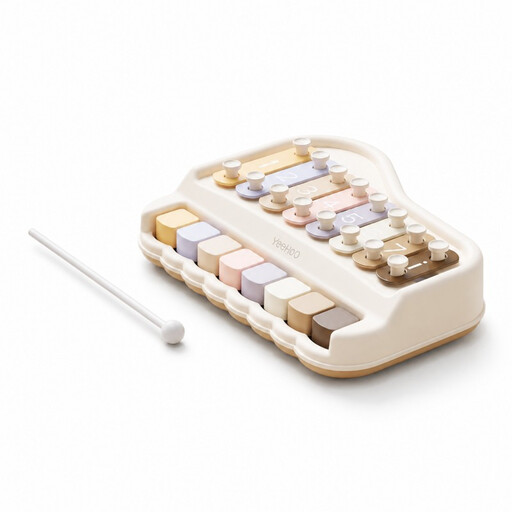
Why this product fits the profile: This compact musical instrument is designed for children aged 3 and up and is ideal for first rhythm and sound games at home or in a childcare setting.
The product details mention eight notes, two ways to play, and a storage option for the mallets. This makes the intended way to play clear.
Eight-note design, dimensions of approximately 20 × 15.5 × 4.5 cm, and includes a note guide.
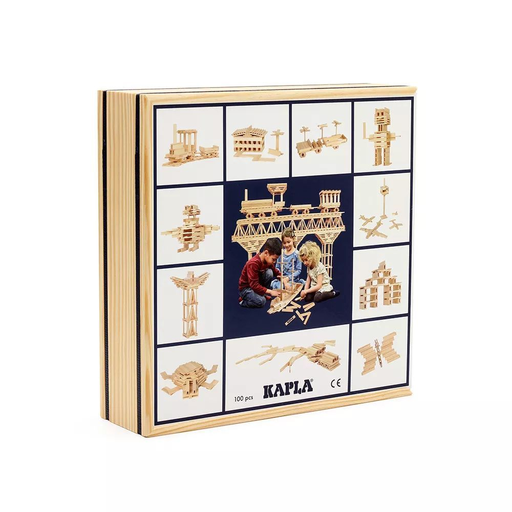
Why this product fits the profile: The 100 identical planks made from untreated pine wood allow for free building without a fixed model and can be used across different age groups.
Instead of just copying a single pre-set figure, the set allows for different towers, bridges, and free-form creations. The pieces are stored in a wooden box.
100 planks, no batteries required, recommended for ages 3+, and expandable with additional sets.
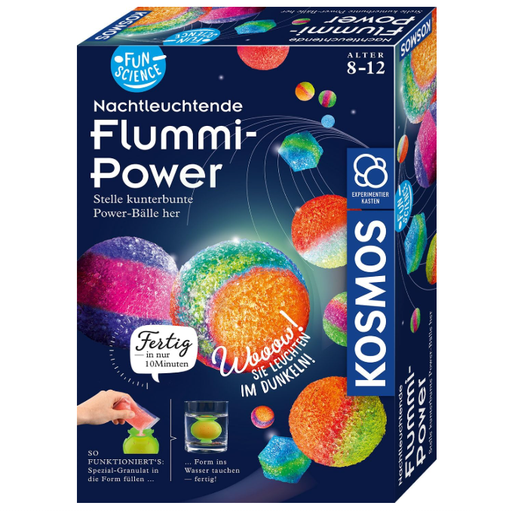
Why this product fits the profile: According to the product details, this science kit is aimed at children aged 8 to 12 and provides materials for making 20 balls.
The age, material contents, and supervision requirements are clearly stated. Included are granules in six colours plus three glow-in-the-dark colours, two moulds, and wobbly eyes.
Manual operation with no batteries needed, 20 balls, and a clearly defined experiment process for home use.
We’ve put together a complete, regularly updated list of products that fully meet these strict selection criteria and the safety regulations in force in the EU.
Depending on the learning goal, other categories may also be a good fit:
For ages 3 and up, larger building blocks, simple stacking and sorting games, first board games, and sturdy musical instruments are all good options. Still, check whether any individual accessories are small and whether supervision is needed.
How long a toy stays interesting depends heavily on the material, the play concept, and how it’s stored. Open-ended building systems and blocks can remain engaging across several developmental stages, whereas consumables from science kits can’t always be replaced after use. Storing toys in a dry place and regularly checking that all pieces are present will extend their practical lifespan.
As well as the purchase price, you should factor in consumables, batteries, and any add-ons. Kits that don’t need batteries can be more affordable if used occasionally. With chemical toys, the instructions, age rating, and adult supervision matter more than getting the lowest possible price.